Nifty 50
- Apollo Hospitals₹8,027.50361.50 (4.72%)
- BSE₹3,287.20-47.60 (-1.43%)
- ITC₹26611.00 (4.31%)
- Reliance Industries₹1,170.30-7.70 (-0.65%)
- Eicher Motors₹7,050282.50 (4.17%)
- JSW Steel₹1,168-7.20 (-0.61%)
- TCS₹2,15680.00 (3.85%)
- Cipla₹1,301-5.80 (-0.44%)
- HCL Technologies₹1,216.7039.80 (3.38%)
- Adani Ports₹1,76153.00 (3.10%)
- Infosys₹1,023.4026.40 (2.65%)
- Shriram Finance₹940.4523.20 (2.53%)
- Tata Motors PV₹279.906.90 (2.53%)
- UltraTech Cement₹10,675249.00 (2.39%)

- Offerings
- Tools & Platforms
Tools & Calculators
- Open API
- Calculators
- SIP Calculator
- CAGR Calculator
- Compound Interest Calculator
- FD Calculator
- RD Calculator
- EPF Calculator
- Retirement Calculator
- HDFC SIP Calculator
- Mutual Fund Return Calculator
- Lumpsum Calculator
- Step Up SIP Calculator
- ETF SIP Calculator
- Brokerage Calculator
- Equity Margin Calculator
- SWP Calculator
- EMI Calculator
- MTF Calculator
- Margin Pledge Calculator
- Algo Strategy
- Markets
Stocks
F&O
Mutual Funds
- More
- Understanding the Inventory: Sales Relationship
- Why Excess Inventory Often Comes Before Earnings Misses
- Key Inventory Metrics Investors Should Track
- Common Causes of Inventory Build-Up
- Warning Phrases Hidden in Earnings Reports
- How to Analyse Inventory Signals Like an Investor
- Industries Where Inventory Signals Matter Most
- Investor Checklist: Spotting Inventory Trouble Early
- Conclusion
- Understanding the Inventory: Sales Relationship
- Why Excess Inventory Often Comes Before Earnings Misses
- Key Inventory Metrics Investors Should Track
- Common Causes of Inventory Build-Up
- Warning Phrases Hidden in Earnings Reports
- How to Analyse Inventory Signals Like an Investor
- Industries Where Inventory Signals Matter Most
- Investor Checklist: Spotting Inventory Trouble Early
- Conclusion
When Inventory Piles Up and Sales Stall: The Supply Chain Signal That Precedes Earnings Misses
By Aseem Shrivastava | Updated at: May 29, 2026 06:13 PM IST
Open Free Demat Account
Open Free Demat Account
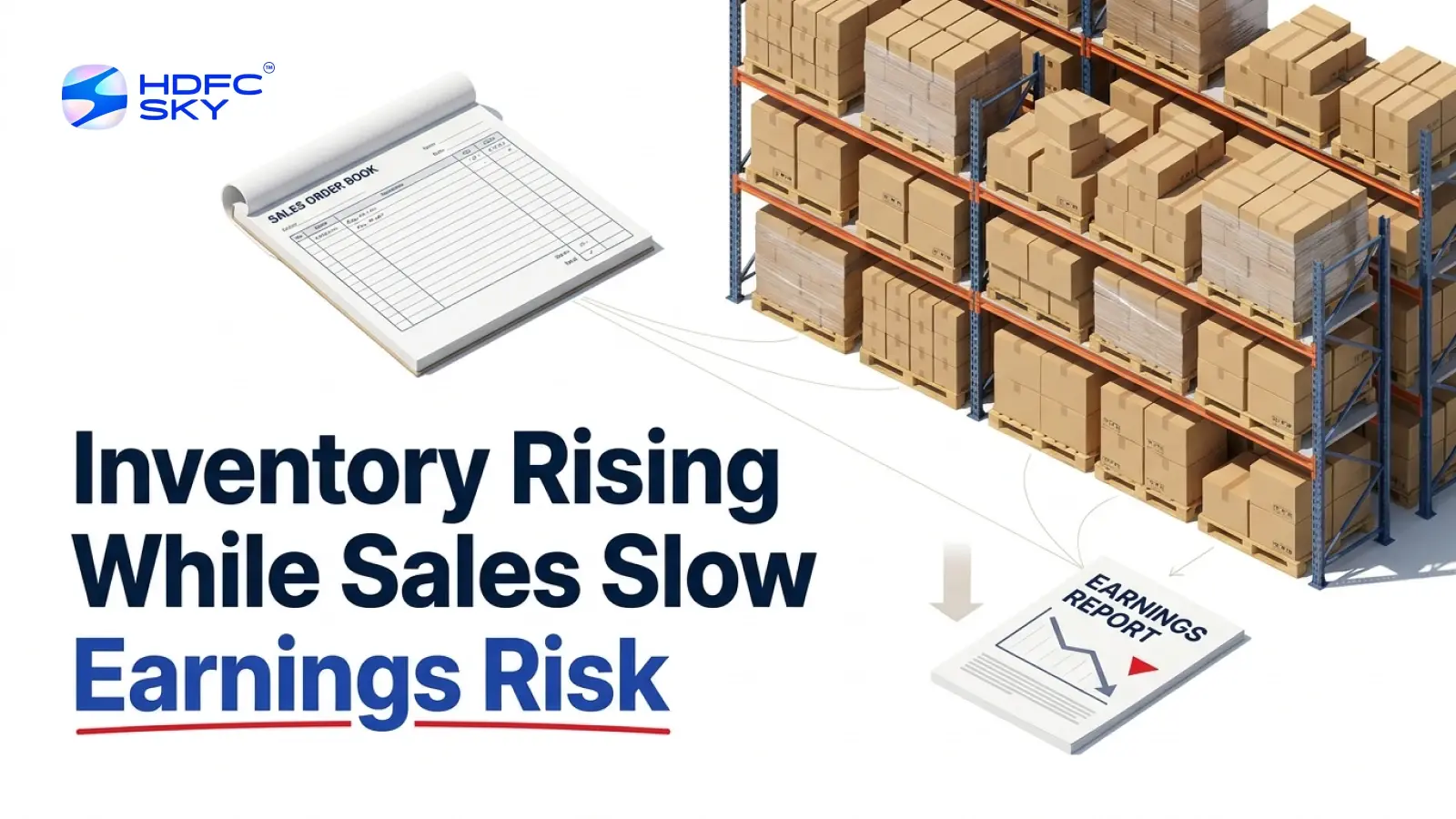
Earnings misses rarely happen without warning. One of the earliest clues often appears in a company’s inventory data, not in its income statement. Rising inventory and slowing sales can signal hidden pressure inside the business. Excess stock may point to weak demand, poor planning, pricing pressure, or supply chain problems. Investors who understand this relationship can often spot risk early and avoid costly surprises before earnings results become public.
Understanding the Inventory: Sales Relationship
Inventory includes products a company has made or purchased but has not yet sold. These goods should generate future revenue, which makes inventory an important sign of business health. It shows how well a company balances supply with customer demand. Healthy companies keep inventory levels in line with sales trends. When inventory rises faster than revenue, inventory days increase, or stock turnover slows, it can signal an imbalance that may affect future profits.
Why Excess Inventory Often Comes Before Earnings Misses
Supply chain problems often hurt profitability before earnings reports reveal the damage. Excess inventory can quietly build pressure and weaken financial performance over time.
- Unsold Goods Can Force Discounting
When products stay unsold for too long, companies often lower prices to clear stock. Discounts and extra promotions reduce profit margins and weaken overall profitability in future earnings reports.
- Storage and Holding Costs Begin to Rise
Excess inventory increases warehousing, insurance, and handling expenses. It also ties up working capital, limits financial flexibility, and creates added pressure on the company’s short-term cash position.
- Inventory Write-Downs Can Hit Earnings Suddenly
Old, damaged, or outdated products may lose value over time. Companies may need inventory write-downs, which can create unexpected losses and sharply reduce reported earnings.
- Management Forecasting Errors Become Visible
Inventory build-up often reveals poor demand forecasting or production planning mistakes. It can also expose weak internal controls and management decisions that failed to match supply with demand.
Also Read: How rising debtor days in a company’s balance sheet predict a cash flow crisis months ahead
Key Inventory Metrics Investors Should Track
A few inventory metrics can help investors detect warning signs early. These numbers often reveal operational pressure before companies openly discuss business problems.
- Inventory Growth vs Revenue Growth
Inventory should usually grow in line with sales. If inventory rises faster than revenue, it may signal weakening demand, overproduction, or poor supply planning.
- Days Inventory Outstanding (DIO)
Days Inventory Outstanding shows how long products remain unsold. A rising DIO often signals slower stock movement and growing difficulty in converting inventory into revenue.
- Inventory Turnover Ratio
This ratio measures how quickly a company sells and replaces inventory. A declining turnover rate can point to weaker demand or falling operational efficiency.
- Gross Margin Trends
Falling gross margins can reflect discounting pressure caused by excess stock. Margin erosion often appears before management openly discusses inventory-related business challenges.
- Management Commentary on Demand
Watch for phrases like “temporary demand softness” or “inventory optimisation.” Such wording may quietly signal hidden inventory pressure or weaker-than-expected sales trends.
Common Causes of Inventory Build-Up
Not every increase in inventory signals trouble. Investors should understand the cause before deciding whether the issue is temporary or more serious.
- Demand Slowdown
Consumer weakness or market saturation can reduce sales unexpectedly. Products may remain unsold for longer periods, causing inventory levels to rise and creating pressure on future earnings.
- Overproduction
Poor demand forecasting or aggressive business expansion can lead companies to produce more goods than customers need, creating excess stock and increasing supply chain pressure.
- Supply Chain Disruptions
Delayed shipments or supplier timing mismatches can temporarily increase inventory levels. These issues may not reflect weak demand but still require careful investor attention.
- Product Obsolescence
Technology changes, seasonal shifts, or changing customer preferences can make products harder to sell. Older inventory may quickly lose value and increase financial risk.
- Channel Stuffing
Some companies push extra goods to distributors to support short-term revenue. This can create artificial sales growth while hiding weaker underlying customer demand.
Warning Phrases Hidden in Earnings Reports
Management language often reveals inventory pressure indirectly. Investors should watch for subtle phrases that may signal deeper supply chain problems.
- “Temporary Demand Normalisation”
This phrase may suggest a hidden slowdown in customer demand rather than a simple short-term adjustment in business conditions.
- “Inventory Rebalancing”
Companies often use this phrase when they need to correct excess stock levels across stores or distribution channels.
- “Promotional Activity Increased”
Higher promotional spending can indicate discount-driven sales efforts designed to clear unwanted inventory and improve short-term stock movement.
- “Working Capital Pressure”
This phrase often points to cash being tied up in unsold inventory, which can strain financial flexibility.
- “Short-Term Margin Compression”
Margin pressure may result from discounting, inventory write-downs, or higher storage costs linked to excess stock.
How to Analyse Inventory Signals Like an Investor
Investors should review inventory trends from several angles instead of relying on one number or one quarter.
- Compare Multiple Quarters, Not One Period
Trend analysis matters more than one isolated quarter. Consistent inventory growth can reveal deeper operational problems that need closer attention.
- Benchmark Against Industry Peers
Compare inventory trends with competitors. This helps investors separate company-specific problems from broader industry challenges affecting multiple businesses.
- Read Footnotes and MD&A Carefully
Company footnotes often include inventory details and slow-moving stock disclosures. These sections can reveal hidden risks before management discusses them openly.
- Watch Cash Flow Alongside Inventory
Rising inventory often consumes cash. Weak operating cash flow alongside growing stock can strengthen the overall warning signal.
Industries Where Inventory Signals Matter Most
Inventory signals matter more in some industries where product cycles move quickly or unsold stock creates greater financial risk.
- Retail and Consumer Goods
Fast-changing customer demand can quickly turn excess stock into discounting pressure and lower profit margins.
- Technology and Electronics
Rapid product changes can make inventory obsolete quickly, increasing the risk of write-downs and sudden earnings pressure.
- Automotive and Manufacturing
Large production cycles often require heavy inventory investment, which can strain working capital when sales begin to slow.
- Pharmaceuticals and Healthcare
Expiry risks and strict regulations can make unsold inventory especially costly and difficult to manage.
Investor Checklist: Spotting Inventory Trouble Early
Before making an investment decision, investors should ask these simple questions to identify possible warning signs early:
- Is inventory growing faster than sales?
- Are inventory days increasing?
- Is gross margin falling?
- Is cash flow weakening?
- Is management using vague explanations?
- Are peers facing similar issues?
- Could an earnings miss follow?
Conclusion
Inventory build-up often signals business problems before earnings reports confirm them. Supply chain data can give investors an early advantage. Looking beyond revenue headlines helps uncover hidden risks. By tracking inventory trends carefully, investors can avoid costly surprises and make smarter investment decisions.



Open Free Demat Account
Open Free Demat Account
Popular Posts
- 10 Interesting Facts About NSE You Probably Didn’t KnowLast Updated: Sep 30, 2026
- 8-4-3 Rule of SIP - How Does That Work?Last Updated: Jul 30, 2025
- Let's view more exciting Post!
Popular Post from Sky Risk Radar
- When EBITDA Grows but Cash Flow Doesn’t: The Red Flag That Precedes Most Accounting FraudsLast Updated: May 29, 2026
- The Sudden Auditor Change Signal: What It Means When a Big-4 Firm Walks Away from a Listed CompanyLast Updated: May 29, 2026
- The Insider Selling Cluster: When Three or More Key Executives Sell Shares in the Same QuarterLast Updated: May 29, 2026
- Rising NPAs in a Bank's Quarterly Disclosure: How to Detect Stress Before the Stock ReactsLast Updated: May 29, 2026
- Related-Party Transactions Above 15% of Revenue: The Governance Red Flag Every Investor Should Screen forLast Updated: May 29, 2026
- Let's view more exciting Post!
Popular Post from Blogs
- “Bounce Back” Theme Gains Traction in 2026Last Updated: Apr 8, 2026
- 5 Takeaways for Tax Payers from the Budget 2025Last Updated: Jan 29, 2026
- Let’s view more exciting Posts


Invest Anytime, Anywhere


By signing up I certify terms, conditions & privacy policy