Nifty 50
- Dr. Reddy's Labs₹1,229.4032.40 (2.71%)
- Apollo Hospitals₹7,775-252.50 (-3.15%)
- Bajaj Auto₹10,034256.00 (2.62%)
- ITC₹257.90-8.10 (-3.05%)
- Tata Motors PV₹284.454.55 (1.63%)
- Tech Mahindra₹1,471-43.10 (-2.85%)
- Bharat Electronics₹373.905.75 (1.56%)
- L&T₹3,627.50-75.80 (-2.05%)
- BSE₹3,330.2043.00 (1.31%)
- Max Healthcare₹865.95-17.85 (-2.02%)
- Cipla₹1,317.4016.40 (1.26%)
- Hindalco Industries₹882.50-17.85 (-1.98%)
- Eicher Motors₹7,11969.00 (0.98%)
- Hindustan Unilever₹1,820.70-36.00 (-1.94%)
- Mahindra & Mahindra₹2,81316.80 (0.60%)
- SBI₹941-18.10 (-1.89%)
- Kotak Mahindra Bank₹443.402.40 (0.54%)
- Coal India₹404.80-6.75 (-1.64%)
- HCL Technologies₹1,2236.30 (0.52%)
- Bharti Airtel₹1,778.70-26.40 (-1.46%)

- Offerings
- Tools & Platforms
Tools & Calculators
- Open API
- Calculators
- SIP Calculator
- CAGR Calculator
- Compound Interest Calculator
- FD Calculator
- RD Calculator
- EPF Calculator
- Retirement Calculator
- HDFC SIP Calculator
- Mutual Fund Return Calculator
- Lumpsum Calculator
- Step Up SIP Calculator
- ETF SIP Calculator
- Brokerage Calculator
- Equity Margin Calculator
- SWP Calculator
- EMI Calculator
- MTF Calculator
- Margin Pledge Calculator
- Algo Strategy
- Markets
Stocks
F&O
Mutual Funds
- More
- Understanding NPAs in the Context of Bank Analysis
- Key NPA Metrics Investors Must Track in Quarterly Reports
- How to Detect Stress Before the Market Reacts
- Red Flags That Suggest a Banking Stock May React Soon
- How Smart Investors Analyse Bank Stress Before Buying or Holding
- Common Mistakes Investors Make While Reading NPA Data
- Conclusion
- Understanding NPAs in the Context of Bank Analysis
- Key NPA Metrics Investors Must Track in Quarterly Reports
- How to Detect Stress Before the Market Reacts
- Red Flags That Suggest a Banking Stock May React Soon
- How Smart Investors Analyse Bank Stress Before Buying or Holding
- Common Mistakes Investors Make While Reading NPA Data
- Conclusion
Rising NPAs in a Bank's Quarterly Disclosure: How to Detect Stress Before the Stock Reacts
By Aseem Shrivastava | Updated at: May 29, 2026 06:09 PM IST
Open Free Demat Account
Open Free Demat Account
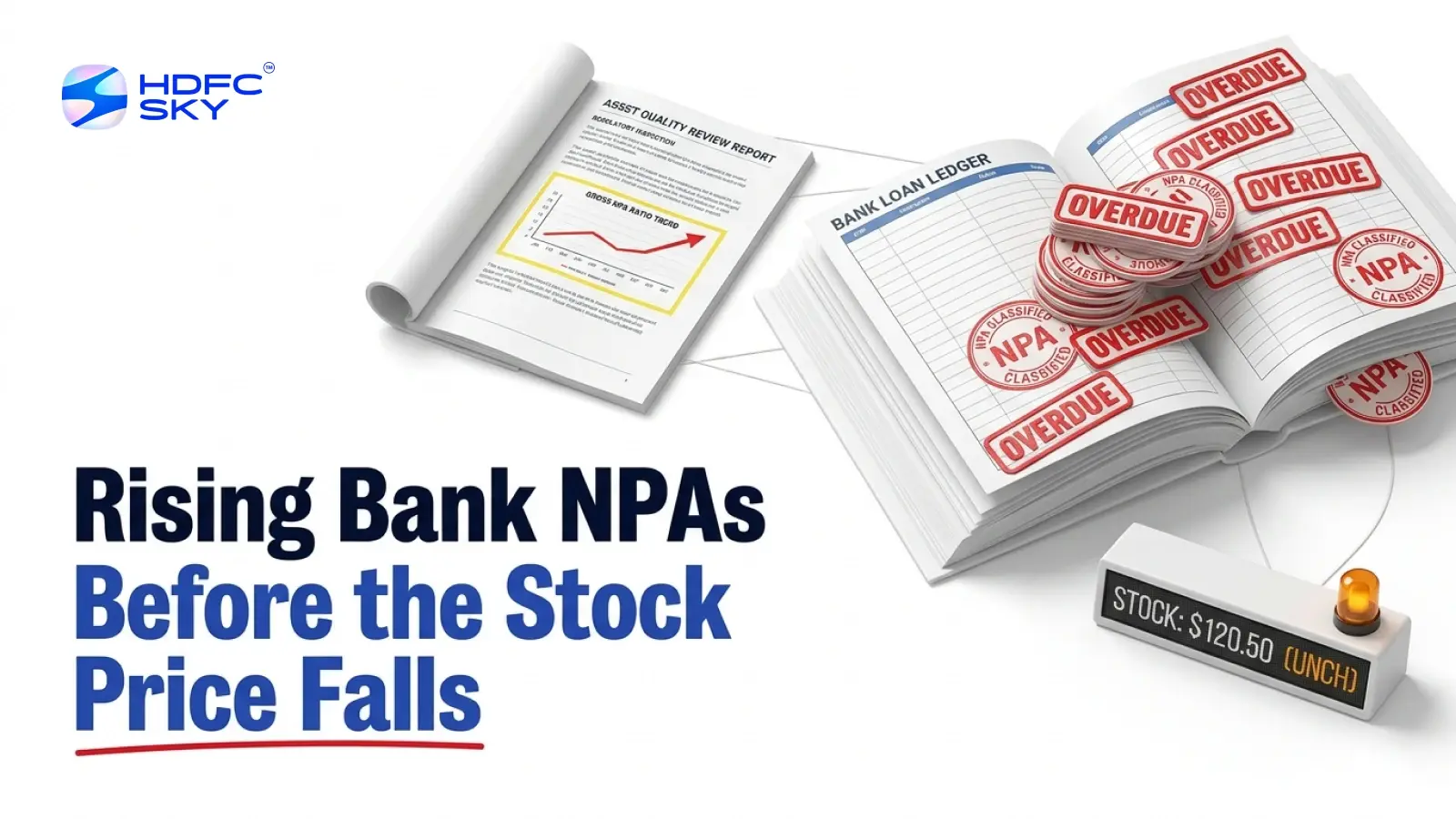
Banking stocks can look stable even when problems quietly build inside a bank’s loan book. Rising NPAs often appear early in quarterly disclosures, long before stock prices react. Investors who know where to look can spot these warning signs sooner. Learning how to read NPA-related data helps first-time investors detect hidden stress and make better decisions before market sentiment changes suddenly.
Understanding NPAs in the Context of Bank Analysis
Non-Performing Assets, or NPAs, refer to loans where borrowers have stopped making repayments. Rising NPAs often signal that more customers or businesses struggle financially. This weakens a bank’s ability to earn a steady income and can slowly damage investor confidence.
Higher NPAs also affect profitability. Banks must set aside money to cover possible loan losses, which reduces earnings and puts pressure on capital reserves. If this continues, the bank may face slower growth or funding challenges.
Many investors focus only on headline profit numbers, but profit can stay strong even when loan quality worsens. Banks may delay the visible impact through provisions, recoveries, or accounting adjustments. Quarterly disclosures often reveal this hidden pressure before it shows up clearly in earnings or stock prices.
Also Read: How to read a credit rating downgrade outlook as an early stock risk signal — before the downgrade
Key NPA Metrics Investors Must Track in Quarterly Reports
A bank’s quarterly report includes several important indicators that reveal changes in asset quality. Tracking these numbers helps investors identify early signs of financial stress before they affect market performance.
- Gross NPA Trend: The First Sign of Credit Stress
Gross NPA shows the total value of bad loans before provisions. A steady quarterly rise often signals growing credit stress. Investors should compare this trend with similar banks to judge whether problems are bank-specific or industry-wide during the same reporting period for better context today. - Net NPA Movement: Measuring Real Balance Sheet Damage
Net NPA reflects bad loans left after provisions, showing actual balance sheet damage. When this number rises, it may suggest the bank lacks enough protection against future losses and may require higher future provisions to protect investor confidence over coming quarters effectively with discipline. - Provision Coverage Ratio: Is the Bank Prepared for Future Losses?
Provision Coverage Ratio measures how much of bad loans the bank has already covered. A higher ratio offers comfort, while a falling ratio can point to under-preparedness for future loan losses that could pressure earnings in the next few quarters for investors watching closely ahead. - Slippage Ratio: The Most Important Early Warning Indicator
Slippages track fresh loans that turn bad during the quarter. Rising slippages often signal future NPA growth, so investors should monitor this number across several quarters for a clearer stress pattern before it appears fully in headline asset quality figures reported publicly. - SMA and Restructured Loans: Hidden Stress Before Official NPAs
SMA accounts and restructured loans often reveal hidden borrower stress before official defaults emerge. These numbers deserve close attention because troubled loans can move into the NPA category later and create sudden pressure on profits and market confidence unexpectedly.
How to Detect Stress Before the Market Reacts
Beyond headline numbers, investors should study patterns and management signals carefully. Small changes across quarterly reports often provide valuable clues before stock prices adjust.
- Watch for Rising NPAs Despite Strong Loan Growth
Rapid loan growth can look impressive, but it sometimes hides weaker lending standards. If NPAs rise while the loan book expands quickly, the bank may be taking higher risks that could create larger problems in future reporting periods for shareholders. - Compare Provisioning Growth with NPA Growth
When bad loans increase faster than provisions, future earnings may face pressure. Investors should check whether the bank builds enough financial protection, because delayed provisioning can suddenly reduce profits and trigger negative market reactions later unexpectedly. - Check Segment-Wise Loan Book Deterioration
Review asset quality across retail, MSME, and corporate lending segments carefully. Stress in one area can spread quickly, and sector-specific weakness often gives investors early warnings about which parts of the bank’s portfolio need closer attention. - Look for Management Language Changes in Earnings Reports
Management commentary often reveals concerns before numbers fully worsen. Phrases like temporary stress, elevated credit costs, or prudential provisioning may signal caution and suggest the bank expects more pressure in upcoming quarters than headlines indicate. - Monitor RBI Divergence Disclosures and Regulatory Flags
NPA divergence happens when regulators identify more bad loans than the bank reported. These corrections can damage trust and often shock investors, making regulatory disclosures essential for spotting hidden risks before the market reacts strongly.
Red Flags That Suggest a Banking Stock May React Soon
Certain warning signs often appear before a sharp shift in investor sentiment or stock performance.
- Consecutive quarterly increases in slippages and NPAs often signal deeper stress before markets react sharply.
- Falling provision coverage alongside rising bad loans may expose weak financial preparedness quickly.
- Increasing write-offs without meaningful recoveries can hide the true scale of asset deterioration.
- Weak capital buffers with rising NPAs can pressure future growth and investor confidence.
- Management downplaying asset quality concerns may suggest unresolved problems beneath reported numbers.
How Smart Investors Analyse Bank Stress Before Buying or Holding
Careful investors use a broader approach instead of reacting only to headline financial results.
- Compare current quarter trends with past performance to identify unusual stress patterns.
- Benchmark asset quality metrics against competitor banks for better sector-wide perspective.
- Focus on trend direction instead of relying only on absolute reported numbers.
- Use investor presentations with financial statements for a more complete analysis.
Common Mistakes Investors Make While Reading NPA Data
Many first-time investors miss early warning signs because they focus on incomplete information.
- Looking only at Gross NPA can hide deeper balance sheet weaknesses.
- Ignoring slippages and restructured assets may delay recognition of stress.
- Trusting profit growth without checking loan quality can mislead investors.
- Reacting only after stock declines often limits better investment choices.
Conclusion
Quarterly disclosures often reveal banking stress long before stock prices reflect it. Investors who track NPAs, slippages, and related warning signs can act early and avoid surprises. Careful, disciplined analysis of bank disclosures helps investors protect capital and make more confident long-term decisions.



Open Free Demat Account
Open Free Demat Account
Popular Posts
- 10 Interesting Facts About NSE You Probably Didn’t KnowLast Updated: Sep 30, 2026
- 8-4-3 Rule of SIP - How Does That Work?Last Updated: Jul 30, 2025
- Let's view more exciting Post!
Popular Post from Sky Risk Radar
- When Inventory Piles Up and Sales Stall: The Supply Chain Signal That Precedes Earnings MissesLast Updated: May 29, 2026
- When EBITDA Grows but Cash Flow Doesn’t: The Red Flag That Precedes Most Accounting FraudsLast Updated: May 29, 2026
- The Sudden Auditor Change Signal: What It Means When a Big-4 Firm Walks Away from a Listed CompanyLast Updated: May 29, 2026
- The Insider Selling Cluster: When Three or More Key Executives Sell Shares in the Same QuarterLast Updated: May 29, 2026
- Related-Party Transactions Above 15% of Revenue: The Governance Red Flag Every Investor Should Screen forLast Updated: May 29, 2026
- Let's view more exciting Post!
Popular Post from Blogs
- “Bounce Back” Theme Gains Traction in 2026Last Updated: Apr 8, 2026
- 5 Takeaways for Tax Payers from the Budget 2025Last Updated: Jan 29, 2026
- Let’s view more exciting Posts


Invest Anytime, Anywhere


By signing up I certify terms, conditions & privacy policy