Nifty 50
- Apollo Hospitals₹8,027.50361.50 (4.72%)
- BSE₹3,287.20-47.60 (-1.43%)
- ITC₹26611.00 (4.31%)
- Reliance Industries₹1,170.30-7.70 (-0.65%)
- Eicher Motors₹7,050282.50 (4.17%)
- JSW Steel₹1,168-7.20 (-0.61%)
- TCS₹2,15680.00 (3.85%)
- Cipla₹1,301-5.80 (-0.44%)
- HCL Technologies₹1,216.7039.80 (3.38%)
- Adani Ports₹1,76153.00 (3.10%)
- Infosys₹1,023.4026.40 (2.65%)
- Shriram Finance₹940.4523.20 (2.53%)
- Tata Motors PV₹279.906.90 (2.53%)
- UltraTech Cement₹10,675249.00 (2.39%)

- Offerings
- Tools & Platforms
Tools & Calculators
- Open API
- Calculators
- SIP Calculator
- CAGR Calculator
- Compound Interest Calculator
- FD Calculator
- RD Calculator
- EPF Calculator
- Retirement Calculator
- HDFC SIP Calculator
- Mutual Fund Return Calculator
- Lumpsum Calculator
- Step Up SIP Calculator
- ETF SIP Calculator
- Brokerage Calculator
- Equity Margin Calculator
- SWP Calculator
- EMI Calculator
- MTF Calculator
- Margin Pledge Calculator
- Algo Strategy
- Markets
Stocks
F&O
Mutual Funds
- More
- Understanding Credit Ratings and Outlook Signals
- Rating Outlook
- Outlook Change vs Actual Downgrade
- Why a Downgrade Outlook Matters for Equity Investors
- Key Phrases Investors Must Read in Rating Reports
- What Triggers a Negative Credit Outlook
- How to Read a Credit Rating Report Like an Investor
- Early Stock Risk Signals That Often Accompany Negative Outlooks
- Investor Action Plan After a Negative Outlook
- Conclusion
- Understanding Credit Ratings and Outlook Signals
- Rating Outlook
- Outlook Change vs Actual Downgrade
- Why a Downgrade Outlook Matters for Equity Investors
- Key Phrases Investors Must Read in Rating Reports
- What Triggers a Negative Credit Outlook
- How to Read a Credit Rating Report Like an Investor
- Early Stock Risk Signals That Often Accompany Negative Outlooks
- Investor Action Plan After a Negative Outlook
- Conclusion
How to Read a Credit Rating Downgrade Outlook as an Early Stock Risk Signal: Before the Downgrade
By Aseem Shrivastava | Updated at: May 29, 2026 06:15 PM IST
Open Free Demat Account
Open Free Demat Account
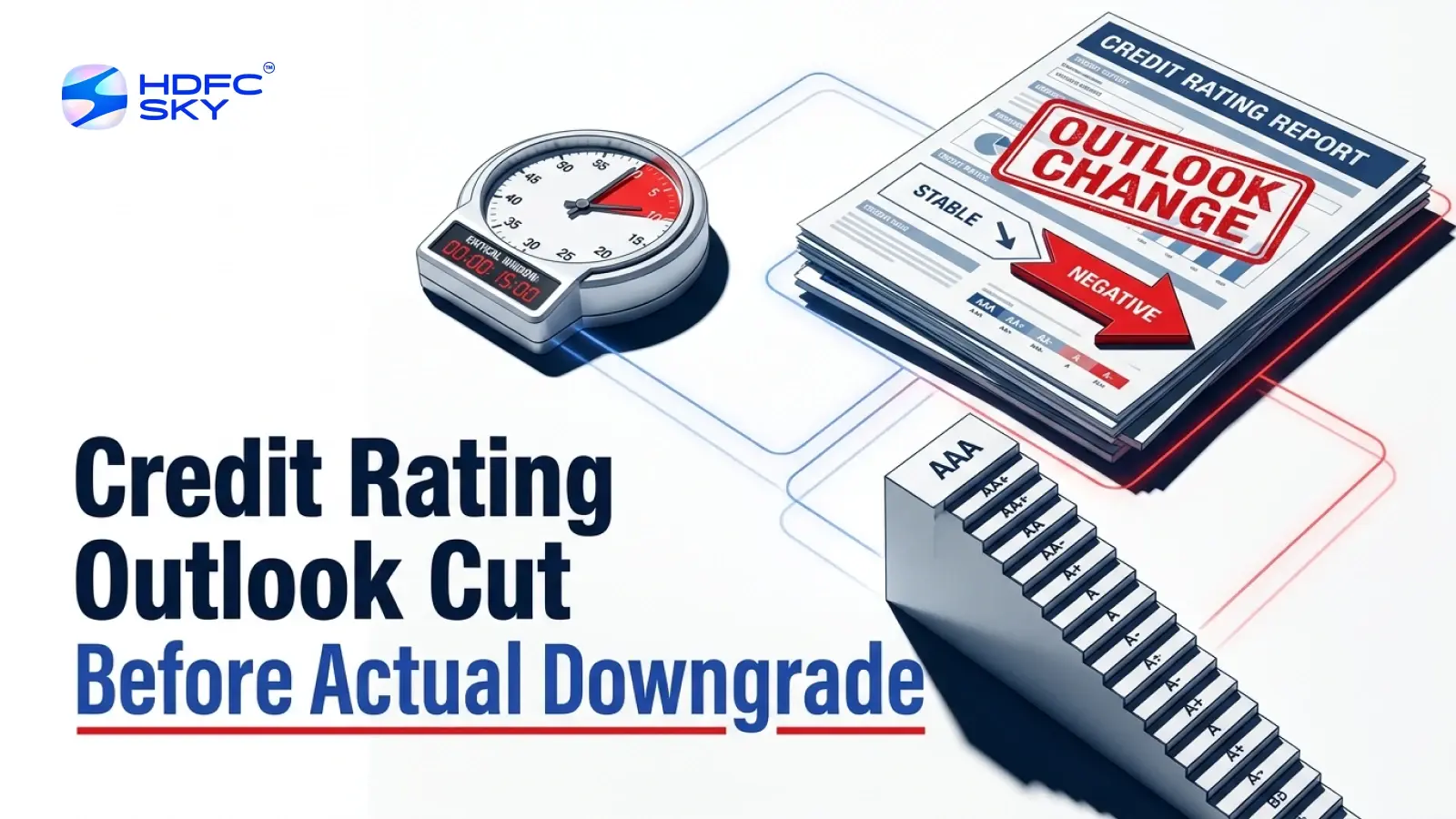
Stock market risks often appear before share prices react sharply. Many investors notice trouble only after a formal credit rating downgrade makes headlines. By then, the stock may have already fallen. Credit rating outlook changes can act as early warning signals and reveal growing financial stress before a downgrade happens. Terms like Negative Outlook, Rating Watch Negative, or Credit Watch can help investors spot risk early and make better decisions before market sentiment shifts.
Understanding Credit Ratings and Outlook Signals
A credit rating measures a company’s ability to repay its debt on time. Rating agencies study a company’s financial strength and assign ratings based on repayment risk. Common agencies include CRISIL, ICRA, CARE Ratings, Moody’s, S&P Global Ratings, and Fitch Ratings.
Investment-grade ratings usually signal lower risk. Lower-rated debt suggests higher repayment risk and greater uncertainty.
Also Read: How rising debtor days in a company’s balance sheet predict a cash flow crisis months ahead
Rating Outlook
A rating outlook shows the possible direction of a company’s credit rating over time. It gives a forward-looking view rather than an immediate decision.
Common outlook terms include:
- Stable: No major change expected
- Positive: Potential for an upgrade
- Negative: Increased chance of a downgrade
- Developing: Outcome remains uncertain
Outlook Change vs Actual Downgrade
A rating outlook serves as a warning. A downgrade is the official action. Investors should not confuse the two. Markets often react before the actual downgrade because institutional investors closely monitor these early signals.
Why a Downgrade Outlook Matters for Equity Investors
Many stock investors focus only on earnings and share prices. Debt signals can reveal hidden problems much earlier.
- Credit Markets Often Detect Financial Stress Earlier
Bond markets often respond faster than stockmarkets. Credit analysts focus directly on repayment ability, debt pressure, and liquidity. Their concerns can expose financial weakness before equity investors notice it. - A Negative Outlook Signals Rising Business Risk
A negative outlook often points to weakening cash flow, rising leverage, shrinking profit margins, or refinancing pressure. These problems may not affect stock prices immediately, but they can damage investor confidence over time. - Stock Prices Can Correct Before the Downgrade Happens
Once investors see warning signs, sentiment can shift quickly. Institutional selling may begin early, and stock volatility can increase. Waiting for the formal downgrade may leave investors reacting too late.
Key Phrases Investors Must Read in Rating Reports
Credit rating reports often contain subtle but important warnings. Paying attention to exact wording can reveal the seriousness of the risk.
- “Negative Outlook” Indicates Growing Concern
This phrase suggests that the agency sees rising risk over the medium term. It does not guarantee a downgrade, but it signals that the company needs close monitoring. - “Rating Watch Negative” Suggests Immediate Risk
This wording signals a higher chance of a near-term downgrade. Agencies often use it when a specific event or trigger could worsen the company’s financial condition quickly. - “Deteriorating Liquidity Position” Signals Cash Stress
This phrase points to possible cash shortages or working capital pressure. Companies may struggle to manage daily expenses or debt repayments. - “Weakened Debt Protection Metrics” Indicates Leverage Trouble
This often means interest coverage has declined or debt-to-earnings ratios have worsened. Rising debt pressure can affect long-term financial stability. - “Execution Challenges” May Reveal Operational Weakness
Project delays, cost overruns, or failed business plans can weaken company performance and increase credit risk.
What Triggers a Negative Credit Outlook
Several factors can push rating agencies to revise their outlook.
- Rising Debt Levels
Aggressive borrowing or debt-funded expansion can increase repayment pressure. It can reduce financial flexibility and raise concerns about the company’s ability to manage future obligations. - Declining Profitability
Lower earnings and shrinking profit margins can weaken repayment ability. This can make it harder for the company to manage debt and maintain financial stability. - Weak Cash Flow Generation
Poor customer collections or high working capital needs can create cash shortages. This can happen even when reported profits appear stable and business performance looks healthy. - Industry Headwinds
Regulatory changes, weaker demand, or commodity price pressure can hurt business performance. These challenges often push rating agencies to adopt a more cautious outlook. - Governance Concerns
Promoter pledging, related-party transactions, or sudden auditor resignations can reduce investor trust. They can also raise serious concerns about transparency and management quality.
How to Read a Credit Rating Report Like an Investor
A credit rating report can reveal important warning signs before a company faces deeper financial trouble. Investors should focus on these key areas while reviewing the report.
- Focus on the Rating Rationale Section
The rating rationale explains why the agency changed the outlook. It highlights the main business risks and often provides the clearest early warning for investors. - Review Financial Ratios Mentioned
Check debt-to-equity, interest coverage, EBITDA margins, and liquidity indicators. These figures help investors understand the company’s financial strength and repayment capacity more clearly. - Compare Current Language With Previous Reports
Changes in wording can reveal worsening conditions. New concerns or stronger cautionary language often signal rising pressure and growing financial risk ahead. - Track Outlook History
A shift from stable to negative deserves attention. Multiple outlook revisions within a short period can indicate increasing financial stress and uncertainty.
Early Stock Risk Signals That Often Accompany Negative Outlooks
A downgrade outlook rarely appears alone. Other warning signs often emerge at the same time.
- Rising bond yields or higher borrowing costs
- Promoter share pledging
- Delayed debt repayments
- Weak quarterly earnings
- Increased analyst downgrades
Investor Action Plan After a Negative Outlook
A negative outlook does not always mean immediate danger, but investors should act carefully.
- Do Not Panic, Investigate
Read the full credit rating report instead of reacting only to headlines. Important details in the full report often provide better context. - Assess Debt Dependence
Review short-term liabilities and refinancing needs carefully. Companies with large upcoming repayments or heavy debt dependence often face greater financial pressure. - Check Management Communication
Listen to earnings calls and review investor presentations. Clear, honest, and consistent communication from management can help investors understand the company’s response. - Review Position Size and Risk Exposure
Check how much of your portfolio depends on that stock. High concentration in one company can increase your overall investment risk. - Watch for Formal Downgrade Triggers
Monitor covenant breaches, liquidity problems, or delayed repayments closely. These warning signs can trigger a formal downgrade and stronger market reactions.
Conclusion
Credit rating outlooks can act as powerful early warning systems for investors. Waiting for the official downgrade can lead to delayed action and avoidable losses. By combining credit analysis with stock research, investors can identify risk sooner, protect their capital, and make smarter long-term investment decisions.



Open Free Demat Account
Open Free Demat Account
Popular Posts
- 10 Interesting Facts About NSE You Probably Didn’t KnowLast Updated: Sep 30, 2026
- 8-4-3 Rule of SIP - How Does That Work?Last Updated: Jul 30, 2025
- Let's view more exciting Post!
Popular Post from Sky Risk Radar
- When Inventory Piles Up and Sales Stall: The Supply Chain Signal That Precedes Earnings MissesLast Updated: May 29, 2026
- When EBITDA Grows but Cash Flow Doesn’t: The Red Flag That Precedes Most Accounting FraudsLast Updated: May 29, 2026
- The Sudden Auditor Change Signal: What It Means When a Big-4 Firm Walks Away from a Listed CompanyLast Updated: May 29, 2026
- The Insider Selling Cluster: When Three or More Key Executives Sell Shares in the Same QuarterLast Updated: May 29, 2026
- Rising NPAs in a Bank's Quarterly Disclosure: How to Detect Stress Before the Stock ReactsLast Updated: May 29, 2026
- Let's view more exciting Post!
Popular Post from Blogs
- “Bounce Back” Theme Gains Traction in 2026Last Updated: Apr 8, 2026
- 5 Takeaways for Tax Payers from the Budget 2025Last Updated: Jan 29, 2026
- Let’s view more exciting Posts


Invest Anytime, Anywhere


By signing up I certify terms, conditions & privacy policy