Nifty 50
- Dr. Reddy's Labs₹1,229.4032.40 (2.71%)
- Apollo Hospitals₹7,775-252.50 (-3.15%)
- Bajaj Auto₹10,034256.00 (2.62%)
- ITC₹257.90-8.10 (-3.05%)
- Tata Motors PV₹284.454.55 (1.63%)
- Tech Mahindra₹1,471-43.10 (-2.85%)
- Bharat Electronics₹373.905.75 (1.56%)
- L&T₹3,627.50-75.80 (-2.05%)
- BSE₹3,330.2043.00 (1.31%)
- Max Healthcare₹865.95-17.85 (-2.02%)
- Cipla₹1,317.4016.40 (1.26%)
- Hindalco Industries₹882.50-17.85 (-1.98%)
- Eicher Motors₹7,11969.00 (0.98%)
- Hindustan Unilever₹1,820.70-36.00 (-1.94%)
- Mahindra & Mahindra₹2,81316.80 (0.60%)
- SBI₹941-18.10 (-1.89%)
- Kotak Mahindra Bank₹443.402.40 (0.54%)
- Coal India₹404.80-6.75 (-1.64%)
- HCL Technologies₹1,2236.30 (0.52%)
- Bharti Airtel₹1,778.70-26.40 (-1.46%)

- Offerings
- Tools & Platforms
Tools & Calculators
- Open API
- Calculators
- SIP Calculator
- CAGR Calculator
- Compound Interest Calculator
- FD Calculator
- RD Calculator
- EPF Calculator
- Retirement Calculator
- HDFC SIP Calculator
- Mutual Fund Return Calculator
- Lumpsum Calculator
- Step Up SIP Calculator
- ETF SIP Calculator
- Brokerage Calculator
- Equity Margin Calculator
- SWP Calculator
- EMI Calculator
- MTF Calculator
- Margin Pledge Calculator
- Algo Strategy
- Markets
Stocks
F&O
Mutual Funds
- More
- What is Promoter Pledging?
- Why Promoter Pledge Above 60% is a Critical Threshold in Indian Markets
- How High Promoter Pledge Impacts Stock Prices
- Why Promoters Pledge Shares Heavily in India
- Early Warning Signs Before Pledge Becomes Dangerous
- Real Market Risk Pattern in India
- Sector-Wise Exposure to High Promoter Pledge Risk
- Why Retail Investors Miss This Signal
- How Investors Should Interpret Promoter Pledge Levels
- What Investors Should Do Instead of Ignoring It
- Conclusion
- What is Promoter Pledging?
- Why Promoter Pledge Above 60% is a Critical Threshold in Indian Markets
- How High Promoter Pledge Impacts Stock Prices
- Why Promoters Pledge Shares Heavily in India
- Early Warning Signs Before Pledge Becomes Dangerous
- Real Market Risk Pattern in India
- Sector-Wise Exposure to High Promoter Pledge Risk
- Why Retail Investors Miss This Signal
- How Investors Should Interpret Promoter Pledge Levels
- What Investors Should Do Instead of Ignoring It
- Conclusion
Promoter Pledge Creeping Above 60%: The Early Warning Sign Most Retail Investors Miss
By Aseem Shrivastava | Updated at: May 29, 2026 06:06 PM IST
Open Free Demat Account
Open Free Demat Account
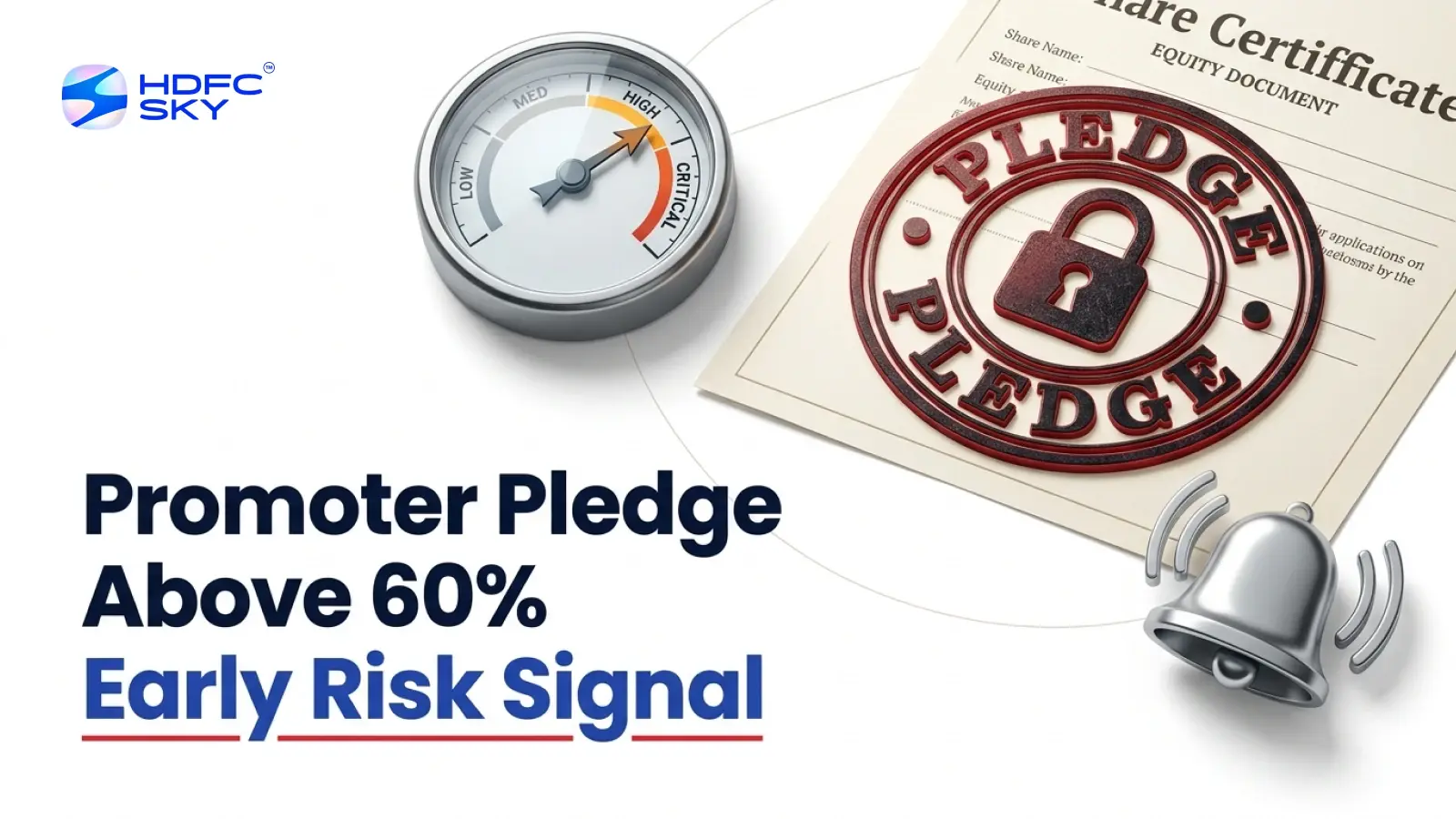
Many Indian investors closely track earnings, price charts, and news flow, but they often ignore promoter behaviour. One of the most important hidden signals is promoter pledging, which can quietly build risk before a stock falls sharply. When the promoter pledge crosses levels like 60%, it often signals financial stress or liquidity pressure. SEBI already discloses this data, but most retail investors overlook it. This blog explains what it means and why it matters.
What is Promoter Pledging?
Promoter pledging happens when company promoters use their shares as collateral to borrow money. Instead of selling their stake, they pledge it to banks or financial institutions to raise funds.
This helps promoters get liquidity while still keeping ownership of the company. However, it comes with risk. If the stock price falls, lenders may ask for more collateral. In extreme cases, they may sell pledged shares in the market.
SEBI requires companies to disclose pledged shares every quarter. The pledging ratio is simple: pledged shares divided by total promoter holding. This makes it easy for investors to track, even if they often ignore it.
Why Promoter Pledge Above 60% is a Critical Threshold in Indian Markets
Once promoter pledging crosses high levels like 60%, it signals deep financial dependency on stock value.
- High Financial Stress Indicator
High pledging often shows that promoters depend heavily on borrowed money. It may indicate weak cash flow or rising debt within the promoter group. This creates pressure on the overall business structure. - Increased Margin Call Risk
When pledge levels are very high, even a small fall in stock price can trigger margin calls. Lenders may force promoters to add more collateral or sell shares, increasing pressure on the stock. - Loss of Market Confidence
Investors view high pledging as a governance concern. Institutional investors often reduce exposure when pledge levels rise. This can lead to valuation compression even before company fundamentals change.
Also Read: How to read a credit rating downgrade outlook as an early stock risk signal — before the downgrade
How High Promoter Pledge Impacts Stock Prices
The real danger of high pledging is not just the number itself, but the chain reaction it creates in the market.
- Forced Selling Pressure
When promoters fail to meet margin requirements, lenders sell pledged shares. This sudden selling increases supply and puts pressure on stock prices. - Price Decline Spiral
A falling stock price can trigger more margin calls. This creates a loop where selling leads to further selling, increasing downward pressure. - Liquidity Shock in Mid & Small Caps
Small and mid-cap stocks suffer the most because they have lower liquidity. Even moderate selling can cause sharp price drops. - Retail Investor Panic
Retail investors often react late. When they start selling, it adds more pressure and increases volatility in the stock.
Why Promoters Pledge Shares Heavily in India
Promoter pledging is not always a negative sign, but in India it often reflects deeper financial needs.
- Raising funds for expansion without reducing ownership: Promoters pledge shares to raise money for business expansion while keeping ownership intact. This helps them fund new projects without selling equity or losing control of the company.
- Repaying group-level debt or refinancing loans: Promoters use pledged shares to raise funds for repaying existing loans or refinancing debt. This helps manage financial pressure and improves liquidity across group companies during repayment cycles.
- Supporting related companies within the promoter group: Promoters pledge shares to support financially weak group companies. This helps maintain stability within the larger business group and ensures smooth operations during stress or uneven performance across subsidiaries.
- Managing temporary cash flow shortages: Promoters use share pledging to handle short-term cash needs. This helps cover operational expenses, supplier payments, or urgent obligations without disturbing ongoing business activities or long-term investment plans.
- High leverage in family-owned or mid-cap companies: In many family-run or mid-cap firms, promoters already carry high debt. They pledge shares to raise funds, increasing financial risk if stock prices fall or market conditions worsen.
Early Warning Signs Before Pledge Becomes Dangerous
Investors should not wait until pledge levels reach 60%. Warning signs often appear earlier.
- Rapid increase in pledged shares every quarter
- Continuous decline in promoter holding
- Rising debt levels in company or group companies
- Weak or inconsistent operating cash flows
- Frequent loan restructuring or refinancing news
Real Market Risk Pattern in India
High promoter pledging has often been linked with weak stock performance in India. Stocks with heavy pledging tend to underperform broader indices over time. In several cases, sudden pledge invocation has triggered sharp crashes.
Small and midcap stocks face higher risk because they lack strong liquidity support. The most dangerous situation occurs when high pledging combines with falling stock prices, creating a fast downward spiral.
Sector-Wise Exposure to High Promoter Pledge Risk
Not all sectors react the same way to high promoter pledging.
- Financial services: Sensitive due to leverage and regulatory exposure
- Real estate: High debt levels often increase pledge usage
- Small-cap manufacturing: Low liquidity increases price risk
- Holding or group companies: Often use internal borrowing structures
- Large-cap companies: Usually more stable with lower pledge levels
Why Retail Investors Miss This Signal
Many retail investors overlook promoter pledging because they focus on price movement and short-term trends.
- They track charts but ignore shareholding data
- They rarely read quarterly disclosures
- They do not fully understand pledge risk
- They become overconfident during bull markets
- They react late to financial updates
How Investors Should Interpret Promoter Pledge Levels
Promoter pledge should be viewed as a risk scale, not a simple yes-or-no signal.
- 0–10%: Normal and safe usage
- 10–30%: Moderate but manageable
- 30–60%: High caution zone, monitor closely
- Above 60%: Critical warning zone requiring strong justification
What Investors Should Do Instead of Ignoring It
Investors should actively track promoter behaviour along with financial performance.
- Track Shareholding Trends
Investors should review quarterly shareholding data to track changes in promoter pledge levels. This helps identify early risk buildup and shows whether promoters are increasing or reducing pledged shares over time. - Compare Pledge Patterns
Investors must study pledge movements across several quarters instead of one data point. This helps reveal whether promoter stress is building gradually or if financial pressure is stabilising or improving. - Check Financial Strength
Investors should analyse debt levels, cash flow, and overall business stability. Strong financials reduce pledge risk, while weak fundamentals often increase the need for promoters to pledge more shares for liquidity. - Avoid Weak Combination Signals
Investors must be careful when rising promoter pledging happens alongside falling stock prices. This combination often signals financial stress and can lead to sharper volatility and deeper price corrections in the market. - Watch Promoter Activity
Investors should closely track promoter buying, selling, and restructuring actions along with pledge changes. Sudden activity often signals internal pressure, financial stress, or strategic shifts within the company structure.
Conclusion
Promoter pledge above 60% is a strong early warning sign in Indian markets. It often reflects financial stress and increases downside risk during volatility. While it does not always signal wrongdoing, investors must study it carefully. Pledge data is public, yet it remains one of the most overlooked indicators.



Open Free Demat Account
Open Free Demat Account
Popular Posts
- 10 Interesting Facts About NSE You Probably Didn’t KnowLast Updated: Sep 30, 2026
- 8-4-3 Rule of SIP - How Does That Work?Last Updated: Jul 30, 2025
- Let's view more exciting Post!
Popular Post from Sky Risk Radar
- When Inventory Piles Up and Sales Stall: The Supply Chain Signal That Precedes Earnings MissesLast Updated: May 29, 2026
- When EBITDA Grows but Cash Flow Doesn’t: The Red Flag That Precedes Most Accounting FraudsLast Updated: May 29, 2026
- The Sudden Auditor Change Signal: What It Means When a Big-4 Firm Walks Away from a Listed CompanyLast Updated: May 29, 2026
- The Insider Selling Cluster: When Three or More Key Executives Sell Shares in the Same QuarterLast Updated: May 29, 2026
- Rising NPAs in a Bank's Quarterly Disclosure: How to Detect Stress Before the Stock ReactsLast Updated: May 29, 2026
- Let's view more exciting Post!
Popular Post from Blogs
- “Bounce Back” Theme Gains Traction in 2026Last Updated: Apr 8, 2026
- 5 Takeaways for Tax Payers from the Budget 2025Last Updated: Jan 29, 2026
- Let’s view more exciting Posts


Invest Anytime, Anywhere


By signing up I certify terms, conditions & privacy policy