Nifty 50
- Nestle₹1,383.2049.20 (3.69%)
- Shriram Finance₹950-38.00 (-3.85%)
- Tata Consumer ₹987.9027.90 (2.91%)
- HDFC Life Insurance ₹544.05-15.95 (-2.85%)
- Infosys₹1,08825.90 (2.44%)
- Bajaj Finance₹957-25.75 (-2.62%)
- Coal India₹416.958.45 (2.07%)
- Bajaj Finserv₹1,710.30-45.40 (-2.59%)
- Tech Mahindra₹1,575.2031.70 (2.05%)
- Mahindra & Mahindra₹2,793.70-70.70 (-2.47%)
- TCS₹2,304.9035.60 (1.57%)
- SBI Life Insurance ₹1,650-37.20 (-2.20%)
- ONGC₹225.502.85 (1.28%)
- Hindalco Industries₹882.50-19.75 (-2.19%)
- Hindustan Unilever₹1,895.5020.00 (1.07%)
- Dr. Reddy's Labs₹1,216-24.00 (-1.94%)
- NTPC₹313.702.70 (0.87%)
- InterGlobe Aviation₹4,718.50-81.90 (-1.71%)
- Adani Enterprises₹2,71722.00 (0.82%)
- Cipla₹1,307.80-21.80 (-1.64%)

- Offerings
- Tools & Platforms
Tools & Calculators
- Open API
- Calculators
- SIP Calculator
- CAGR Calculator
- Compound Interest Calculator
- FD Calculator
- RD Calculator
- EPF Calculator
- Retirement Calculator
- HDFC SIP Calculator
- Mutual Fund Return Calculator
- Lumpsum Calculator
- Step Up SIP Calculator
- ETF SIP Calculator
- Brokerage Calculator
- Equity Margin Calculator
- SWP Calculator
- EMI Calculator
- MTF Calculator
- Margin Pledge Calculator
- Algo Strategy
- Markets
Stocks
F&O
Mutual Funds
- More
Oil Prices Today, August 28, 2026: Brent Crude Slips To $89.2 Per Barrel Amid Iran Uncertainty
Authored By HDFC SKY | Last Modified: Aug 28, 2026 10:25 AM IST
Open Free Demat Account
Open Free Demat Account
Mumbai, August 28: Oil prices slipped on Friday and were headed for a weekly decline, despite lingering tensions between the United States and Iran and uncertainty over the future of diplomatic efforts to ease the conflict.
Brent crude futures fell 0.5% to $89.20 a barrel, while U.S. West Texas Intermediate crude was down 0.5% at $83.12. Both benchmarks were on course to snap a two-week winning streak, with Brent headed for a weekly decline of more than 5% and WTI set to lose more than 4%.

Oil Prices Fall Despite Iran Uncertainty
The decline in crude came despite oil prices settling higher in the previous session after reports that U.S. President Donald Trump’s administration was not interested in returning to the terms of an earlier agreement with Iran.
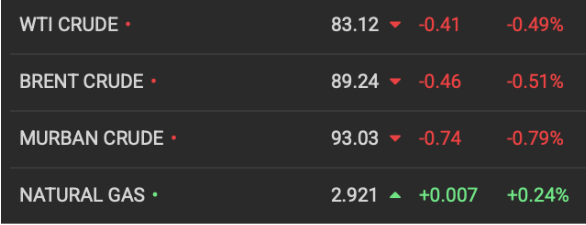
Both contracts eased even as uncertainty loomed over Middle East. Source: Oilprice.com
The report has complicated diplomatic efforts to restart talks between Washington and Tehran. The United States said on Thursday that it was not engaged in negotiations with Iran, despite efforts by other countries to bring the two sides back to the negotiating table.
Washington has also imposed what it described as its toughest sanctions on Iran, while Tehran has condemned the measures as hostile and ineffective.
Despite the geopolitical uncertainty, traders appear increasingly focused on the possibility of an improvement in physical oil flows rather than simply the latest diplomatic statements.
Strait Of Hormuz Remains Key To Oil Market
The Strait of Hormuz remains at the centre of the oil market outlook. The strategically important waterway normally handles a significant share of global oil shipments, but traffic has remained severely disrupted since the conflict began.
Diplomatic efforts to restore normal shipping through the strait have intensified, with Iran working with Oman on a possible shipping corridor. Qatar has also been involved in efforts to persuade Tehran to restore freedom of navigation.
However, shipping volumes remain far below normal levels. Reuters reported that traffic through the strait has fallen to only a fraction of usual levels, keeping the risk of renewed supply disruption firmly on the radar of oil traders.
Any meaningful improvement in shipping flows could put further downward pressure on crude prices by easing concerns over the availability of Middle Eastern supplies. Conversely, a renewed escalation could quickly restore the geopolitical premium in oil.
China Demand Offers Another Bearish Cue
Oil prices have also faced pressure from weaker Chinese crude demand. China has emerged as an increasingly important influence on the global oil market as its crude imports have fallen sharply this year.
Reuters reported that China’s crude imports have declined by about 400 million barrels compared with the previous year, reflecting factors including lower refinery activity, a domestic fuel export ban and growing adoption of electric vehicles.
The reduction in Chinese demand has helped offset some of the supply disruption caused by the Iran conflict. It has also reduced the ability of OPEC+ production decisions to exert their traditional influence over global prices.
OPEC+’s share of global oil output has fallen to about 40% in July from more than 48% before the conflict, according to Reuters calculations based on International Energy Agency data.
What Lower Oil Prices Mean For India
For India, a sustained decline in crude prices would be a positive development. The country imports a large proportion of its crude oil requirements, making energy prices an important factor for inflation, the trade deficit and the rupee.
Lower crude prices can also improve margins for companies with significant fuel or petrochemical input costs. Airlines, paints, chemicals, tyres and other fuel-intensive industries could benefit if the decline in oil prices persists.
At the same time, weaker crude prices could weigh on upstream oil producers because lower benchmark prices can reduce realisations. Refiners may also see the impact depend on changes in refining margins and the relative movement of crude and product prices.
For Indian equities, therefore, the latest decline in oil prices provides some relief against the broader global risk backdrop. However, the benefit could prove fragile as long as the Strait of Hormuz remains disrupted and the Iran-U.S. standoff continues.
Geopolitical Risks Keep Oil Volatile
The oil market is also being influenced by wider geopolitical tensions. Russia has warned that it could target British military assets in response to Ukrainian attacks involving British-supplied long-range missiles, although Trump has played down concerns about a broader confrontation involving NATO.
For now, the balance between improving diplomatic prospects, weaker Chinese demand and disrupted Middle Eastern supplies is keeping crude prices volatile.
A sustained reopening of the Strait of Hormuz would likely reinforce the recent downward trend in oil prices. But any breakdown in diplomacy or fresh disruption to shipping could quickly reverse the move, making geopolitical developments the key risk for crude markets in the near term.
Source
- oilprice.com
Disclaimer
If you have any concerns, questions, or wish to point out any discrepancies in our content, please feel free to write to us at content@hdfcsec.com.
Please Note: The information shared is intended solely for informational purposes and does not make any investment recommendations
HDFC SKY, one of India’s most trusted trading platforms, has been recognized with the Next-Gen Digi Content Awards 2025–26.
Disclaimer
At HDFC SKY*, we take utmost care and due diligence in curating and presenting news and market-related content. However, inadvertent errors or omissions may occasionally occur.
If you have any concerns, questions, or wish to point out any discrepancies in our content, please feel free to write to us at content@hdfcsec.com.
Please Note: The information shared is intended solely for informational purposes and does not make any investment recommendations.
HDFC SKY from HDFC Securities, one of most trusted trading platforms in India, has been recognized with the *Next-Gen Digi Content Awards 2025-26.
 Join Us
 Add as preferred source on Google


More Business News









Open Free Demat Account
Open Free Demat Account











Invest Anytime, Anywhere


By signing up I certify terms, conditions & privacy policy