Nifty 50
- Coal India₹426.4511.75 (2.83%)
- HCL Technologies₹1,258-23.00 (-1.80%)
- Titan Company₹4,961.5086.50 (1.77%)
- Tech Mahindra₹1,544.30-14.20 (-0.91%)
- Dr. Reddy's Labs₹1,21617.70 (1.48%)
- Infosys₹1,029.30-9.20 (-0.89%)
- Adani Ports₹1,806.9019.80 (1.11%)
- Grasim Industries₹3,138.70-27.30 (-0.86%)
- HDFC Bank₹747.558.05 (1.09%)
- Max Healthcare₹1,058.70-7.90 (-0.74%)
- Jio Financial ₹232.432.46 (1.07%)
- ONGC₹234.06-1.57 (-0.67%)
- Asian Paints₹2,463.6023.30 (0.95%)
- Cipla₹1,377.70-8.40 (-0.61%)
- HDFC Life Insurance ₹564.505.10 (0.91%)
- Hindalco Industries₹976.50-4.70 (-0.48%)
- Maruti Suzuki₹12,262109.00 (0.90%)
- Bajaj Auto₹11,409-51.00 (-0.45%)
- Adani Enterprises₹2,997.3022.30 (0.75%)
- TCS₹2,120.40-8.30 (-0.39%)

- Offerings
- Tools & Platforms
Tools & Calculators
- Open API
- Calculators
- SIP Calculator
- CAGR Calculator
- Compound Interest Calculator
- FD Calculator
- RD Calculator
- EPF Calculator
- Retirement Calculator
- HDFC SIP Calculator
- Mutual Fund Return Calculator
- Lumpsum Calculator
- Step Up SIP Calculator
- ETF SIP Calculator
- Brokerage Calculator
- Equity Margin Calculator
- SWP Calculator
- EMI Calculator
- MTF Calculator
- Margin Pledge Calculator
- Algo Strategy
- Markets
Stocks
F&O
Mutual Funds
- More
Oil Prices Today, September 22, 2026: Brent Rises 1% to $101.4; WTI Gains 0.8% to $93.12 Ahead of US-Iran Talks
Authored By HDFC SKY | Published at: Sep 22, 2026 09:37 AM IST
Open Free Demat Account
Open Free Demat Account
Mumbai, September 22: Oil prices climbed on Tuesday, recovering some ground after a sharp decline in the previous session, as investors assessed the possibility of diplomatic progress between the United States and Iran. Brent crude futures rose 1% to $101.4 a barrel, while US West Texas Intermediate (WTI) crude futures gained 0.8% to $93.12 a barrel.
The rebound came as traders remained focused on developments around potential US-Iran talks at the United Nations General Assembly this week. Any signs of progress towards a diplomatic understanding could ease concerns over supply disruptions and put downward pressure on crude prices, while a breakdown in talks could keep geopolitical risk elevated.

Brent, WTI Recover After Sharp Fall
The rise in oil prices followed a decline of more than 3% in the previous session, when crude came under pressure on expectations that diplomatic engagement could help reduce tensions in the Middle East.
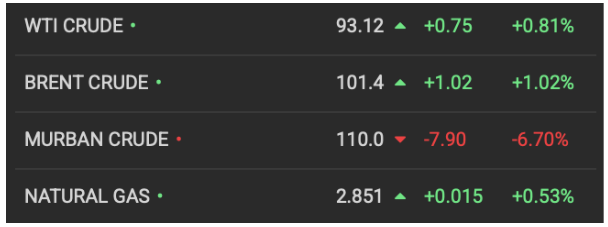
Both contracts rose after falling in the previous session. Source: oilprice.com
The latest recovery was relatively modest compared with Monday’s sell-off, suggesting that investors remained cautious about the outlook for the market. Traders continued to weigh the possibility of additional supplies returning to global markets against the risk of further disruption in a region that remains critical to crude flows.
Brent, the international benchmark, remained above the $100-a-barrel level despite the recent volatility. WTI, the US benchmark, traded below Brent, with both contracts continuing to respond sharply to geopolitical headlines.
Also Read: How To Invest In Crude Oil
US-Iran Talks in Focus
The possibility of a meeting between US President Donald Trump and Iranian President Masoud Pezeshkian has emerged as an important factor for oil markets this week. Pezeshkian is expected to attend the UN General Assembly in New York, where diplomatic efforts involving the two countries could gain momentum.
Trump has indicated that he would be willing to meet the Iranian president, while Tehran has set conditions for returning to negotiations. Investors are closely monitoring the developments because any diplomatic breakthrough could reduce the geopolitical risk premium embedded in crude prices.
At the same time, uncertainty surrounding the outcome of potential talks means traders remain reluctant to make aggressive bets on the direction of prices. Oil markets have become particularly sensitive to headlines involving Iran because of the country’s importance to global energy supplies and its proximity to key shipping routes.
Middle East Supply Risks Remain
Despite the prospect of diplomatic engagement, supply risks across the Middle East remain. Attacks involving Iran-backed Houthi forces have added to concerns about the security of energy shipments through the region.
Saudi Arabia has increased crude exports through the Strait of Hormuz after attacks disrupted some shipments, while China has privately urged Tehran to help curb Houthi attacks, according to sources cited by Reuters.
The Strait of Hormuz remains a critical chokepoint for global energy markets, making developments in and around the waterway particularly important for crude prices. Any prolonged disruption to shipping could tighten supplies and increase the risk premium on oil.
What It Means For India
The movement in crude prices remains particularly important for India, which relies heavily on imports to meet its oil requirements. A sustained increase in international crude prices can raise the country’s import bill and put pressure on the trade balance, while also affecting inflation and costs for businesses.
For Indian equity markets, oil prices are therefore an important macroeconomic cue. Higher crude can weigh on sentiment because of its potential impact on inflation, the current account and corporate input costs. Conversely, a sustained decline in oil prices could provide some relief to oil-importing sectors and the broader economy.
The latest rise in Brent and WTI comes despite the sharp fall in the previous session, leaving the direction of crude prices dependent largely on the next set of geopolitical developments. Investors will continue to track US-Iran diplomatic signals, developments around regional shipping routes and any indications of changes in global oil supply.
With Brent trading around $101 a barrel, crude remains a key trigger for financial markets, particularly as investors assess whether diplomatic efforts can reduce geopolitical risks or whether continued tensions will keep a premium embedded in oil prices.
Source
- oilprice.com
Disclaimer
At HDFC SKY*, we take utmost care and due diligence in curating and presenting news and market-related content. However, inadvertent errors or omissions may occasionally occur.
If you have any concerns, questions, or wish to point out any discrepancies in our content, please feel free to write to us at content@hdfcsec.com.
Please Note: The information shared is intended solely for informational purposes and does not make any investment recommendations.
HDFC SKY from HDFC Securities, one of most trusted trading platforms in India, has been recognized with the *Next-Gen Digi Content Awards 2025-26.
 Join Us
 Add as preferred source on Google


More Business News




Open Free Demat Account
Open Free Demat Account









Invest Anytime, Anywhere


By signing up I certify terms, conditions & privacy policy