Nifty 50
- Tech Mahindra₹1,790140.00 (8.48%)
- InterGlobe Aviation₹4,686.90-91.40 (-1.91%)
- TCS₹2,465115.00 (4.89%)
- BSE₹3,363-65.00 (-1.90%)
- Infosys₹1,161.2051.20 (4.61%)
- Max Healthcare₹846-12.00 (-1.40%)
- Bharti Airtel₹1,90551.00 (2.75%)
- Tata Consumer ₹978.90-12.55 (-1.27%)
- Mahindra & Mahindra₹2,920.9059.20 (2.07%)
- Jio Financial ₹216.25-2.76 (-1.26%)
- Bajaj Finance₹98115.75 (1.63%)
- ONGC₹222-2.64 (-1.18%)
- Hindalco Industries₹90814.15 (1.58%)
- Bharat Electronics₹376.85-3.55 (-0.93%)
- HCL Technologies₹1,38020.00 (1.47%)
- Nestle₹1,265.50-10.30 (-0.81%)
- JSW Steel₹1,216.4016.00 (1.33%)
- Adani Enterprises₹2,680.90-19.10 (-0.71%)
- Grasim Industries₹2,92034.10 (1.18%)
- Bajaj Finserv₹1,720-12.00 (-0.69%)

- Offerings
- Tools & Platforms
Tools & Calculators
- Open API
- Calculators
- SIP Calculator
- CAGR Calculator
- Compound Interest Calculator
- FD Calculator
- RD Calculator
- EPF Calculator
- Retirement Calculator
- HDFC SIP Calculator
- Mutual Fund Return Calculator
- Lumpsum Calculator
- Step Up SIP Calculator
- ETF SIP Calculator
- Brokerage Calculator
- Equity Margin Calculator
- SWP Calculator
- EMI Calculator
- MTF Calculator
- Margin Pledge Calculator
- Algo Strategy
- Markets
Stocks
F&O
Mutual Funds
- More
Dow Jones Sheds 113 Points, Nasdaq Flat as Sticky 3.7% PCE Inflation Reinforces Fed Rate Hike Bets
Authored By HDFC SKY | Published at: Aug 27, 2026 08:47 AM IST
Open Free Demat Account
Open Free Demat Account
Mumbai, Aug 27: U.S. equities closed largely unchanged on Wednesday as hotter-than-expected inflation data reinforced expectations for tighter monetary policy, while investors adopted a cautious stance ahead of Federal Reserve Chair Kevin Warsh’s Jackson Hole speech.
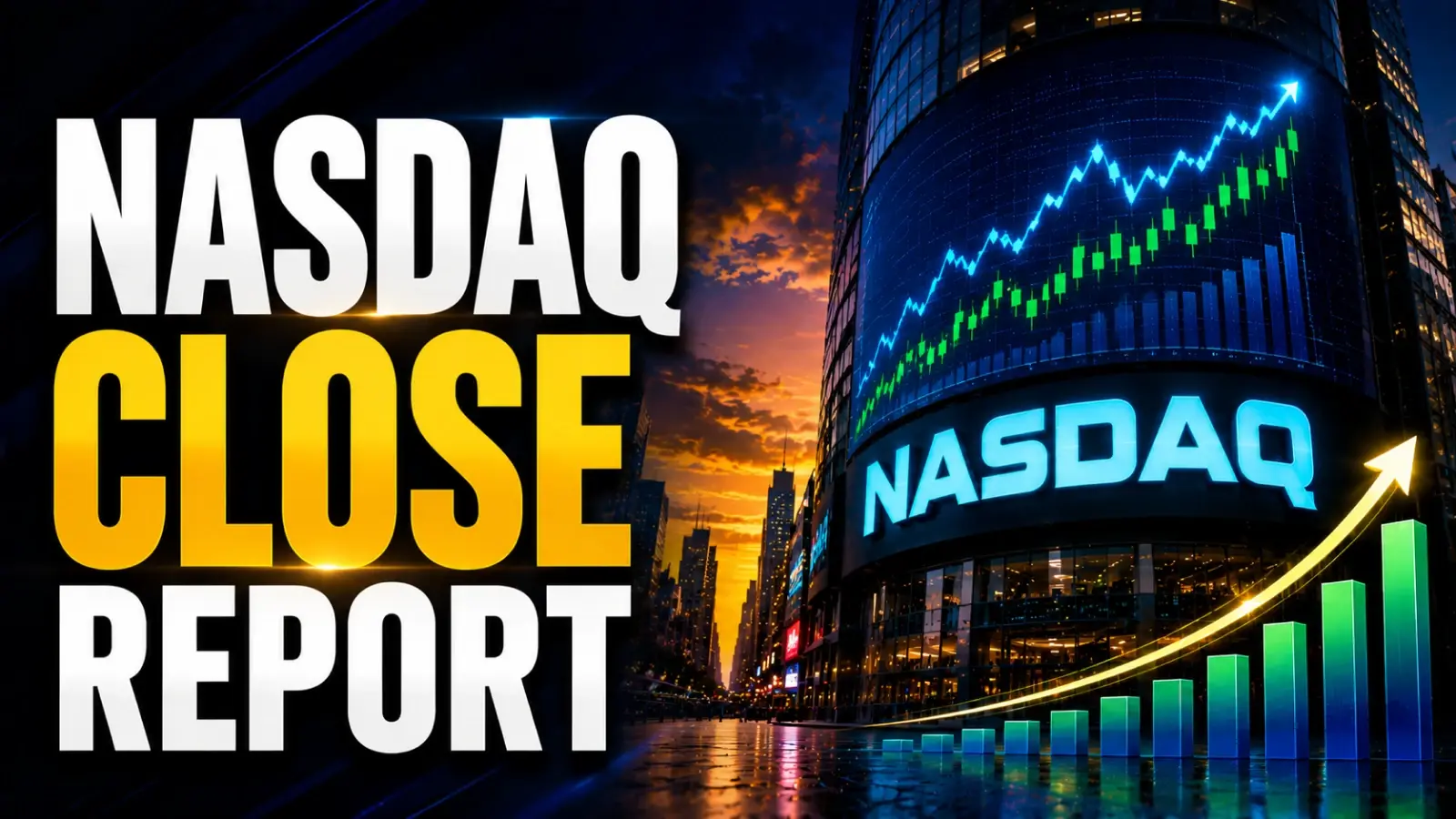
The Dow Jones Industrial Average declined 113.52 points, or 0.21%, to close at 53,463.88. The S&P 500 slipped 1.58 points, or 0.02%, to settle at 7,675.70. The Nasdaq Composite fell 21.10 points, or 0.08%, to finish at 26,130.20.
The indices opened lower, with the S&P 500 down 0.1% and the Nasdaq Composite off 0.2% at the bell, reflecting a cautious start as investors weighed the inflation data against expectations for future growth.

Dow Jones Industrial Average Snaps Three-Session Winning Streak
The Dow Jones Industrial Average opened at 53,547.68 and traded within a day range of 53,379.40 to 53,639.75. The index’s 52-week range stands at 44,948.16 to 54,744.33. Among the 30 components, Caterpillar (CAT) rose 1.29% and Honeywell (HON) surged 2.31%, while Merck (MRK) tumbled 2.15% and Goldman Sachs (GS) fell 1.73%. The index snapped its three-session winning streak, reflecting the broader market’s indecision. Volume stood at 410,537,914 shares.
S&P 500 Holds Near Flatline as Industrials Gain and Healthcare Weighs
The S&P 500 opened at 7,666.88 and moved between an intraday low of 7,657.41 and a high of 7,690.73. Its 52-week range is 6,316.91 to 7,816.70. The Industrials sector was the top performer, gaining 1.07%, led by transportation and freight companies such as C.H. Robinson Worldwide which surged 5.62%, while trucking firm FedEx Freight Holding advanced 3.5%.
Conversely, Health Care was the worst-performing sector, falling 1.00%, pressured by losses in major pharmaceutical names including Merck, Johnson & Johnson, and Eli Lilly. Volume for the session totalled 2,353,911,000 shares.
Nasdaq Composite Dips 0.08% as Technology Gains Offset by Broader Weakness
The tech-heavy Nasdaq Composite opened at 26,099.58 and traded within a day range of 26,021.63 to 26,189.81. Its 52-week range is 20,690.25 to 27,190.21. While the Information Technology sector advanced 0.98%, the index’s decline was driven by weakness in communication services and consumer discretionary stocks. Advancers outnumbered decliners on the Nasdaq by a 1.76-to-1 ratio, indicating underlying breadth was more positive than the index movement suggested. Volume for the session stood at 6,113,897,000 shares.
Russell 2000 Edges Lower as Small-Cap Stocks Show Resilience
The Russell 2000 Index declined 4.12 points, or 0.14%, to close at 3,005.90. It opened at 3,005.52 and traded between 2,999.91 and 3,014.88. The index’s 52-week range is 2,303.46 to 3,069.71. The S&P 100 Index fell 0.33% to 3,775.16, reflecting weakness in the largest mega-cap stocks.
The Dow Jones Composite Average inched up 0.056% to 16,914.60, while the Dow Jones Transportation Average gained 0.59% to 21,583.06 and the Dow Jones Utility Average rose 0.48% to 1,095.11, indicating defensive rotation into utilities.
Philadelphia Semiconductor Index Advances 0.20% Despite Sector Caution
The PHLX Semiconductor Sector Index (SOX) advanced 23.20 points, or 0.20%, to close at 11,611.24. The index opened at 11,564.44 and traded between 11,471.03 and 11,632.44. Its 52-week range stands at 5,503.12 to 14,655.29.
The NYSE Composite slipped 26.06 points, or 0.11%, to 24,742.59, opening at 24,768.65 and trading between 24,726.51 and 24,819.29. The S&P MidCap 400 gained 0.61% to 3,822.80, and the S&P SmallCap 600 rose 0.052% to 1,782.95, indicating relative strength in mid and small-cap segments compared to large-cap benchmarks.
Also Read: How to Invest in the US Stocks From India
PCE Inflation Holds at 3.7% in July, Exceeding Expectations and Keeping Fed Hike Bets Alive
The Personal Consumption Expenditures (PCE) price index, the Federal Reserve’s preferred inflation gauge, rose 3.7% year-over-year in July, matching June’s reading but exceeding economists’ forecast of 3.6%. On a monthly basis, the index rose 0.2%, a turnaround from June’s 0.1% decline.
Core PCE, which excludes food and energy, rose 3.3% annually and 0.2% monthly, in line with expectations. This marks the 65th consecutive month that inflation has remained above the Fed’s 2% target. Following the data release, markets priced in a 40.1% probability of a 25-basis-point Fed rate hike in September, up from approximately 36% before the release.
US GDP Growth Maintains 1.5% Annualised Pace in Q2 on Consumer Spending Strength
The U.S. economy grew at an annualised rate of 1.5% in the second quarter, unchanged from the first estimate but down from 2.1% growth in the first quarter, according to the Commerce Department’s second estimate. Consumer spending, which accounts for roughly 70% of economic activity, rose 3.4%, supported by resilient household demand despite elevated inflation. Business investment excluding housing jumped 8.5%, driven by the AI investment boom, while imports surged 12.5%, subtracting 1.64 percentage points from GDP growth. An alternative measure of underlying economic growth, which strips out volatile components, accelerated to 4.2%, suggesting the economy’s fundamental strength remains intact.
US Corporate Profit Margins Widen to Record 19.4% in Second Quarter
US corporate profit margins widened to a record 19.4% in the second quarter, up from 18.2% in the previous quarter, as after-tax profits rose nearly 10%, according to Bureau of Economic Analysis data. Strong earnings, price increases and resilient consumer spending helped companies protect margins despite higher input costs and slower wage growth.
The robust profit growth is also supporting business investment, with nonresidential fixed investment rising at an annualised 8.5% pace in the quarter. The margin measure covers profits generated within the U.S. and excludes overseas earnings of U.S. companies.
US Treasury Yields Edge Higher as Inflation Data Reinforces Rate Hike Expectations
US Treasury yields edged higher on Wednesday as the sticky PCE data reinforced expectations for tighter monetary policy. The 2-year Treasury yield rose to 4.218%, while the 10-year yield climbed to 4.655%, up three basis points from Tuesday’s close. The 30-year bond yield also advanced, reflecting the market’s adjustment to the possibility of higher-for-longer interest rates.
Yields had hit multiyear highs last week, with the 30-year rate reaching levels not seen in nearly 20 years. The yield curve remained inverted, with the 2-year yield trading above the 10-year yield, a signal that has historically preceded economic recessions. Traders now price a 40% chance of a September Fed rate hike, rising to 75% by December.
US Dollar Index Climbs 0.28% to 99.19 as Fed Rate Hike Odds Improve
The US Dollar Index (DXY) rose 0.28% to 99.19 following the inflation data, as expectations for a September rate hike strengthened. The euro weakened 0.16% to $1.165, while the Japanese yen traded at 159.406 per dollar, up 0.19%. The British pound also declined against the dollar, tracking the broader dollar strength.
A stronger dollar typically pressures multinational corporate earnings as overseas revenues become less valuable when converted back to dollars. The greenback’s advance also weighed on commodity prices, particularly gold and oil. The dollar’s strength reflects the market’s assessment that the Fed may need to maintain a restrictive policy stance for longer.
Gold Falls 0.85% to $4,618.57 as Rate Hike Prospects Strengthen
Gold prices fell 0.85% to $4,618.57 per ounce as the firmer dollar and elevated Treasury yields diminished the appeal of the non-yielding asset. The precious metal, which had recently topped $4,600 an ounce, remains near its highest level in more than three months but faced pressure from the inflation data.
Spot gold declined to $4,611.79 an ounce, while US gold futures declined 0.6%. The stronger dollar, which rose 0.2% on the day, also pressured bullion. Traders now see a 40% chance of a September rate hike, up from 36% before the data. Silver prices also declined, tracking gold’s movement lower, while copper remained under pressure from demand concerns.
Oil Prices Decline Over 1% on Iran-Oman Strait of Hormuz Revenue Sharing Agreement
Brent crude futures fell 1.12% to $87.59 per barrel, while West Texas Intermediate (WTI) crude declined 0.85% to $81.66 per barrel after Iran and Oman announced an agreement to share revenue from the Strait of Hormuz. The development eased some geopolitical risk premium, though traffic through the strategic waterway remained subdued.
The agreement came as Iran’s Revolutionary Guard confirmed a deal on revenue sharing, though a full reopening of the strait remains conditional on the end of the US naval blockade. US natural gas futures also rose 2.4% to $2.837 per million British thermal units, reaching a one-week high on warmer forecasts for September boosting cooling demand expectations.
Also Read: How to Invest in S&P 500 Stocks Through Index Funds
CBOE Volatility Index Drops 0.91% to 15.31 as Market Calm Prevails
The CBOE Volatility Index (VIX), often referred to as Wall Street’s fear gauge, fell 0.91% to close at 15.31, indicating relatively subdued market anxiety despite the day’s mixed performance. The VIX opened at 15.65 and traded within a range of 15.27 to 15.74. The index’s 52-week range stands at 13.38 to 35.30.
The decline in volatility suggests that investors are not anticipating significant market turbulence in the immediate term. The CBOE Nasdaq Volatility Index (VXN) and the CBOE S&P 500 3-Month Volatility Index (VIX3M) also remained at subdued levels, reflecting the market’s wait-and-see approach ahead of key events.
S&P 500 Sector Performance: Industrials and Technology Lead, Healthcare and Defensives Lag
Eleven sectors of the S&P 500 showed mixed performance, with five sectors closing in positive territory. Industrials led with a gain of 1.07%, driven by strength in transportation and freight companies as oil prices declined, reducing input costs. Information Technology advanced 0.98%, supported by gains in select software and hardware stocks. Financials rose 0.42% as banks benefited from the steepening yield curve, which improves net interest margins.
Energy gained 0.13% despite the decline in oil prices. On the losing side, Health Care declined 1.00% as pharmaceutical and medical device stocks came under pressure from regulatory concerns. Consumer Staples fell 0.74%, and Communication Services dropped 0.68% on sector-specific weakness. Utilities declined 0.45%, Real Estate fell 0.32%, and Consumer Discretionary dropped 0.22%. Materials ended the day flat.
Semiconductor Stocks Show Mixed Performance Amid Sector Caution
Semiconductor stocks displayed mixed performance on Wednesday, reflecting broader uncertainty in the technology sector. While the PHLX Semiconductor Index managed a modest gain of 0.20%, the group’s performance was uneven.
Memory chip makers and optical component suppliers showed relative strength, while some larger integrated device manufacturers faced pressure. The sector’s mixed performance comes against the backdrop of sustained AI-related investment, though concerns about valuation and demand sustainability continue to linger.
Financial Stocks Advance as Yield Curve Steepens
Financial stocks advanced 0.42% on Wednesday, benefiting from the steepening yield curve as the 2-year and 10-year Treasury yields moved higher. Banks typically benefit from a steeper yield curve as it improves their net interest margins, the difference between what they earn on loans and pay on deposits.
Regional banks and money centre banks both participated in the advance, though gains were tempered by concerns about the impact of higher rates on loan demand and credit quality.
Energy Stocks Gain Marginally Despite Oil Price Decline
Energy stocks managed a modest gain of 0.13% despite the decline in oil prices following the Iran-Oman agreement. The sector’s resilience reflects the view that energy fundamentals remain supportive, with global supply constraints and robust demand providing a floor for prices. Exploration and production companies showed relative strength, while refining stocks were mixed.
Also Read : US Stock Market Timings
Geopolitical Developments Ease Oil Supply Fears as Iran-Oman Talks Progress
Geopolitical developments contributed to the market’s mixed performance as Iran and Oman restarted talks on managing the Strait of Hormuz. The announcement supported broader risk appetite and contributed to the decline in oil prices.
The market is also monitoring elevated oil prices, government debt and inflation expectations, which recently pushed Treasury yields to multi-year highs. Investors are now looking to Federal Reserve Chair Kevin Warsh’s Jackson Hole speech for further clues on policy. The Iran-Oman agreement, while easing some supply concerns, remains conditional, and the situation continues to be monitored for further developments.
Federal Reserve Policy in Focus as Jackson Hole Speech Nears
Investors are eyeing Federal Reserve Chair Kevin Warsh’s speech on Friday at the Fed’s annual symposium in Jackson Hole, Wyoming, for clues on the central bank’s policy direction. The speech comes after the Fed kept rates at 3.50%-3.75% in July and with inflation remaining stubbornly above the 2% target for the 65th consecutive month.
Markets are pricing in a 40% probability of a September rate hike and a 75% probability by December. The inflation outlook remains complicated by tariff-related price pressures and the lingering impact of geopolitical tensions on energy costs. Some analysts have noted Warsh could remain tight-lipped ahead of the Fed’s monetary policy decision in September, potentially leaving markets without clear guidance.
The July PCE inflation reading reinforces expectations that the Federal Reserve may maintain a restrictive monetary policy stance, with markets pricing in a 40% probability of a September rate hike. The 10-year Treasury yield’s movement towards 4.70% warrants attention as it influences borrowing costs and equity valuations. The dollar’s strength, supported by sticky inflation, may continue to pressure commodity prices and multinational earnings. The Jackson Hole symposium on Friday is a key event for assessing the Fed’s policy direction. The mixed sector performance, with Industrials and Technology leading gains while Healthcare lags, reflects selective market participation.
Source
- https://www.nasdaq.com/
- spglobal.com/spdji/en/indices/equity/sp-500/
- https://www.dowjones.com/
- https://www.spglobal.com/spdji/en/indices/equity/dow-jones-industrial-average/
- https://www.spglobal.com/spdji/en/indices/equity/sp-500/
- https://www.nasdaq.com/market-activity/index/comp
- https://www.nasdaq.com/market-activity/quotes/nasdaq-ndx-index
- https://www.spglobal.com/spdji/en/indices/equity/sp-100/
- https://www.lseg.com/en/ftse-russell/indices/russell-us
- https://www.nyse.com/index
- https://www.nyse.com/index
- https://www.spglobal.com/spdji/en/indices/equity/dow-jones-transportation-average/
- https://www.spglobal.com/spdji/en/indices/equity/dow-jones-utility-average/
- https://www.spglobal.com/spdji/en/indices/equity/dow-jones-composite-average/
- https://www.nasdaq.com/market-activity/index/sox
- https://www.cboe.com/tradable_products/vix/
Disclaimer
If you have any concerns, questions, or wish to point out any discrepancies in our content, please feel free to write to us at content@hdfcsec.com.
Please Note: The information shared is intended solely for informational purposes and does not make any investment recommendations
HDFC SKY, one of India’s most trusted trading platforms, has been recognized with the Next-Gen Digi Content Awards 2025–26.
Disclaimer
At HDFC SKY*, we take utmost care and due diligence in curating and presenting news and market-related content. However, inadvertent errors or omissions may occasionally occur.
If you have any concerns, questions, or wish to point out any discrepancies in our content, please feel free to write to us at content@hdfcsec.com.
Please Note: The information shared is intended solely for informational purposes and does not make any investment recommendations.
HDFC SKY from HDFC Securities, one of most trusted trading platforms in India, has been recognized with the *Next-Gen Digi Content Awards 2025-26.
 Join Us
 Add as preferred source on Google


More International News








Open Free Demat Account
Open Free Demat Account











Invest Anytime, Anywhere


By signing up I certify terms, conditions & privacy policy