Nifty 50
- Dr. Reddy's Labs₹1,311.5082.00 (6.67%)
- Shriram Finance₹820.30-44.70 (-5.17%)
- BSE₹3,367.80137.00 (4.24%)
- Tata Consumer ₹925.10-38.80 (-4.03%)
- JSW Steel₹1,226.2040.70 (3.43%)
- HDFC Life Insurance ₹516.35-7.40 (-1.41%)
- Eternal₹327.5010.10 (3.18%)
- Bajaj Finance₹918.10-10.85 (-1.17%)
- Max Healthcare₹836.9021.90 (2.69%)
- HDFC Bank₹685.75-7.05 (-1.02%)
- Adani Ports₹1,743.2040.50 (2.38%)
- Nestle₹1,164.10-10.90 (-0.93%)
- Kotak Mahindra Bank₹4409.50 (2.21%)
- Infosys₹1,145.65-8.15 (-0.71%)
- Hindalco Industries₹885.3015.45 (1.78%)
- Tech Mahindra₹1,778.40-11.60 (-0.65%)
- Trent₹2,764.9037.40 (1.37%)
- SBI Life Insurance ₹1,629.90-10.10 (-0.62%)
- Reliance Industries₹1,201.8011.80 (0.99%)
- Asian Paints₹2,293.20-13.80 (-0.60%)

- Offerings
- Tools & Platforms
Tools & Calculators
- Open API
- Calculators
- SIP Calculator
- CAGR Calculator
- Compound Interest Calculator
- FD Calculator
- RD Calculator
- EPF Calculator
- Retirement Calculator
- HDFC SIP Calculator
- Mutual Fund Return Calculator
- Lumpsum Calculator
- Step Up SIP Calculator
- ETF SIP Calculator
- Brokerage Calculator
- Equity Margin Calculator
- SWP Calculator
- EMI Calculator
- MTF Calculator
- Margin Pledge Calculator
- Algo Strategy
- Markets
Stocks
F&O
Mutual Funds
- More
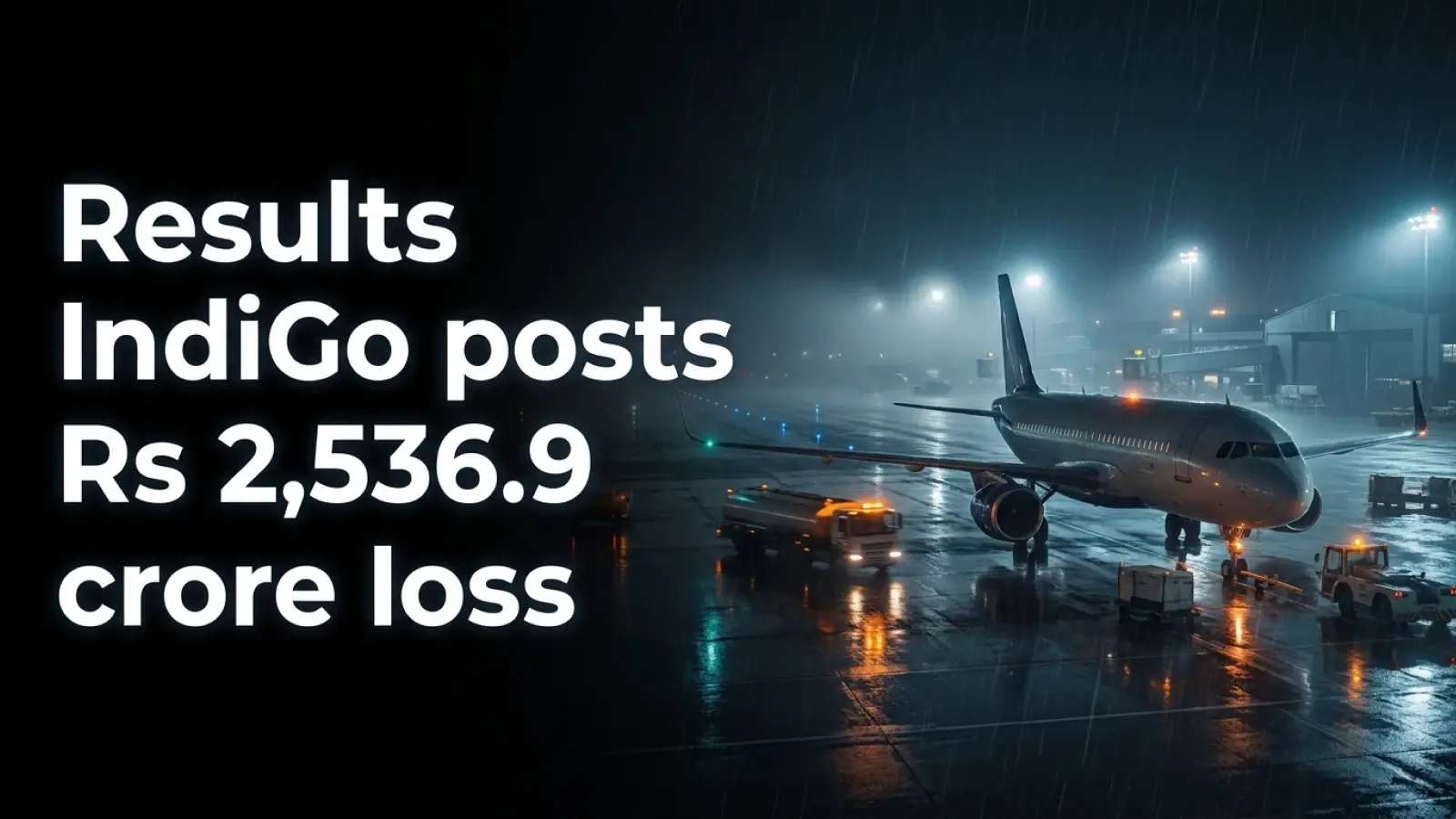
Q4 Results: Indigo Posts Rs 2,536.9 Crore Loss as Soaring Fuel Prices, Weak Rupee Hit Margins
Authored By HDFC SKY | Last Modified: May 29, 2026 05:54 PM IST
Open Free Demat Account
Open Free Demat Account
Mumbai, May 29:InterGlobe Aviation, the parent of IndiGo, slipped into a quarterly loss in the March quarter as surging fuel costs, a weaker rupee and operational disruptions sharply increased expenses for India’s largest airline.
The carrier reported a consolidated net loss of ₹2,536 crore for the fourth quarter, compared with a profit of over ₹3,000 crore a year earlier. Revenue from operations, however, edged up marginally to around ₹22,438 crore, reflecting continued passenger demand despite mounting industry challenges.
The results came amid one of the most turbulent operating periods for the aviation sector in recent years, with airlines grappling with elevated aviation turbine fuel (ATF) prices, geopolitical disruptions in West Asia and continued restrictions linked to Pakistan’s airspace closure for Indian carriers.
IndiGo’s expenses surged nearly 31% during the quarter as fuel prices soared and longer international flight routes increased operating costs. The airline also reported significant foreign exchange losses due to rupee depreciation, which hurt profitability because a large part of its costs — including aircraft leases and maintenance — are dollar-linked.

Stock Market Snapshot
InterGlobe Aviation shares remained under pressure on May 29, 2026, with the stock ending the session lower amid broad-based selling through the day.
As of 3:30 PM IST, the stock was trading at ₹4,420.00, down ₹150.00 or 3.28% from the previous close of ₹4,570.00.
The stock opened at ₹4,550.00 and touched an intraday high of ₹4,555.00 before steadily declining through the session. Selling intensified in the final hour of trade, dragging the stock to an intraday low of ₹4,381.20 before a modest recovery. The InterGlobe Aviation share price remained below the ₹4,450 mark for most of the afternoon session.
Despite the day’s decline, the stock continues to trade above its 52-week low of ₹3,895.20, though it remains significantly below its 52-week high of ₹6,232.50. With a market capitalisation of approximately ₹1.71 lakh crore, InterGlobe Aviation remains India’s largest listed airline by market value.
The sharp fall suggests investors adopted a cautious stance toward aviation stocks, with market participants likely monitoring industry developments, fuel price trends and travel demand indicators ahead of the peak travel season.
Fuel prices, rerouting pressures weigh heavily
The airline industry has been under pressure since rising tensions in the Middle East disrupted key international air corridors and pushed crude oil prices sharply higher. For IndiGo, the impact was amplified because the carrier does not hedge fuel costs, leaving it fully exposed to spikes in ATF prices.
The airline was also forced to take longer routes on several international flights due to regional airspace disruptions, increasing fuel consumption and operational expenses. Analysts noted that these rerouting challenges, combined with higher fuel prices, significantly squeezed margins during the quarter.
In addition, IndiGo had earlier reduced domestic capacity by around 10% following operational disruptions and government scrutiny after widespread flight cancellations in December. Lower capacity growth further weighed on earnings momentum during the quarter.
Despite the weak earnings performance, IndiGo maintained its dominance in the domestic aviation market and continued to benefit from strong passenger traffic trends. The airline has also been focusing on international expansion and premium offerings to improve yields.
Investors watch outlook amid aviation turbulence
Market participants are now closely monitoring management commentary around fuel costs, fares, capacity discipline and international expansion plans as the aviation sector navigates an uncertain environment.
Analysts warned that the near-term outlook for airlines could remain challenging if crude oil prices stay elevated and geopolitical tensions continue to disrupt air routes.
The Street is also assessing how much of the cost inflation airlines can pass on to passengers through higher ticket prices without affecting demand.
Even so, investors remain constructive on IndiGo’s long-term positioning given its dominant market share, strong balance sheet relative to peers and expanding international network. Analysts believe the airline remains better placed than most competitors to withstand prolonged sector turbulence, though profitability may remain volatile in the near term amid elevated fuel and currency pressures.
Source:
- https://nsearchives.nseindia.com/corporate/Indigo1_29052026162550_Outcome_of_BM_29052027.pdf
Disclaimer
If you have any concerns, questions, or wish to point out any discrepancies in our content, please feel free to write to us at content@hdfcsec.com.
Please Note: The information shared is intended solely for informational purposes and does not make any investment recommendations
Disclaimer
At HDFC SKY*, we take utmost care and due diligence in curating and presenting news and market-related content. However, inadvertent errors or omissions may occasionally occur.
If you have any concerns, questions, or wish to point out any discrepancies in our content, please feel free to write to us at content@hdfcsec.com.
Please Note: The information shared is intended solely for informational purposes and does not make any investment recommendations.
HDFC SKY from HDFC Securities, one of most trusted trading platforms in India, has been recognized with the *Next-Gen Digi Content Awards 2025-26.
 Join Us
 Add as preferred source on Google


More Markets News








Open Free Demat Account
Open Free Demat Account











Invest Anytime, Anywhere


By signing up I certify terms, conditions & privacy policy