Nifty 50
- Bharti Airtel₹1,900.608.90 (0.47%)
- Nestle₹1,192.40-31.50 (-2.57%)
- Eternal₹313.250.90 (0.29%)
- Power Grid Corp₹246.35-5.80 (-2.30%)
- ICICI Bank₹1,388.803.80 (0.27%)
- Coal India₹398.25-9.25 (-2.27%)
- Bajaj Finance₹926.900.90 (0.10%)
- SBI Life Insurance ₹1,625.20-35.80 (-2.16%)
- ONGC₹225.790.17 (0.08%)
- Trent₹2,762.30-59.70 (-2.12%)
- Kotak Mahindra Bank₹437.800.00 (0.00%)-
- Max Healthcare₹803.15-16.75 (-2.04%)
- Bharat Electronics₹365-6.20 (-1.67%)
- HDFC Life Insurance ₹531.05-8.60 (-1.59%)
- Hindalco Industries₹878.80-14.05 (-1.57%)
- Asian Paints₹2,283.60-35.80 (-1.54%)

- Offerings
- Tools & Platforms
Tools & Calculators
- Open API
- Calculators
- SIP Calculator
- CAGR Calculator
- Compound Interest Calculator
- FD Calculator
- RD Calculator
- EPF Calculator
- Retirement Calculator
- HDFC SIP Calculator
- Mutual Fund Return Calculator
- Lumpsum Calculator
- Step Up SIP Calculator
- ETF SIP Calculator
- Brokerage Calculator
- Equity Margin Calculator
- SWP Calculator
- EMI Calculator
- MTF Calculator
- Margin Pledge Calculator
- Algo Strategy
- Markets
Stocks
F&O
Mutual Funds
- More
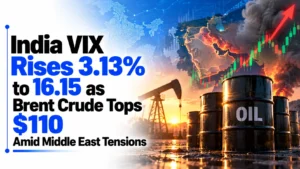
Oil Prices Today: Brent Tops $110 Over Escalating Tensions in Middle East
Authored By HDFC SKY | Published at: Oct 22, 2026 09:37 AM IST

Open Free Demat Account
Open Free Demat Account
Mumbai, October 22: Crude oil prices climbed on Thursday, October 22, as escalating tensions in the Middle East heightened concerns over potential disruptions to global energy supplies. Brent crude futures climbed 1.6% to $110.5 per barrel, while US West Texas Intermediate (WTI) crude gained 1.3% to $98.4 per barrel.
The gains came after fresh attacks by Yemen’s Iran-aligned Houthi militants in Saudi Arabia prompted the United States to order some diplomats and their family members to leave the Kingdom. The developments raised concerns about the security of energy infrastructure and shipping routes across the Gulf, keeping a risk premium in oil prices.

Why Are Crude Oil Prices Rising Today?
The latest gains in crude oil prices followed an escalation in regional hostilities, with Houthi attacks reportedly targeting locations in Saudi Arabia. At least one person was killed and eight others injured in an attack on a civilian airport in Dammam, while a drone strike on a Saudi oil field killed two people, according to reports cited by Reuters.
Both contracts jumped after fresh attacks by Yemen’s Iran-aligned Houthi militants in Saudi Arabia. Source: oilprice.com
The US State Department’s decision to withdraw some personnel and family members from its missions in Saudi Arabia underscored the heightened security concerns. Washington also planned to withdraw family members from several other US missions in the region, US officials told Reuters.
The developments have increased fears that the conflict could spread further and threaten energy production, export facilities and maritime transportation. With the Gulf region a critical source of global crude supplies, any disruption to production or shipping could tighten markets and push prices higher.
Explosions were also reported in Sirik in southern Iran, although Iranian media said the nature and origin of the blasts were unclear. Meanwhile, Iran’s Foreign Minister Abbas Araqchi said Tehran was prepared to defend itself, while President Masoud Pezeshkian said the United States could not expect dialogue while threatening and blockading Iran.
Shipping Risks Add To Supply Concerns
Concerns over maritime security have added to the upward pressure on oil prices. Data from ship-tracking firm Kpler showed at least 18 attacks on vessels over the preceding two weeks.
Analysts at LSEG warned that attacks on tankers had extended beyond the Strait of Hormuz into the Gulf of Oman, putting crude loadings and ship-to-ship transfers supporting regional exports at risk.
The Strait of Hormuz is a crucial passage for global energy trade. Any sustained disruption to shipping through the area could delay deliveries, raise freight and insurance costs, and increase volatility in international crude markets.
For traders, the immediate concern is whether the latest attacks remain limited or develop into a broader disruption affecting oil production and exports across the region.
US Crude Inventories Provide Additional Support
Supply-side data from the United States also supported prices. US crude oil inventories fell by 3.06 million barrels to 412.5 million barrels last week, according to the US Energy Information Administration (EIA).
The decline was substantially larger than the 820,000-barrel draw expected by analysts in a Reuters poll, indicating a tighter balance in the world’s largest oil-consuming market.
However, distillate inventories, which include diesel and heating oil, rose by 1.68 million barrels to 104.3 million barrels during the week. This was contrary to analysts’ expectations for a decline of 1.16 million barrels.
The US administration also announced plans to lend out a portion of its emergency heating oil reserve to help address elevated fuel costs amid shortages linked to the conflicts in Iran and Ukraine.
What Higher Crude Oil Prices Mean For India
For India, which imports a substantial share of its crude oil requirements, a sustained rise in international prices could increase the import bill and put pressure on the rupee. Higher crude prices can also add to domestic inflationary pressures and complicate the outlook for interest rates.
Oil marketing companies could face pressure on marketing margins if retail fuel prices do not adjust in line with international crude costs. Sectors such as aviation, paints, chemicals and logistics could also face higher input expenses, potentially affecting profitability.
Conversely, upstream oil producers may benefit from higher realisations if crude prices remain elevated.
Investors will therefore monitor developments in the Middle East, tanker movements and further US inventory data for cues on the direction of oil prices. Any additional escalation threatening energy infrastructure or shipping routes could keep crude prices volatile and sustain the premium associated with supply risks.
Source:
- Oilprice.com
Disclaimer
 Join Us
 Add as preferred source on Google


More Markets News









Open Free Demat Account
Open Free Demat Account











Invest Anytime, Anywhere


By signing up I certify terms, conditions & privacy policy