Nifty 50
- Tech Mahindra₹1,790140.00 (8.48%)
- InterGlobe Aviation₹4,686.90-91.40 (-1.91%)
- TCS₹2,465115.00 (4.89%)
- BSE₹3,363-65.00 (-1.90%)
- Infosys₹1,161.2051.20 (4.61%)
- Max Healthcare₹846-12.00 (-1.40%)
- Bharti Airtel₹1,90551.00 (2.75%)
- Tata Consumer ₹978.90-12.55 (-1.27%)
- Mahindra & Mahindra₹2,920.9059.20 (2.07%)
- Jio Financial ₹216.25-2.76 (-1.26%)
- Bajaj Finance₹98115.75 (1.63%)
- ONGC₹222-2.64 (-1.18%)
- Hindalco Industries₹90814.15 (1.58%)
- Bharat Electronics₹376.85-3.55 (-0.93%)
- HCL Technologies₹1,38020.00 (1.47%)
- Nestle₹1,265.50-10.30 (-0.81%)
- JSW Steel₹1,216.4016.00 (1.33%)
- Adani Enterprises₹2,680.90-19.10 (-0.71%)
- Grasim Industries₹2,92034.10 (1.18%)
- Bajaj Finserv₹1,720-12.00 (-0.69%)

- Offerings
- Tools & Platforms
Tools & Calculators
- Open API
- Calculators
- SIP Calculator
- CAGR Calculator
- Compound Interest Calculator
- FD Calculator
- RD Calculator
- EPF Calculator
- Retirement Calculator
- HDFC SIP Calculator
- Mutual Fund Return Calculator
- Lumpsum Calculator
- Step Up SIP Calculator
- ETF SIP Calculator
- Brokerage Calculator
- Equity Margin Calculator
- SWP Calculator
- EMI Calculator
- MTF Calculator
- Margin Pledge Calculator
- Algo Strategy
- Markets
Stocks
F&O
Mutual Funds
- More
- What is a Currency Carry Trade?
- Why the US Dollar Matters in Carry Trades
- How Carry Trades Flow Into Indian Equity Markets
- What Happens When the Dollar Strengthens Globally
- Transmission Channels: How the Impact Reaches Indian Stocks
- Sector-Wise Impact in India
- Why India is Highly Sensitive to Carry Trade Cycles
- Historical Pattern in Markets
- Limitations of Linking Carry Trades Directly to Equities
- What Investors Should Watch Instead
- Conclusion
- What is a Currency Carry Trade?
- Why the US Dollar Matters in Carry Trades
- How Carry Trades Flow Into Indian Equity Markets
- What Happens When the Dollar Strengthens Globally
- Transmission Channels: How the Impact Reaches Indian Stocks
- Sector-Wise Impact in India
- Why India is Highly Sensitive to Carry Trade Cycles
- Historical Pattern in Markets
- Limitations of Linking Carry Trades Directly to Equities
- What Investors Should Watch Instead
- Conclusion
How Currency Carry Trades Affect Indian Equity Markets When the Dollar Strengthens Globally
By Aseem Shrivastava | Updated at: Jun 1, 2026 06:58 PM IST
Open Free Demat Account
Open Free Demat Account
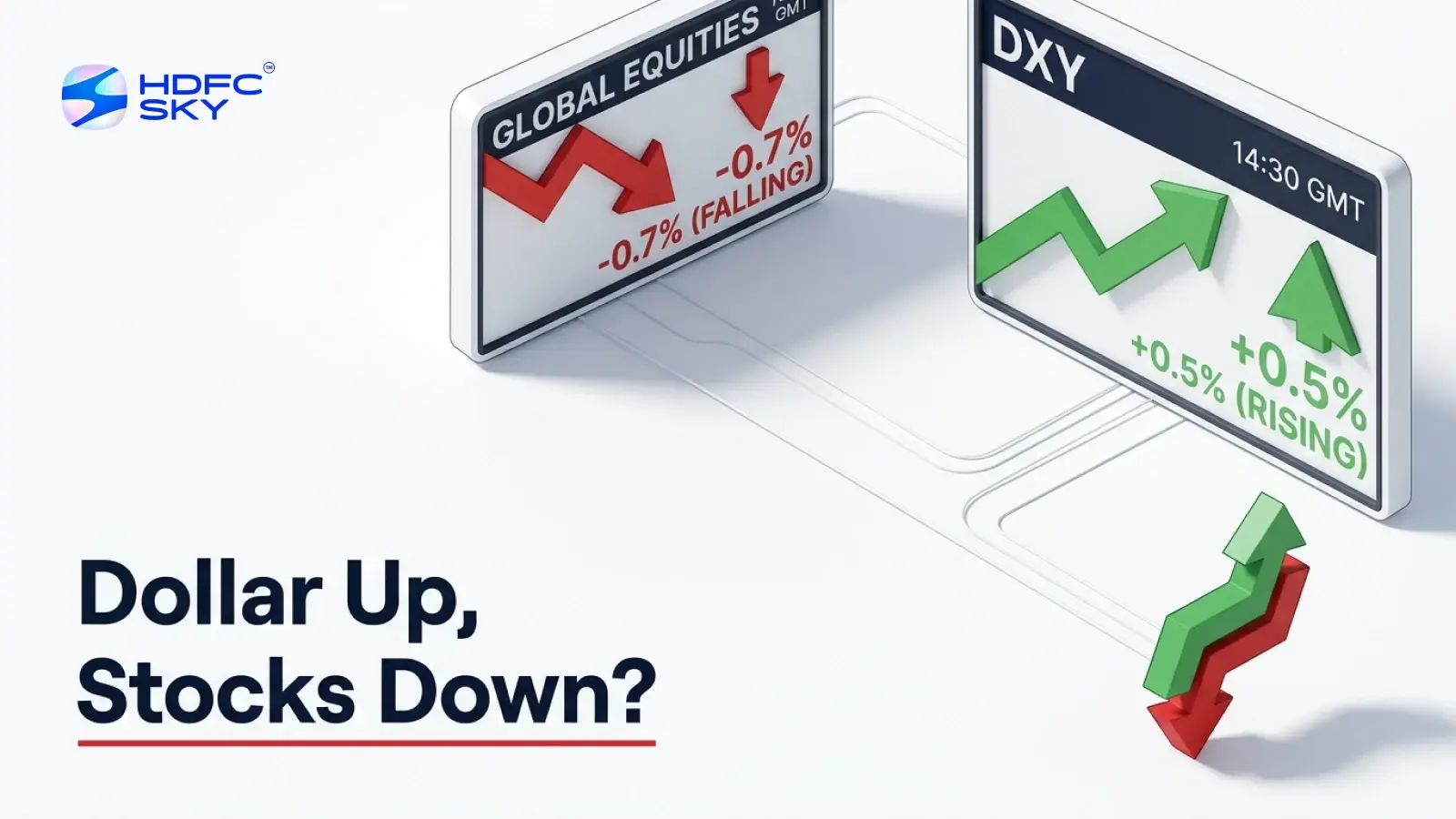
Global markets today move in sync more than ever before, and currency shifts often influence stocks as much as company earnings. One major trigger is the strength of the US dollar, which can quickly change global capital flows. A key mechanism behind these shifts is the currency carry trade. India, as an emerging market, feels these changes strongly. This blog explains how carry trades work and how they shape Indian equity market movements.
What is a Currency Carry Trade?
A currency carry trade is a simple investment strategy used by global investors. They borrow money in a low-interest currency and invest it in a higher-yielding market. The goal is to earn profit from the interest rate difference.
For example, investors may borrow in US dollars or Japanese yen and invest in Indian equities or bonds. If India offers higher returns, the investor earns the spread as profit.
However, this strategy depends on stable currency conditions. It also depends on strong global risk appetite. If markets turn volatile, carry trades can reverse quickly and lead to sudden capital outflows from emerging markets like India.
Also Read: Decoding RBI’s monetary policy statement: the 5 lines that actually move markets
Why the US Dollar Matters in Carry Trades
The US dollar plays a central role in global carry trades because it acts as the world’s main funding currency.
- Dollar as the Global Funding Currency
Most global loans and cross-border investments use US dollars. This makes it the cheapest and most accessible borrowing option during stable periods. - Weak or Stable Dollar Supports Borrowing
When the dollar stays stable or weak, borrowing costs remain low. Investors feel confident and increase carry trade positions. This brings more global money into emerging markets like India. - Strong Dollar Increases Risk And Cost
When the dollar strengthens, borrowing becomes expensive. Investors must repay more in local terms. This reduces the attractiveness of carry trades and forces investors to reduce exposure. - Strong Dollar Tightens Global Liquidity
A rising dollar reduces available global liquidity. Investors become cautious and shift money back to safer assets. This directly affects equity inflows into markets like India. - Direct Impact On Emerging Markets
As liquidity tightens, countries like India see reduced foreign inflows. This often leads to weaker equity performance and higher volatility.
How Carry Trades Flow Into Indian Equity Markets
Carry trade flows reach India through foreign institutional investors and global funds searching for higher returns.
- Increased Foreign Institutional Inflows
Global investors borrow at low rates and invest in Indian equities. This increases demand for stocks and pushes market indices higher. - Liquidity Boost in Equity Markets
When global money enters India, market liquidity improves. Large-cap stocks benefit first as institutional money targets stable companies. - Risk-On Sentiment Strengthens Markets
Carry trades thrive in “risk-on” environments. During such phases, investors feel confident and prefer emerging markets like India. This supports strong upward momentum in equities.
What Happens When the Dollar Strengthens Globally
A strong dollar often reverses carry trade flows and changes investor behaviour in Indian markets.
- Carry Trade Unwinding
Investors close borrowed positions because repayment becomes costly. They exit riskier assets, including Indian equities. - FII Outflows Increase
Foreign institutional investors withdraw funds from Indian markets. This creates selling pressure on major indices like the Nifty and Sensex. - Rupee Depreciation Pressure
As investors exit, demand for dollars rises. The Indian rupee weakens, which reduces foreign returns and increases market stress. - Market Volatility Rises
Lower liquidity leads to sharper price swings. Markets often move sideways or correct in the short term until stability returns.
Transmission Channels: How the Impact Reaches Indian Stocks
The effect of carry trades reaches Indian equities through several connected channels.
- Foreign portfolio investment flows into and out of equities
- Movement in the USD/INR exchange rate
- US Federal Reserve interest rate decisions
- Global commodity prices, especially crude oil
- Overall risk sentiment across emerging markets
Each channel works together and shapes how Indian markets respond to global dollar strength.
Sector-Wise Impact in India
Carry trade cycles do not affect all sectors equally. Some react more strongly than others.
- IT & export sectors: These companies benefit from a weaker rupee, but global demand still plays a bigger role in performance.
- Financials: Banks and financial stocks react strongly to liquidity changes and FII flows.
- FMCG & domestic sectors: These remain relatively stable, but sentiment changes can still affect valuations.
- High-beta stocks: Small-cap and mid-cap stocks face the strongest impact during carry trade unwinds due to higher volatility.
Why India is Highly Sensitive to Carry Trade Cycles
India reacts strongly to global carry trade movements for several structural reasons.
- High dependence on foreign capital inflows for market growth
- Large share of FIIs in equity ownership
- Emerging market status increases sensitivity to global shocks
- Strong link between USD/INR movement and stock market sentiment
- Tight correlation with global liquidity conditions
These factors make India more responsive to global dollar cycles than many developed markets.
Historical Pattern in Markets
Markets often follow a repeatable pattern linked to dollar strength.
Weak dollar periods usually bring strong FII inflows and bullish trends in Indian equities. Strong dollar periods often lead to outflows, corrections, or sideways consolidation. These cycles repeat over time because they are closely linked to global interest rate changes and central bank policies, especially from the US Federal Reserve.
Limitations of Linking Carry Trades Directly to Equities
Carry trades influence markets, but they do not explain everything.
- Not all equity movements come from carry trades
- Domestic investors now play a major role in India
- Long-term performance depends more on corporate earnings
- RBI actions can stabilise currency fluctuations
- Global shocks can override normal carry trade behavior
What Investors Should Watch Instead
Investors should track broader signals to understand market direction.
- US Dollar Index (DXY) trend
- US Federal Reserve interest rate decisions
- FII inflow and outflow data
- USD/INR movement
- Global risk indicators like volatility and oil prices
- Domestic earnings growth trends
These indicators give a clearer and more practical view of market direction.
Conclusion
Currency carry trades act as a hidden force shaping liquidity in Indian equity markets. A strong dollar often weakens these flows and pressures stocks. However, long-term direction still depends on earnings and economic growth. Investors should view carry trades as a short-term influence within a much larger global picture.



Open Free Demat Account
Open Free Demat Account
Popular Posts
- 10 Interesting Facts About NSE You Probably Didn’t KnowLast Updated: Sep 30, 2026
- 8-4-3 Rule of SIP - How Does That Work?Last Updated: Jul 30, 2025
- Let's view more exciting Post!
Popular Post from Market Decoded by Sky
- What the Buffett Indicator Says About Indian Market Valuations Right Now and Its LimitationsLast Updated: Jun 3, 2026
- What Is “Yield Curve Inversion” and Why Does It Make Economists Nervous About India’s Growth?Last Updated: Jun 3, 2026
- What Happens to Indian Stocks When the US Fed Changes Rates: The Historical Correlation DecodedLast Updated: Jun 3, 2026
- Understanding India VIX: What 15 vs 25 Means for Your Portfolio Risk in Plain LanguageLast Updated: Jun 3, 2026
- The Repo Rate Transmission Lag: Why RBI Rate Cuts Take 6–12 Months to Show Up in Your EMILast Updated: Jun 3, 2026
- Let's view more exciting Post!
Popular Post from Blogs
- “Bounce Back” Theme Gains Traction in 2026Last Updated: Apr 8, 2026
- 5 Takeaways for Tax Payers from the Budget 2025Last Updated: Jan 29, 2026
- Let’s view more exciting Posts


Invest Anytime, Anywhere


By signing up I certify terms, conditions & privacy policy