Nifty 50
- Tech Mahindra₹1,63054.80 (3.48%)
- Nestle₹1,301.60-81.60 (-5.90%)
- ICICI Bank₹1,384.2045.60 (3.41%)
- Trent₹2,940.10-30.90 (-1.04%)
- Reliance Industries₹1,214.6040.00 (3.41%)
- Adani Enterprises₹2,703.20-19.40 (-0.71%)
- Bharti Airtel₹1,855.1060.50 (3.37%)
- Bharat Electronics₹380.20-2.15 (-0.56%)
- HCL Technologies₹1,368.6041.60 (3.13%)
- Maruti Suzuki₹11,500322.00 (2.88%)
- BSE₹3,426.2088.20 (2.64%)
- JSW Steel₹1,205.8029.60 (2.52%)
- Eicher Motors₹7,260177.50 (2.51%)
- TCS₹2,359.4054.50 (2.36%)

- Offerings
- Tools & Platforms
Tools & Calculators
- Open API
- Calculators
- SIP Calculator
- CAGR Calculator
- Compound Interest Calculator
- FD Calculator
- RD Calculator
- EPF Calculator
- Retirement Calculator
- HDFC SIP Calculator
- Mutual Fund Return Calculator
- Lumpsum Calculator
- Step Up SIP Calculator
- ETF SIP Calculator
- Brokerage Calculator
- Equity Margin Calculator
- SWP Calculator
- EMI Calculator
- MTF Calculator
- Margin Pledge Calculator
- Algo Strategy
- Markets
Stocks
F&O
Mutual Funds
- More
- What Is an Earnings Call Transcript?
- Why Earnings Call Transcripts Matter More Than Reported Numbers
- How to Read the Prepared Management Commentary
- How to Decode the Analyst Q&A Section
- Language Signals That May Indicate Hidden Problems
- Red Flags Indian Investors Should Watch For
- What to Compare Beyond the Transcript
- Common Mistakes Retail Investors Make
- How Investors Should Read Earnings Calls More Effectively
- Management Language vs Hidden Meaning
- Conclusion
- What Is an Earnings Call Transcript?
- Why Earnings Call Transcripts Matter More Than Reported Numbers
- How to Read the Prepared Management Commentary
- How to Decode the Analyst Q&A Section
- Language Signals That May Indicate Hidden Problems
- Red Flags Indian Investors Should Watch For
- What to Compare Beyond the Transcript
- Common Mistakes Retail Investors Make
- How Investors Should Read Earnings Calls More Effectively
- Management Language vs Hidden Meaning
- Conclusion
How to Read an Earnings Call Transcript to Find What Management Is Hiding Between the Lines
By Aseem Shrivastava | Updated at: Jun 1, 2026 06:56 PM IST
Open Free Demat Account
Open Free Demat Account
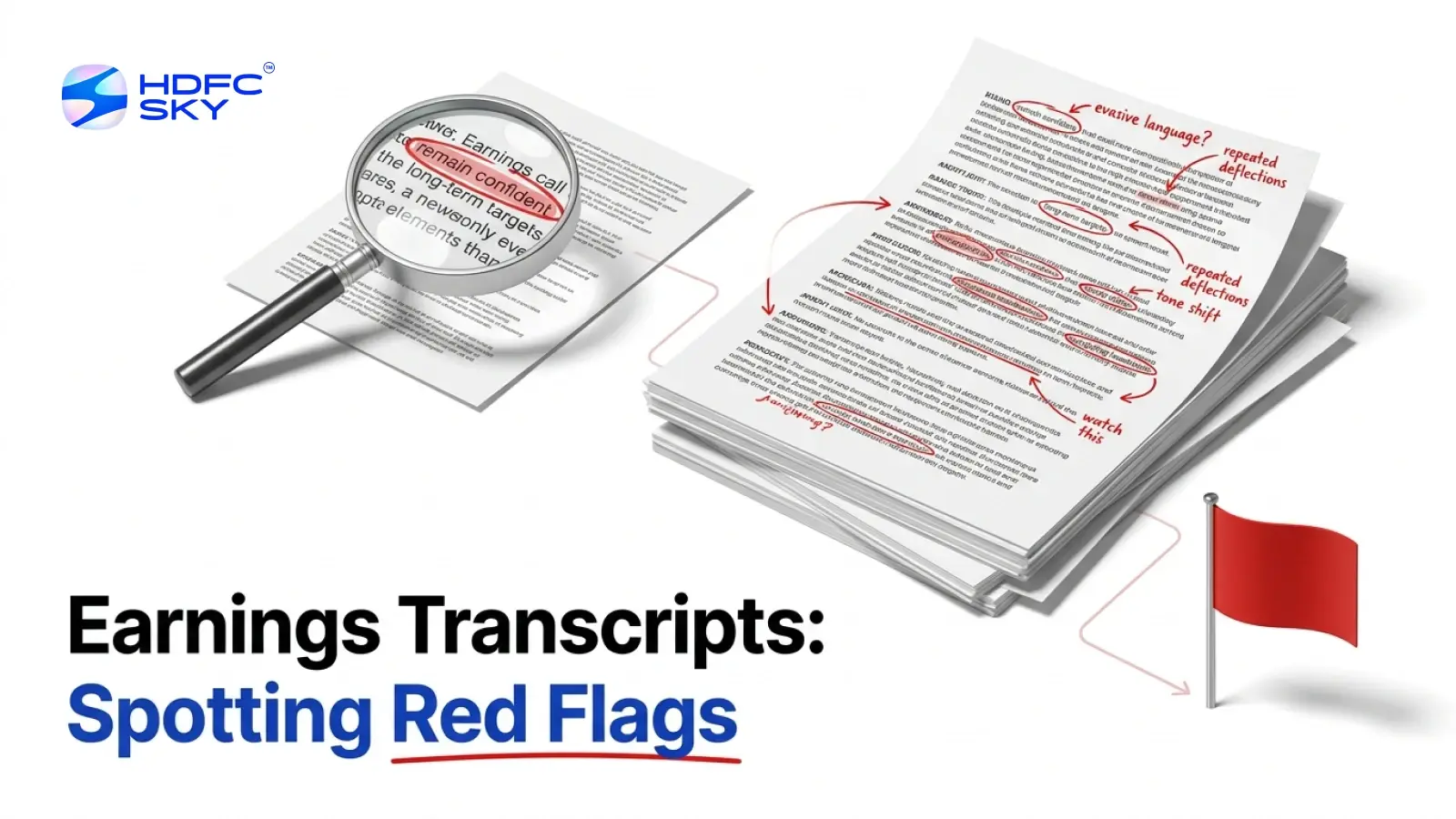
Most investors focus on earnings numbers, but experienced investors also study what management says, and what it avoids saying. Earnings call transcripts often reveal early warning signs before they appear in financial statements. Management language, tone, and evasive answers can offer valuable clues. Indian listed companies regularly publish earnings call transcripts after quarterly results, making them accessible to every investor. In many cases, management may soften difficult news through vague language or selective disclosure.
Learning how to read these transcripts carefully can help investors identify hidden risks and changing business conditions early.
What Is an Earnings Call Transcript?
An earnings call transcript is a written record of a company’s discussion with analysts after quarterly or annual financial results.
It usually has two main sections:
- Prepared management commentary, where company leaders explain performance and business updates
- Analyst Q&A session, where market analysts ask direct questions
The main speakers usually include:
- CEO, who discusses business strategy and outlook
- CFO, who explains financial performance and numbers
- Investor relations team, who manages communication with investors
These transcripts matter because they reveal management thinking beyond reported numbers. Investors can usually find them on:
- Company investor relations websites
- National Stock Exchange of India filings
- BSE Limited disclosures
- Investor presentation portals
For beginner investors, transcripts offer a simple way to understand how management views the business.
Also Read: When inventory piles up and sales stall: the supply chain signal that precedes earnings misses
Why Earnings Call Transcripts Matter More Than Reported Numbers
Financial statements show what happened, but management commentary often hints at what may happen next.
- Numbers Show the Past
Reported earnings explain how the company performed in the previous quarter. Earnings call transcripts often reveal management concerns, future opportunities, or possible challenges that may affect performance before those risks become visible in financial statements. - Management Tone Reveals Confidence
The words management chooses can reflect confidence, caution, or discomfort. A confident leadership team often gives clear and direct answers, while uncertain management may use vague language or avoid specific commitments. - Hidden Risks Often Appear First Here
Issues such as weak demand, margin pressure, rising debt, or delayed payments often appear first in subtle management comments. Investors who notice these early signals can prepare before the market reacts.
How to Read the Prepared Management Commentary
The opening remarks often contain carefully chosen language that deserves close attention.
- Watch for Repeated Positive Buzzwords
Words like “resilient,” “robust,” or “strong momentum” can sound reassuring. When management repeats these phrases too often without supporting numbers, it may signal an attempt to distract from weaker business performance. - Look for What Is Missing
Management may avoid discussing weak business segments, falling margins, or slowing demand. Silence around previously important topics can often reveal more than what management openly says. - Compare with Previous Calls
Small wording changes can signal changing business conditions. A shift from “strong demand” to “stable demand” may suggest early weakness that management has not fully explained. - Notice Changes in Guidance Language
Words matter. If management moves from “confident” to “cautiously optimistic” or “watchful,” it often reflects growing uncertainty about future performance.
How to Decode the Analyst Q&A Section
The Q&A often reveals more truth than the prepared presentation.
- Track Which Questions Get Direct Answers
Clear and specific answers usually show management confidence. Direct responses suggest transparency and comfort with current business conditions. - Watch for Evasive Responses
Long answers that avoid the actual question can signal discomfort. Management may redirect attention when discussing weak areas. - Notice Repeated Analyst Concerns
When multiple analysts ask about debt, receivables, or margins, they may see risks that ordinary investors often miss. - Observe Tone Under Pressure
Defensive or irritated responses can indicate stress. Calm management usually handles difficult questions with confidence.
Language Signals That May Indicate Hidden Problems
- Temporary Headwind
This phrase suggests short-term problems, but it can hide deeper demand weakness or operational issues. Companies may downplay long-lasting challenges by calling them temporary, even when recovery remains uncertain. - Short-Term Pressure
Management uses this phrase to describe current difficulties. However, it may last longer than expected. It often signals margin stress, weak demand, or cost issues that may persist across multiple quarters. - One-Off Impact
Companies use this term to explain unusual losses or expenses. If repeated often, it may indicate recurring problems. What appears “one-time” may actually reflect ongoing structural business weaknesses. - We Remain Confident
This phrase shows optimism, but it often lacks details. When management does not support confidence with data or timelines, it may signal uncertainty about future performance or limited visibility ahead. - We Expect Improvement Soon
This statement suggests recovery, but it often stays vague. Without clear timelines or evidence, it may reflect hope rather than certainty, so investors should track actual performance closely.
Red Flags Indian Investors Should Watch For
Some patterns in earnings calls and disclosures deserve immediate attention because they often signal deeper business or financial concerns.
- Avoiding Specific Numbers
Management avoids clear guidance or targets when it lacks confidence. This often signals uncertainty about future performance or weak visibility ahead. - Frequent Use of Vague Language
Broad statements without data reduce clarity. When management avoids facts, it weakens credibility and makes it harder for investors to judge performance. - Sudden Management Turnover Mentioned Briefly
Unexpected exits of key leaders like CFOs can indicate internal stress. Brief disclosure without explanation may signal deeper governance or operational issues. - Repeated Questions on Working Capital
When analysts focus on receivables or cash flow, it often signals liquidity stress. This suggests pressure in collections or weakening financial discipline. - Blaming External Factors Too Often
Excessive reliance on external excuses may hide internal weakness. Companies may overuse macro reasons instead of addressing real operational or execution problems.
What to Compare Beyond the Transcript
Transcript analysis works best when matched with financial data.
- Compare management commentary with actual revenue and profit trends
- Check whether cash flow supports management optimism
- Review receivables, debt, and working capital changes
- Compare current transcript with earlier quarters
- Match management claims with investor presentations
Common Mistakes Retail Investors Make
Many investors read transcripts, but miss the most useful signals.
- Focus only on headline commentary
- Ignore tone and wording changes
- Skip the analyst Q&A section
- Trust management optimism without verification
- Read only one quarter in isolation
How Investors Should Read Earnings Calls More Effectively
A simple process can make transcript reading much more useful.
- Read management commentary first
- Highlight vague or repetitive phrases
- Focus on difficult analyst questions
- Compare answers with reported numbers
- Track wording changes across multiple quarters
Management Language vs Hidden Meaning
| Management Phrase | Possible Hidden Meaning |
| Demand remains healthy | Growth may be slowing, but management wants to maintain confidence. |
| Temporary margin pressure | Profitability may stay weak longer than management currently suggests. |
| One-time issue | The problem may repeat or remain unresolved over future quarters. |
| Near-term headwinds | Business visibility remains uncertain and risks may continue. |
| Confident about recovery | Management expects improvement but lacks a clear timeline. |
Conclusion
Earnings call transcripts often reveal more than financial statements alone. Management wording, tone, and avoided topics can uncover hidden risks before they become visible in reported numbers. Indian investors can gain an important edge by reading these transcripts carefully. Management may not always hide bad news, but careful reading can help investors detect signals that numbers alone may miss.



Open Free Demat Account
Open Free Demat Account
Popular Posts
- 10 Interesting Facts About NSE You Probably Didn’t KnowLast Updated: Sep 30, 2026
- 8-4-3 Rule of SIP - How Does That Work?Last Updated: Jul 30, 2025
- Let's view more exciting Post!
Popular Post from Market Decoded by Sky
- What the Buffett Indicator Says About Indian Market Valuations Right Now and Its LimitationsLast Updated: Jun 3, 2026
- What Is “Yield Curve Inversion” and Why Does It Make Economists Nervous About India’s Growth?Last Updated: Jun 3, 2026
- What Happens to Indian Stocks When the US Fed Changes Rates: The Historical Correlation DecodedLast Updated: Jun 3, 2026
- Understanding India VIX: What 15 vs 25 Means for Your Portfolio Risk in Plain LanguageLast Updated: Jun 3, 2026
- The Repo Rate Transmission Lag: Why RBI Rate Cuts Take 6–12 Months to Show Up in Your EMILast Updated: Jun 3, 2026
- Let's view more exciting Post!
Popular Post from Blogs
- “Bounce Back” Theme Gains Traction in 2026Last Updated: Apr 8, 2026
- 5 Takeaways for Tax Payers from the Budget 2025Last Updated: Jan 29, 2026
- Let’s view more exciting Posts


Invest Anytime, Anywhere


By signing up I certify terms, conditions & privacy policy