Nifty 50
- Nestle₹1,369.5035.50 (2.66%)
- Shriram Finance₹956.30-31.70 (-3.21%)
- Infosys₹1,086.3024.20 (2.28%)
- HDFC Life Insurance ₹551.65-8.35 (-1.49%)
- TCS₹2,314.4045.10 (1.99%)
- Bajaj Finserv₹1,732.70-23.00 (-1.31%)
- Coal India₹416.257.75 (1.90%)
- SBI Life Insurance ₹1,666.10-21.10 (-1.25%)
- Tata Consumer ₹976.0516.05 (1.67%)
- Bajaj Finance₹971.55-11.20 (-1.14%)
- Tech Mahindra₹1,562.7019.20 (1.24%)
- SBI₹946.80-10.20 (-1.07%)
- Hindustan Unilever₹1,896.4020.90 (1.11%)
- Sun Pharmaceutical₹1,752.80-17.90 (-1.01%)
- Kotak Mahindra Bank₹443.704.70 (1.07%)
- Cipla₹1,316.60-13.00 (-0.98%)
- ONGC₹224.742.09 (0.94%)
- Dr. Reddy's Labs₹1,228.40-11.60 (-0.94%)
- Reliance Industries₹1,177.4010.70 (0.92%)
- Eicher Motors₹7,096-67.00 (-0.94%)

- Offerings
- Tools & Platforms
Tools & Calculators
- Open API
- Calculators
- SIP Calculator
- CAGR Calculator
- Compound Interest Calculator
- FD Calculator
- RD Calculator
- EPF Calculator
- Retirement Calculator
- HDFC SIP Calculator
- Mutual Fund Return Calculator
- Lumpsum Calculator
- Step Up SIP Calculator
- ETF SIP Calculator
- Brokerage Calculator
- Equity Margin Calculator
- SWP Calculator
- EMI Calculator
- MTF Calculator
- Margin Pledge Calculator
- Algo Strategy
- Markets
Stocks
F&O
Mutual Funds
- More
Oil Prices Today, October 14, 2026: Brent Rises 0.5% To $106.2, WTI Gains 0.6% To $94.7 Amid Saudi Supply Risks
Authored By HDFC SKY | Last Modified: Oct 14, 2026 10:23 AM IST

Open Free Demat Account
Open Free Demat Account
Mumbai, October 14: Crude oil prices edged higher on Wednesday as traders weighed the risk of supply disruptions following escalating hostilities involving Saudi Arabia and Yemen’s Houthi rebels, while the prospect of increased Russian diesel exports offered some relief to concerns over tight global fuel supplies. Brent crude futures gained 0.5% to $106.2 a barrel, while US West Texas Intermediate (WTI) crude futures advanced 0.6% to $94.7 a barrel.
The gains reflect continued uncertainty ovear energy supplies amid heightened geopolitical tensions in the Middle East and risks to key shipping routes. Investors are assessing whether further attacks on Saudi targets could disrupt oil production or exports, even as potential additional supplies of Russian fuel could ease pressure on global markets.

Saudi Supply Risks Support Oil Prices
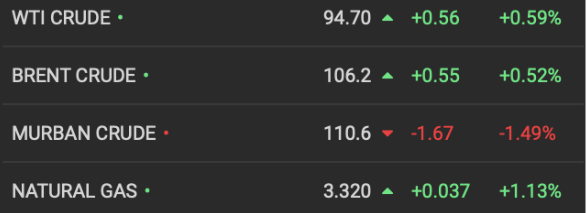
Both contracts edged higher as hostilities involving Saudi Arabia and Yemen’s Houthi rebels escalated. Source: Oilprice.com
Oil prices remained supported by concerns over Saudi Arabia’s energy infrastructure after Houthi missile and drone attacks intensified regional tensions. Saudi Arabia has faced attacks amid the conflict in Yemen, with the Iran-aligned group targeting Saudi interests as hostilities involving regional actors escalate.
The threat to Saudi infrastructure has drawn particular attention because the kingdom is one of the world’s leading oil producers and a major supplier to international markets. Any disruption to production, processing facilities or export terminals could tighten supplies and push crude prices higher.
Saudi Aramco, the state-owned oil giant, has been at the centre of these concerns following reports of an attack on an administrative building in Dhahran that caused a limited fire. Market participants are monitoring developments closely for signs that the attacks could spread to critical energy facilities or affect the movement of crude shipments.
Geopolitical risks have become an increasingly important driver of oil prices, with traders balancing the possibility of supply interruptions against broader concerns about global demand and the availability of alternative supplies.
Also Read: How To Invest In Crude Oil
Russian Diesel Supplies Offer Some Relief
The prospect of higher Russian diesel exports could help ease tightness in global fuel markets and limit further gains in oil prices. Diesel availability is an important factor for refiners and consumers, particularly when geopolitical tensions threaten supplies from major producing regions.
Russia has indicated that it sees no direct connection between its diesel export agreement with the United States and negotiations aimed at ending the war in Ukraine. The development comes as energy markets continue to assess the impact of sanctions, trade arrangements and diplomatic efforts on the flow of Russian petroleum products.
While additional diesel supplies could ease pressure on refined fuel markets, the impact on crude prices will depend on the scale and timing of the exports, as well as whether they can offset potential disruptions elsewhere. Traders are also watching whether geopolitical tensions affect shipping costs, insurance premiums and the availability of tankers.
The prospect of greater Russian fuel availability therefore offers a counterweight to the supply risks stemming from the Middle East, although it does not eliminate concerns over potential disruptions to crude production and transportation.
Strait Of Hormuz Remains A Key Concern
The oil market is also watching developments surrounding the Strait of Hormuz, a vital waterway through which a significant share of global oil supplies passes. Any disruption to shipping through the strait could affect crude exports from major Gulf producers, tighten global availability and increase transportation costs.
Concerns over regional security and the potential for further escalation have kept a risk premium in oil prices. Even without a sustained interruption to shipments, uncertainty over the safety of energy infrastructure and maritime routes can encourage traders to price in the possibility of tighter supplies.
At the same time, increased production by major oil-producing countries could help cushion the impact of any disruption. Saudi Arabia and other members of the Organisation of the Petroleum Exporting Countries and their allies (OPEC+) have adjusted output in response to changing market conditions, leaving investors to assess whether additional production can offset geopolitical risks.
India’s Exposure To Higher Crude Prices
For India, the rise in international crude oil prices presents a challenge because the country depends heavily on imports to meet its petroleum requirements. A sustained increase in crude prices can raise the import bill, put pressure on the rupee and add to inflationary pressures across the economy.
Higher oil prices can also affect the operating costs of sectors such as aviation, paints, chemicals, logistics and oil marketing. If elevated crude prices persist, investors may reassess the earnings outlook for companies with significant exposure to energy costs, while upstream oil producers could benefit from stronger realisations.
The impact on domestic fuel prices will depend on international crude benchmarks, currency movements and the pricing decisions of oil marketing companies. Traders will continue to monitor developments in the Middle East, Russian fuel flows and the security of major shipping routes for further direction.
Source
- oilprice.com
Disclaimer
The information shared here is intended solely for informational and educational purposes and does not constitute investment recommendations. While we practice strict due diligence in curating daily market data, readers must perform independent research before trading. To flag any real-time data discrepancies or content concerns, please write to us at content@hdfcsec.com.
 Join Us
 Add as preferred source on Google


More Business News










Open Free Demat Account
Open Free Demat Account












Invest Anytime, Anywhere


By signing up I certify terms, conditions & privacy policy