Nifty 50
- Dr. Reddy's Labs₹1,311.5082.00 (6.67%)
- Shriram Finance₹820.30-44.70 (-5.17%)
- BSE₹3,367.80137.00 (4.24%)
- Tata Consumer ₹925.10-38.80 (-4.03%)
- JSW Steel₹1,226.2040.70 (3.43%)
- HDFC Life Insurance ₹516.35-7.40 (-1.41%)
- Eternal₹327.5010.10 (3.18%)
- Bajaj Finance₹918.10-10.85 (-1.17%)
- Max Healthcare₹836.9021.90 (2.69%)
- HDFC Bank₹685.75-7.05 (-1.02%)
- Adani Ports₹1,743.2040.50 (2.38%)
- Nestle₹1,164.10-10.90 (-0.93%)
- Kotak Mahindra Bank₹4409.50 (2.21%)
- Infosys₹1,145.65-8.15 (-0.71%)
- Hindalco Industries₹885.3015.45 (1.78%)
- Tech Mahindra₹1,778.40-11.60 (-0.65%)
- Trent₹2,764.9037.40 (1.37%)
- SBI Life Insurance ₹1,629.90-10.10 (-0.62%)
- Reliance Industries₹1,201.8011.80 (0.99%)
- Asian Paints₹2,293.20-13.80 (-0.60%)

- Offerings
- Tools & Platforms
Tools & Calculators
- Open API
- Calculators
- SIP Calculator
- CAGR Calculator
- Compound Interest Calculator
- FD Calculator
- RD Calculator
- EPF Calculator
- Retirement Calculator
- HDFC SIP Calculator
- Mutual Fund Return Calculator
- Lumpsum Calculator
- Step Up SIP Calculator
- ETF SIP Calculator
- Brokerage Calculator
- Equity Margin Calculator
- SWP Calculator
- EMI Calculator
- MTF Calculator
- Margin Pledge Calculator
- Algo Strategy
- Markets
Stocks
F&O
Mutual Funds
- More
Cotton Import Duty Scrapped: What It Means for Textile and Spinning Stocks
Authored By HDFC SKY | Published at: Jun 1, 2026 11:22 AM IST
Open Free Demat Account
Open Free Demat Account
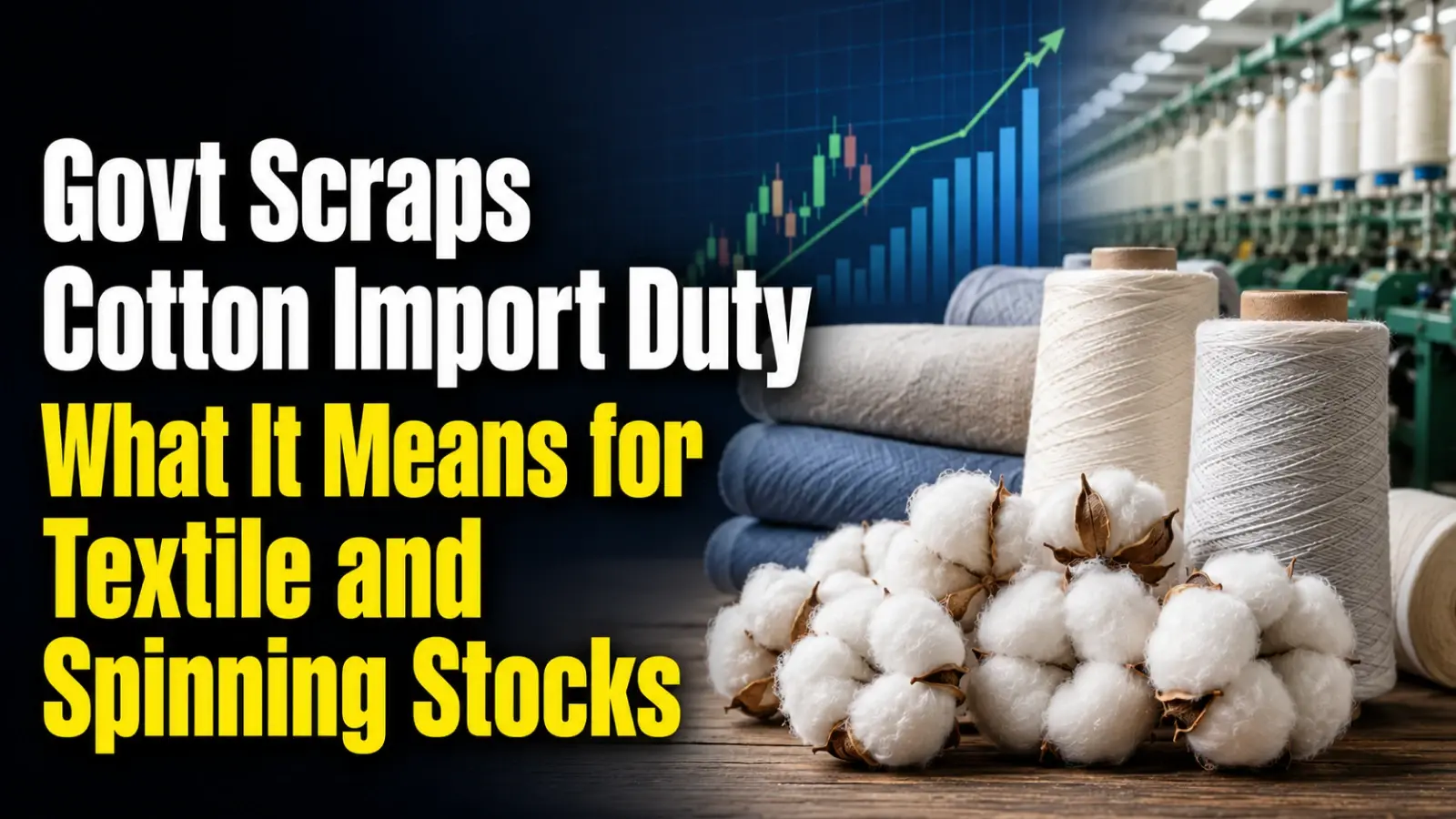
Mumbai, June 1: The government has suspended its 11% customs duty on cotton imports for five months effective until October 30 in a targeted relief measure aimed at textile exporters who need access to contamination-free natural fibre to meet surging overseas demand for yarn, particularly from markets that have shifted sourcing away from competing origins amid ongoing global trade disruptions.
The move by the world’s second-largest cotton producer signals New Delhi’s intent to prioritise export competitiveness in the textile sector even at the cost of short-term customs revenue, and comes as the Iran war continues to disrupt global supply chains and raise input costs across India’s manufacturing base.
The policy signal is meaningful for small and medium-sized textile firms that specifically need contamination-free varieties not always available domestically and the five-month window through the October end gives exporters a clear runway to plan procurement ahead of the critical festive-season and winter order fulfilment period that dominates the second half of the calendar year. The measure is also expected to provide modest support to global cotton prices as India’s import appetite, even if limited, adds a layer of incremental demand to a market that has been grappling with uncertain weather and geopolitical disruption.

Impact on Stocks:
- Spinning Mills and Yarn Exporters Near-Term Positive:
Companies like Vardhman Textiles, Trident, Ambika Cotton and Indo Count Industries stand to benefit from improved access to contamination-free cotton, which allows them to produce higher-quality yarn that commands a premium in export markets particularly from buyers in Europe and the US who have strict quality specifications. While the duty waiver does not dramatically lower procurement costs given current currency dynamics, the policy certainty it provides allows these companies to accept larger and longer-duration export orders with greater confidence in their input supply chain.
- Integrated Textile Companies Margin Relief on Premium Exports:
Large integrated players like Welspun India, Arvind Limited and Raymond who operate both spinning and fabric manufacturing facilities will benefit disproportionately from access to cleaner cotton, as contamination-free fibre directly improves weaving efficiency, reduces loom breakdowns and lowers fabric rejection rates in their export-oriented production lines. For these companies, even a modest improvement in cotton quality translates into meaningful operational leverage fewer rejected export shipments, lower rework costs and better realisations from quality-conscious overseas buyers which can add 50 to 100 basis points to EBITDA margins over the five-month window.
- Cotton Ginners and Domestic Farmers Limited Disruption Risk:
India’s domestic cotton ginners and farmer cooperatives had initially feared that a duty waiver would flood the market with cheap imports and suppress domestic prices but with Indian cotton currently the world’s cheapest and the rupee-adjusted import price remaining above local procurement levels, the risk of a significant demand shift away from domestic cotton is low. Stocks of companies like Kama Holdings and MCX cotton futures are therefore unlikely to experience significant downward pressure, as the import arbitrage simply does not exist at current exchange rates a view that Cotton Association president Vinay Kotak’s public comments have effectively validated, providing a measure of reassurance to domestic market participants.
- Garment and Apparel Exporters Indirect Beneficiary:
Downstream garment exporters like Kitex Garments, Page Industries and KPR Mill do not source raw cotton directly, but stand to benefit indirectly as the duty waiver eases the cost environment for their upstream spinning and fabric suppliers particularly if it prevents any supply-driven spike in domestic cotton prices during peak export order season between July and October. With the Iran war already pushing up logistics and energy costs across the textile value chain, any government measure that stabilises or moderates raw material input costs for the sector is a net positive for downstream exporters’ margin outlook, even if the quantum of benefit is modest and difficult to quantify precisely at this early stage.
Source:
- https://www.pib.gov.in/PressReleasePage.aspx?PRID=2267049®=3&lang=1
Disclaimer
If you have any concerns, questions, or wish to point out any discrepancies in our content, please feel free to write to us at content@hdfcsec.com.
Please Note: The information shared is intended solely for informational purposes and does not make any investment recommendations
Disclaimer
At HDFC SKY*, we take utmost care and due diligence in curating and presenting news and market-related content. However, inadvertent errors or omissions may occasionally occur.
If you have any concerns, questions, or wish to point out any discrepancies in our content, please feel free to write to us at content@hdfcsec.com.
Please Note: The information shared is intended solely for informational purposes and does not make any investment recommendations.
HDFC SKY from HDFC Securities, one of most trusted trading platforms in India, has been recognized with the *Next-Gen Digi Content Awards 2025-26.
 Join Us
 Add as preferred source on Google


More Markets News







Open Free Demat Account
Open Free Demat Account











Invest Anytime, Anywhere


By signing up I certify terms, conditions & privacy policy