Nifty 50
- TCS₹2,34293.60 (4.16%)
- ICICI Bank₹1,422.80-20.20 (-1.40%)
- Tech Mahindra₹1,640.9055.90 (3.53%)
- Shriram Finance₹1,086.90-14.10 (-1.28%)
- Infosys₹1,14433.20 (2.99%)
- ITC₹266-3.00 (-1.12%)
- HCL Technologies₹1,316.1034.10 (2.66%)
- UltraTech Cement₹11,589-128.00 (-1.09%)
- Wipro₹180.954.55 (2.58%)
- Asian Paints₹2,608.70-22.30 (-0.85%)
- Bajaj Auto₹11,910190.00 (1.62%)
- SBI Life Insurance ₹1,761.10-12.10 (-0.68%)
- Hindalco Industries₹1,037.4013.40 (1.31%)
- Eicher Motors₹8,059-41.00 (-0.51%)
- HDFC Bank₹720.309.30 (1.31%)
- Maruti Suzuki₹13,376-64.00 (-0.48%)
- Tata Motors PV₹319.403.40 (1.08%)
- Bajaj Finserv₹2,002-9.00 (-0.45%)
- Grasim Industries₹3,29032.00 (0.98%)
- InterGlobe Aviation₹5,166-23.00 (-0.44%)

- Offerings
- Tools & Platforms
Tools & Calculators
- Open API
- Calculators
- SIP Calculator
- CAGR Calculator
- Compound Interest Calculator
- FD Calculator
- RD Calculator
- EPF Calculator
- Retirement Calculator
- HDFC SIP Calculator
- Mutual Fund Return Calculator
- Lumpsum Calculator
- Step Up SIP Calculator
- ETF SIP Calculator
- Brokerage Calculator
- Equity Margin Calculator
- SWP Calculator
- EMI Calculator
- MTF Calculator
- Margin Pledge Calculator
- Markets
Stocks
F&O
Mutual Funds
- More
How Unequal Gains from Globalisation Triggered a Shift to Protectionism
Authored By Shishta Dutta | Published at: Aug 29, 2025 05:45 PM IST
Open Free Demat Account
Open Free Demat Account
In the 1990s and 2000s, globalisation transformed the world economy. Countries lowered tariffs, opened their markets, and embraced foreign investment. This shift spurred industrial growth, created jobs, and lifted millions out of poverty, especially in emerging economies like China and India.
However, while cross-border trade surged and global production networks expanded, not everyone benefited equally. The same policies that helped developing nations scale up also hollowed out middle-income jobs in richer countries. Many advanced economies saw rising inequality, wage stagnation, and growing resentment among workers who felt left behind.
But who exactly benefited from this boom and who was left behind?

Who Gained, Who Lost: The Anatomy of Unequal Growth
Emerging markets gained access to global markets and foreign capital. Low-cost manufacturing hubs thrived, helping reduce poverty and improve incomes. But within many countries, especially wealthier ones, income gains were heavily skewed.
Global supply chains shifted jobs from advanced economies to cheaper locations, reducing demand for low- and mid-skilled workers at home. At the same time, technology displaced routine jobs and rewarded those with specialised skills. This dual force of globalisation and automation shrank the middle class and concentrated wealth.
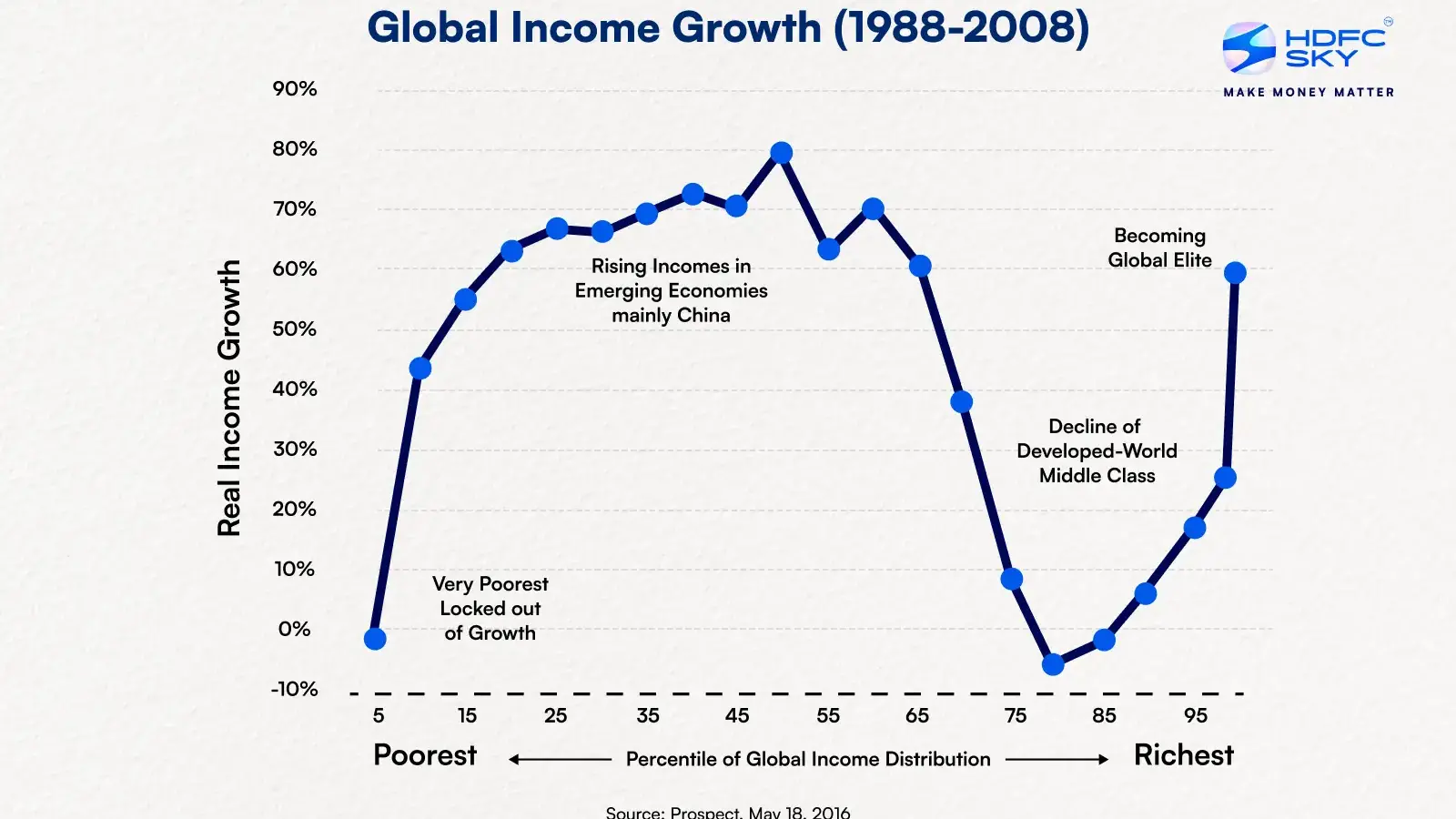
A widely cited study by Lakner-Milanovic visualised this with the “Elephant Curve,” showing that global middle-income groups (particularly in Asia) gained the most from globalisation, while lower-middle classes in rich countries saw little to no income growth.
Still, global forces weren’t the only reason inequality widened. National policy choices made it worse.
Domestic Policy Gaps Made Inequality Worse
Global forces alone didn’t create inequality. Domestic policy choices also played a major role. In many advanced economies, weak labour protections, eroded union power, stagnant minimum wages, and tax reforms tilted toward capital rather than labour.
Safety nets failed to keep up with rising inequality. Cuts to welfare spending, underinvestment in education and skills, and the growing dominance of finance over manufacturing further concentrated gains at the top.
This rising inequality and discontent eventually found political expression.
Turning Points that Shifted the Global Trade Mindset
A series of shocks and political events triggered a gradual turn inward.
- 2015-2016: Brexit and the U.S.-China trade war signalled a backlash. Countries began reintroducing tariffs and questioning the benefits of free trade.
- 2020: COVID-19 exposed the fragility of global supply chains. Lockdowns disrupted manufacturing, and countries scrambled for essentials like medicines and semiconductors.
- 2022 Onwards: Russia-Ukraine war and resulting energy shocks made countries more aware of strategic dependencies. As a result, “friendshoring” emerged, prioritising trade with politically aligned nations.
These moments revealed that efficiency alone could no longer be the guiding principle. Security, resilience, and control gained new importance.
Faced with these disruptions, countries began revisiting their trade playbooks.
How Nations Are Responding: A Return to Strategic Protectionism
Countries are now recalibrating their trade policies.
India once followed a protectionist model post-independence, using high tariffs and import substitution to build domestic industries. While it helped develop a manufacturing base, it also limited competition and innovation. The 1991 liberalisation reversed course, and the country embraced global markets, with significant gains in exports and foreign investment.
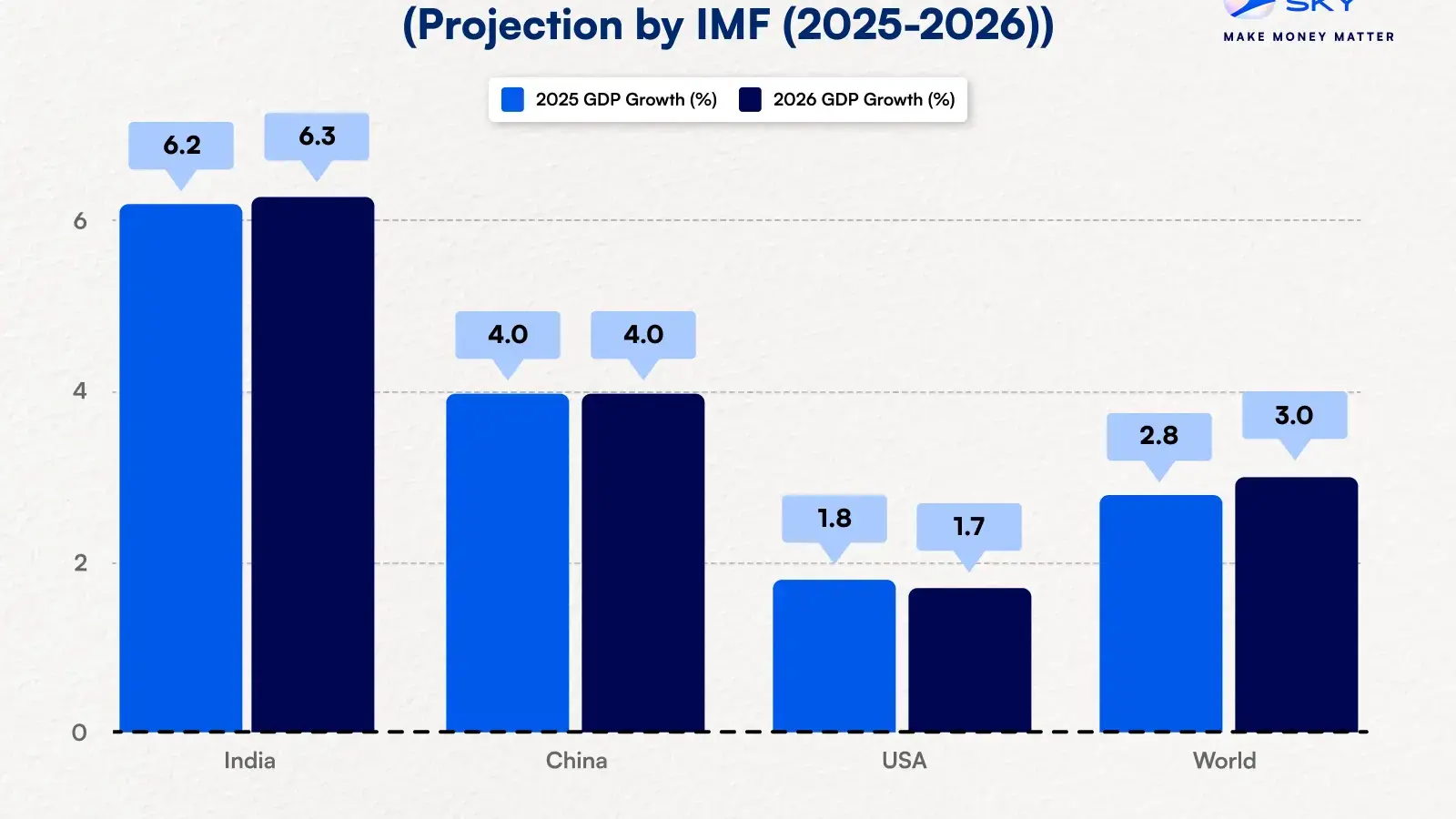
And the payoff was clear. India became one of the fastest-growing economies in the world and is projected to grow at an impressive pace.
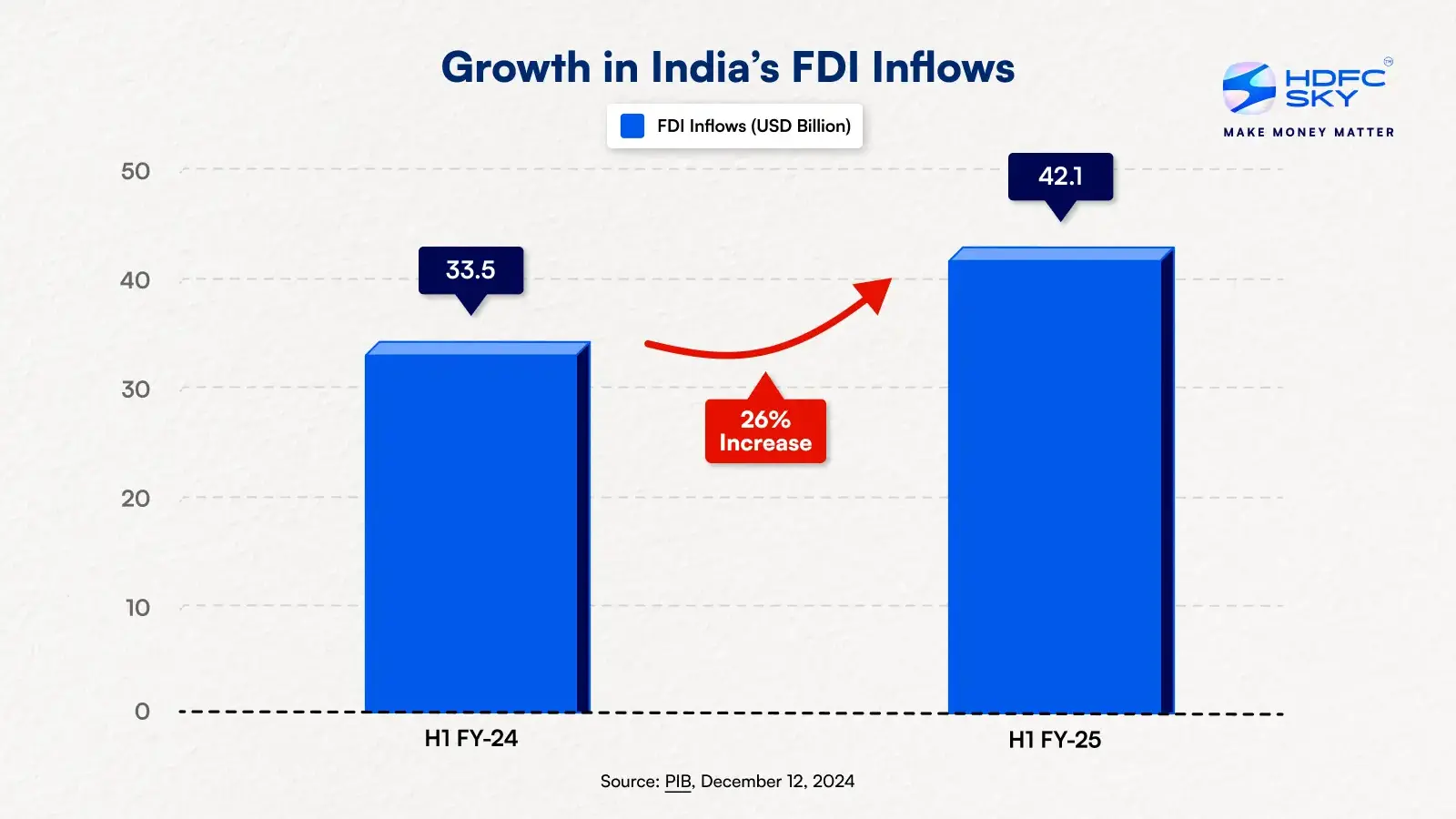
The results of this openness continue to play out today. Even the data from the past two years shows a significant jump in FDI inflows, signalling sustained global investor confidence in India’s long-term potential.
But recent global shocks and supply chain disruptions have made India rethink its stance. While remaining outward-facing in many sectors, the country is once again leaning on targeted protectionism through production-linked incentives, higher import duties in select industries, and an emphasis on self-reliance in strategic areas like electronics, defence, and clean energy.
The U.S., too, is embracing protectionism, but in a distinctly modern form. It has imposed high tariffs on imports and offered subsidies for local manufacturing in strategic sectors like semiconductors and clean energy. This is aimed at reducing reliance on global rivals and protecting domestic jobs.
What Protectionism Offers and What It Risks
The idea of protectionism is all about protecting a country’s trade or industry by putting taxes on goods bought from other countries.
Protectionist policies can:
- Shield critical industries from global shocks
- Preserve domestic employment in sensitive sectors
- Buy time for countries to build local capacity
But they also come at a cost:
- Higher prices for consumers
- Reduced competitiveness
- Retaliatory tariffs from trade partners
- Disruption in global supply chains
Protectionism may provide short-term political and economic relief, but excessive reliance on it can reduce innovation, limit market access, and harm long-term growth.
A Smarter Path Forward: Reforming, Not Retreating from Global Trade
Rather than full decoupling, the world needs smarter cooperation. A “G3” framework among the U.S., EU, and China could restore trust and address structural issues:
- Fiscal Coordination: China increases domestic demand, the EU sustains growth, and the U.S. takes steps to control its debt levels.
- Monetary Policy: Cooperation to avoid currency manipulation.
- Development Policy: More funding for climate and poverty reduction via global institutions.
- Trade Rules: Update WTO norms and resolve disputes faster.
Such reforms would make globalisation more inclusive, without sacrificing efficiency or innovation.
The Outlook
The world has moved away from unqualified support for open markets. Now, governments are focused on balancing global integration with national interest.
But closing off completely is not the answer. Countries that combine selective protection with strong domestic investment in skills, infrastructure, and innovation are more likely to thrive.
The challenge is not choosing between globalisation and isolation. It is about ensuring that the benefits of openness are shared more fairly within and across nations.
Inclusive growth, resilient supply chains, and strategic autonomy must now define the next phase of global trade.
 Join Us
 Add as preferred source on Google


More Business News







Open Free Demat Account
Open Free Demat Account






Invest Anytime, Anywhere


By signing up I certify terms, conditions & privacy policy