Nifty 50
- TCS₹2,34293.60 (4.16%)
- ICICI Bank₹1,422.80-20.20 (-1.40%)
- Tech Mahindra₹1,640.9055.90 (3.53%)
- Shriram Finance₹1,086.90-14.10 (-1.28%)
- Infosys₹1,14433.20 (2.99%)
- ITC₹266-3.00 (-1.12%)
- HCL Technologies₹1,316.1034.10 (2.66%)
- UltraTech Cement₹11,589-128.00 (-1.09%)
- Wipro₹180.954.55 (2.58%)
- Asian Paints₹2,608.70-22.30 (-0.85%)
- Bajaj Auto₹11,910190.00 (1.62%)
- SBI Life Insurance ₹1,761.10-12.10 (-0.68%)
- Hindalco Industries₹1,037.4013.40 (1.31%)
- Eicher Motors₹8,059-41.00 (-0.51%)
- HDFC Bank₹720.309.30 (1.31%)
- Maruti Suzuki₹13,376-64.00 (-0.48%)
- Tata Motors PV₹319.403.40 (1.08%)
- Bajaj Finserv₹2,002-9.00 (-0.45%)
- Grasim Industries₹3,29032.00 (0.98%)
- InterGlobe Aviation₹5,166-23.00 (-0.44%)

- Offerings
- Tools & Platforms
Tools & Calculators
- Open API
- Calculators
- SIP Calculator
- CAGR Calculator
- Compound Interest Calculator
- FD Calculator
- RD Calculator
- EPF Calculator
- Retirement Calculator
- HDFC SIP Calculator
- Mutual Fund Return Calculator
- Lumpsum Calculator
- Step Up SIP Calculator
- ETF SIP Calculator
- Brokerage Calculator
- Equity Margin Calculator
- SWP Calculator
- EMI Calculator
- MTF Calculator
- Margin Pledge Calculator
- Markets
Stocks
F&O
Mutual Funds
- More
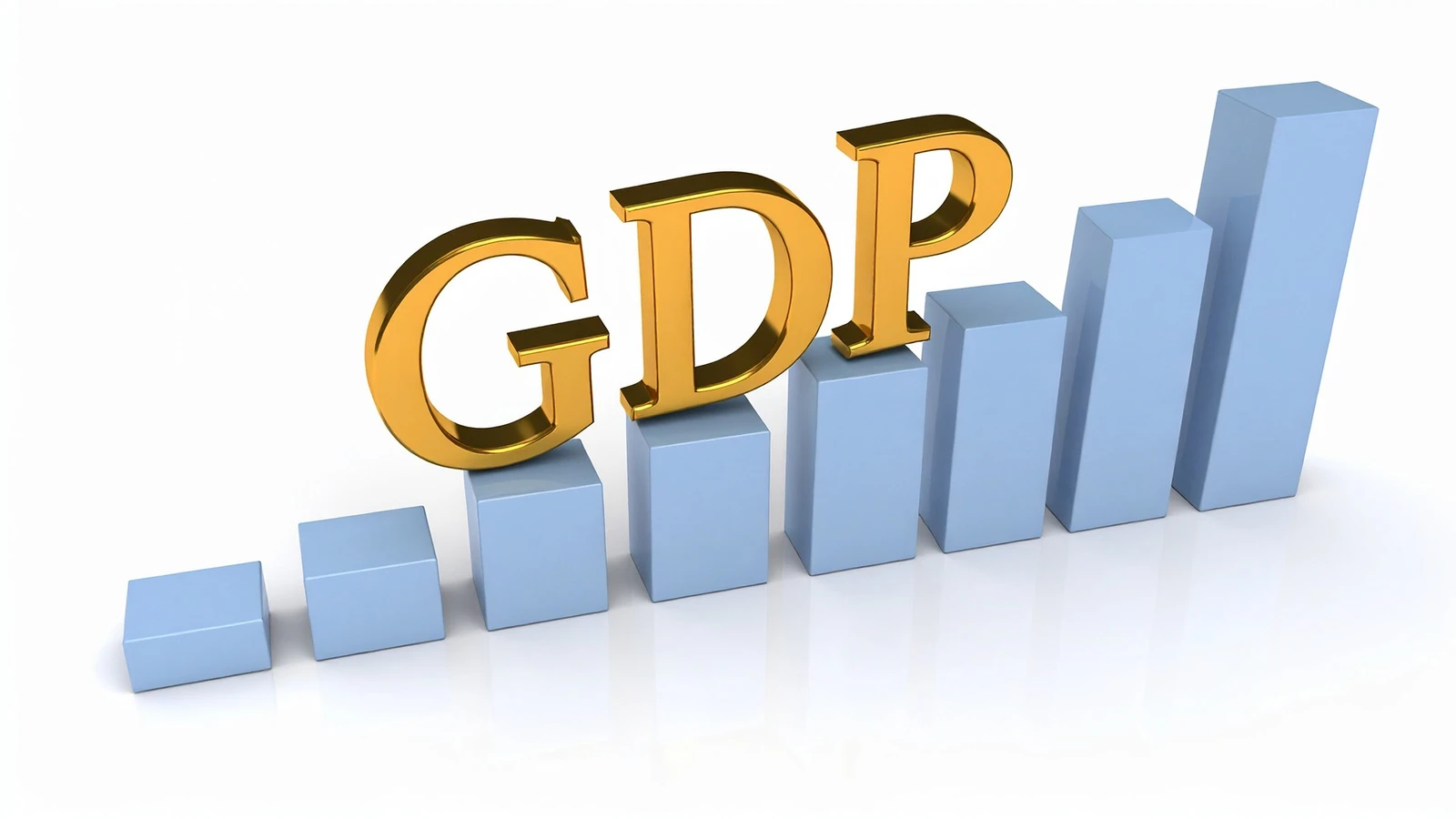
India’s GDP Forecast Raised to 6.4% for FY26 in IMF’s July Outlook: Understand What It Means
Authored By Shishta Dutta | Published at: Jul 31, 2025 09:38 AM IST
Open Free Demat Account
Open Free Demat Account
New Delhi, July 31: The International Monetary Fund (IMF) has upgraded India’s economic growth forecast for 2025 and 2026 to 6.4%, citing a more supportive external environment and improved global financial conditions. The projection, released in the IMF’s World Economic Outlook Update – July 2025, marks a 20-basis-point upward revision from the April estimate, positioning India as one of the fastest-growing major economies globally.

IMF’s Revised India Growth Forecast
| Year | Earlier Estimate (Apr ’25) | Revised Estimate (Jul ’25) |
|---|---|---|
| 2025 | 6.2% | 6.4% |
| 2026 | 6.3% | 6.4% |
The report attributes the upgrade to a “more benign external environment than assumed in the April reference forecast,” which includes a weaker US dollar, improved trade dynamics, and global financial easing.
Key Global Comparisons
| Country/Region | 2025 GDP Forecast | 2026 GDP Forecast |
|---|---|---|
| India | 6.4% | 6.4% |
| China | 4.8% | 4.2% |
| United States | 1.9% | 2.0% |
| Euro Area | 1.0% | 1.2% |
| Emerging Markets Avg. | 4.1% | 4.0% |
| World Output | 3.0% | 3.1% |
India, therefore, outpaces both emerging and advanced economies, retaining its lead in global growth contribution.
Drivers of Growth and Resilience
Several factors contribute to India’s robust growth and resilience. Trade Winds are shifting favourably, as India has benefited from export opportunities amid changes in global supply chains and tariff pauses between major trading blocs, such as the US and China. The country also enjoys Monetary Policy Space; with global inflation easing and the US dollar weakening, emerging markets such as India have gained room to manage interest rates more flexibly. Furthermore, the IMF notes a Front-Loaded Global Demand, where firms and households across major economies advanced orders and inventories in anticipation of future tariff hikes, indirectly supporting Indian exports.
Risks on the Horizon
Despite the upgraded forecast, the IMF cautions about key downside risks that could impact India’s growth trajectory. One major concern is Tariff Escalation; if paused tariffs resume post-August 2025 or new protectionist barriers emerge, the current trade momentum could falter. Geopolitical Uncertainty also poses a risk, as any disruptions in key regions like the Middle East or Eastern Europe could jolt commodity prices and impair trade flows. Lastly, Fiscal Tightening in Advanced Economies, driven by widening deficits in the US and Europe, could lead to tighter financial conditions globally, potentially reducing investment appetite.
Inflation and Policy Implications
India’s inflation dynamics remain moderate compared to advanced economies. While global headline inflation is projected to decline to 4.2% in 2025 and 3.6% in 2026, India is expected to stay within a manageable range. This stability is largely supported by stable energy prices and effective macroprudential fiscal measures.
Decoding The Effect of the Newly Raised Forecast
- India’s GDP Forecast Raised to 6.4% for FY26
The IMF has revised India’s FY26 GDP growth forecast upward from 6.1% to 6.4%. This reflects confidence in India’s domestic consumption, capital formation, and policy continuity—factors that typically encourage long-term investment. - Foreign Investment Sentiment May Improve
A higher growth estimate boosts India’s image as a favourable investment destination. It could attract more foreign portfolio and direct investment, especially in manufacturing, infrastructure, and digital sectors. - Key Sectors Likely to Benefit from Growth Boost
Sectors such as banking, capital goods, infrastructure, and real estate are closely tied to economic cycles. These may see improved performance as rising GDP usually translates to higher demand and better earnings. - RBI May Continue Supportive Monetary Policy
With growth momentum in place and inflation stabilising, the RBI may avoid aggressive rate hikes. Stable interest rates can support lending, benefiting interest-sensitive sectors like auto, housing, and NBFCs. - Rupee Stability Could Be Strengthened
Strong GDP growth and potential for capital inflows may support the rupee. A stable currency reduces imported inflation and encourages sustained foreign participation in Indian markets. - Global Headwinds Still Remain a Concern
Despite domestic tailwinds, risks like global slowdown, US interest rate trends, or geopolitical disruptions could impact investor sentiment. Investors will be closely monitoring their portfolios.
Road Ahead
The road ahead for Indian markets looks promising, backed by strong domestic demand, policy continuity, and structural growth drivers. Sectors like banking, auto, and infrastructure are expected to benefit from steady consumption and capital expenditure. With gradual interest rate movements and controlled inflation, investor confidence may remain stable. However, global uncertainties and commodity volatility could pose near-term risks. Diversification and a focus on long-term trends like digitalisation, manufacturing, and financial inclusion can help investors navigate this evolving landscape. Staying selective and disciplined will be key to building wealth in the coming quarters.
About the IMF Report
The World Economic Outlook Update – July 2025 provides biannual forecasts for global and national economies. It incorporates real-time trade policy assumptions, fiscal developments, and monetary trends, including front-loaded global demand and geopolitical risks.
India’s projections in the IMF report are based on calendar year data, while domestic metrics often refer to fiscal year data (April–March). The current estimate aligns with FY25–26 expectations of stable and robust economic expansion.
REF: https://www.imf.org/-/media/Files/Publications/WEO/2025/update/july/english/text.ashx
Disclaimer: At HDFC SKY, we take utmost care and due diligence in curating and presenting news and market-related content. However, inadvertent errors or omissions may occasionally occur.
If you have any concerns, questions, or wish to point out any discrepancies in our content, please feel free to write to us at content@hdfcsec.com.
Please note that the information shared is intended solely for informational purposes and does not make any investment recommendations
 Join Us
 Add as preferred source on Google


More Business News







Open Free Demat Account
Open Free Demat Account







Invest Anytime, Anywhere


By signing up I certify terms, conditions & privacy policy