Nifty 50
- JSW Steel₹1,241.3025.00 (2.06%)
- Axis Bank₹1,236-54.00 (-4.19%)
- ONGC₹2253.00 (1.35%)
- Tata Motors PV₹278-8.85 (-3.09%)
- SBI₹973.7011.10 (1.15%)
- Infosys₹1,130.70-30.50 (-2.63%)
- L&T₹3,661.9034.80 (0.96%)
- Bajaj Finance₹957.35-24.75 (-2.52%)
- Eicher Motors₹7,34964.50 (0.89%)
- Apollo Hospitals₹7,700-190.00 (-2.41%)
- Adani Ports₹1,76615.20 (0.87%)
- UltraTech Cement₹10,650-257.00 (-2.36%)
- Dr. Reddy's Labs₹1,242.509.50 (0.77%)
- HDFC Bank₹712-16.85 (-2.31%)
- InterGlobe Aviation₹4,70013.10 (0.28%)
- Trent₹2,891.60-67.10 (-2.27%)
- Bharat Electronics₹377.200.35 (0.09%)
- Hindustan Unilever₹1,853.20-40.60 (-2.14%)
- NTPC₹309-6.15 (-1.95%)

- Offerings
- Tools & Platforms
Tools & Calculators
- Open API
- Calculators
- SIP Calculator
- CAGR Calculator
- Compound Interest Calculator
- FD Calculator
- RD Calculator
- EPF Calculator
- Retirement Calculator
- HDFC SIP Calculator
- Mutual Fund Return Calculator
- Lumpsum Calculator
- Step Up SIP Calculator
- ETF SIP Calculator
- Brokerage Calculator
- Equity Margin Calculator
- SWP Calculator
- EMI Calculator
- MTF Calculator
- Margin Pledge Calculator
- Algo Strategy
- Markets
Stocks
F&O
Mutual Funds
- More
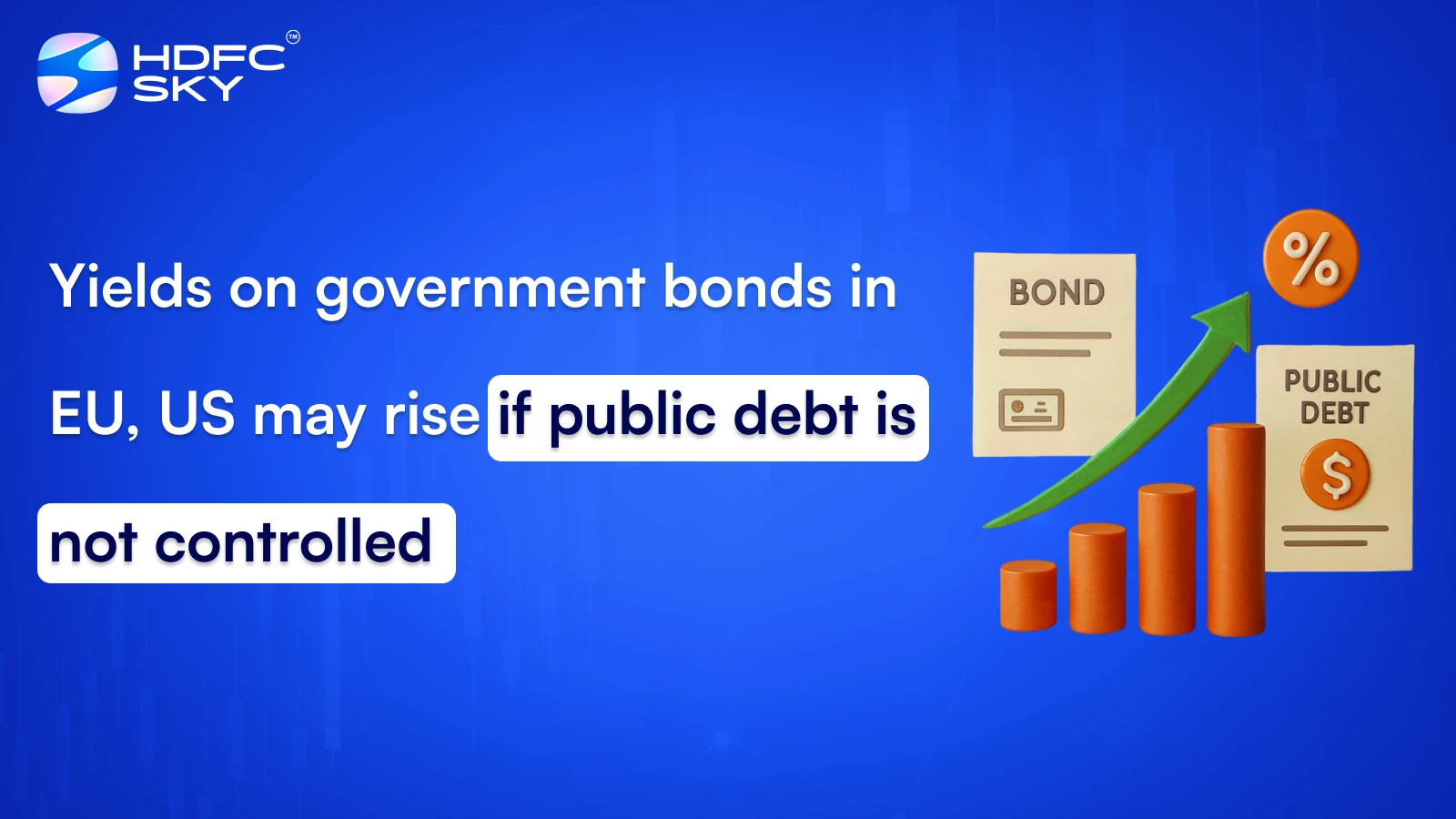
Yields on government bonds in EU, US may rise if public debt is not controlled
Authored By Ankur Chandra | Last Modified: Nov 10, 2025 10:08 AM IST
Open Free Demat Account
Open Free Demat Account
The higher public debt that governments in EU and US are running may result in increase in yields on government bonds in the foreseeable future. The yield that a bond gives is inversely proportional to the price of the bond. When the price of a bond increases, yield on it go down. When the price of a bond decreases, it results in increase in yield on it. Yield of a bond is the interest that it pays divided by its current market price.
Government bond prices may go down if public debt is not controlled
The high debt that governments of Euro Zone and US are carrying, presently, may cause prices of their bonds to go down in foreseeable future. This in turn will cause yields on them to go up. In November 2021, yield on 10 year US treasury bond was 0.68%. Government bond prices had risen up during the Covid lockdown period. The quantitative easing of US Federal Reserve and the low interest rate policy regime also got reflected in low yield on government bonds. Currently, the yield on US 10-year treasury bond is around 4.09%. The interest rate cuts by US Federal Reserve in the past few months also had an impact on yields of US treasury bonds.
The current yield curve of Euro zone government bonds also indicates that yields are expected to rise much sharply over the next 10 years and after that to rise less steeply. Yield on 10-year highest rated Euro zone government bond is currently 2.73%. On 1 year bond it is 1.93%. And on 15 year bond it is 3.055%. Yield curves also show current expectations about future interest rates.
US government debt currently at 120% of GDP; Euro zone debt at around 88% of GDP
Total debt of US government currently is around 120% of its GDP. Euro zone’s total government debt as a percentage of GDP currently stands at around 88%. This high debt increases the risk of these government bonds. Government bonds are considered to be safest in terms of default risk because governments can always, as a last resort, print more currency to pay off their debt obligations. But printing of more currency results in inflation shooting up. Higher inflation again lowers the price of bonds, thereby increasing yield on them.
The rising debt can be controlled if these governments start controlling their expenditures and become fiscally prudent. Right now that is not looking possible. French government recently delayed the proposal to increase retirement age. This, because of tremendous public pressure. Increasing retirement age would have reduced future pension liabilities of the French government. This in turn would have helped it in controlling its fiscal deficit. This in turn would have enabled it to control its debt level.
Increasing taxes to increase government revenues and reduce fiscal deficit and public debt are also politically very unpopular. In US, President Trump, is against any tax increases, especially for the rich and affluent segment. All these things point out to the high chance that prices of government bonds may go down in future and yields may increase if effective measures for controlling government debt are not taken.
Disclaimer : This content is only for informational purpose. It does not make any recommendation to act or invest.
Source: European Commission https://ec.europa.eu/eurostat/web/products-euro-indicators/w/2-21072025-ap
 Join Us
 Add as preferred source on Google


More Markets News







Open Free Demat Account
Open Free Demat Account












Invest Anytime, Anywhere


By signing up I certify terms, conditions & privacy policy