Diwali Stock Market Schedule 2025: Markets Open October 20, Closed October 21-22, Muhurat Trading Window Explained
Authored By Shishta Dutta | Last Modified: Oct 20, 2025 03:19 PM IST
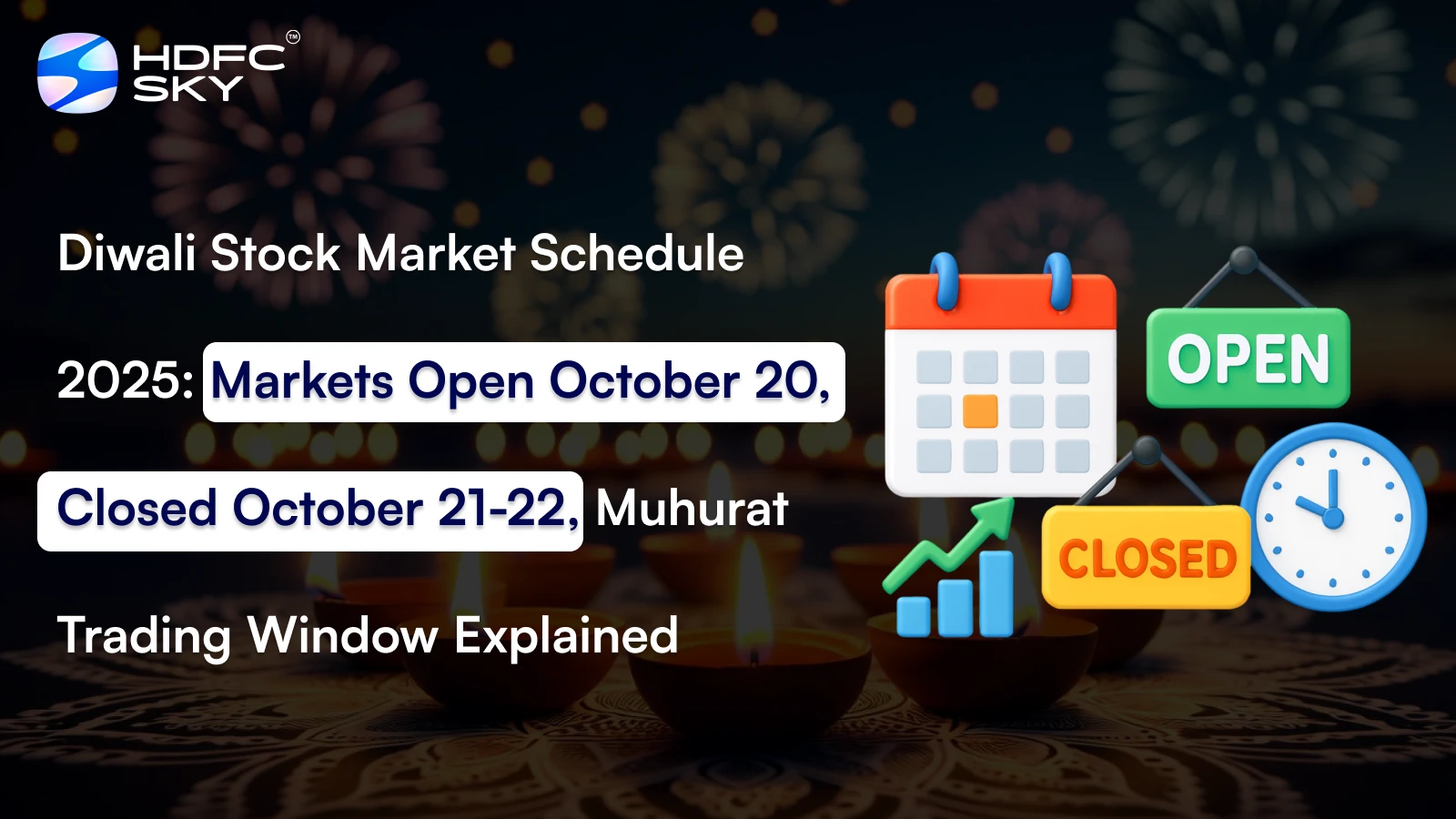
October 20, 2025: If you think that the stock markets will be closed for Diwali and Govardhan Pooja (Balipratipada festival in the southern states), here is some update for you. You should know that due to differences in regional celebrations, the schedule is a bit different from the past. Let us start with Monday (20th October): some regions in North India are celebrating Diwali on Monday, October 20, but the stock markets will function as usual on this date. The stock markets will be closed for trading on October 21 and 22 for Laxmi Pujan (Deepawali) and Govardhan (Balipratipada).
However, on 21st October, both BSE and NSE will have a special Muhurat Trading session for an hour, celebrating the arrival of Samvat 2082, the Hindu financial year. The markets will operate normally during this hour, and you can make token investments, or if you are a new trader, you can make your first trade during this session.
Day-by-Day Schedule
To avoid any type of confusion, here is a day-by-day schedule for the Diwali celebrations:
- Monday, October 20: Normal market hours and full-day trading.
- Tuesday, October 21: Regular trading suspended; Muhurat Trading from 1:45 PM to 2:45 PM, with a pre-open session from 1:30 PM to 1:45 PM.
- Wednesday, October 22: Markets closed for Balipratipada.
You should plan your transfers, settlements, and other placements, as back-to-back holidays can have a direct impact on settlement timelines and market liquidity.
What Happens During Muhurat Trading
The Muhurat session is both symbolic and functional, as all trades executed during this period carry normal settlement obligations. The session marks the start of Samvat 2082, the traditional financial year followed by the trading community. For 2025, the exchanges have shifted the timing to an afternoon slot, breaking away from the evening sessions observed in earlier years.
This special hour allows investors to make small, symbolic investments as a gesture of gratitude and optimism for the year ahead. Many consider it an auspicious time to begin new portfolios or re-enter the market after the festive break.
Why the Schedule Matters
The two-day market closure around Diwali can lead to subdued volumes and slightly higher volatility in the short term. Traders and investors should ensure that their trading accounts are active, funds are available, and limit orders are placed to avoid sudden price swings. Institutional and retail participants often use this period to rebalance their holdings or make token purchases in blue-chip stocks.
Looking Ahead
Diwali is the time to be with your family and loved ones. The normal trading will resume after the festivities, and the Muhurat session is an excellent way of blending culture and tradition with modern finance. Use this time to make your first trade, and if you are already an investor, celebrate prosperity, reaffirm optimism and set up the tone for the new financial year.
 Join Us
 Add as preferred source on Google