Nifty 50
- TCS₹2,34293.60 (4.16%)
- ICICI Bank₹1,422.80-20.20 (-1.40%)
- Tech Mahindra₹1,640.9055.90 (3.53%)
- Shriram Finance₹1,086.90-14.10 (-1.28%)
- Infosys₹1,14433.20 (2.99%)
- ITC₹266-3.00 (-1.12%)
- HCL Technologies₹1,316.1034.10 (2.66%)
- UltraTech Cement₹11,589-128.00 (-1.09%)
- Wipro₹180.954.55 (2.58%)
- Asian Paints₹2,608.70-22.30 (-0.85%)
- Bajaj Auto₹11,910190.00 (1.62%)
- SBI Life Insurance ₹1,761.10-12.10 (-0.68%)
- Hindalco Industries₹1,037.4013.40 (1.31%)
- Eicher Motors₹8,059-41.00 (-0.51%)
- HDFC Bank₹720.309.30 (1.31%)
- Maruti Suzuki₹13,376-64.00 (-0.48%)
- Tata Motors PV₹319.403.40 (1.08%)
- Bajaj Finserv₹2,002-9.00 (-0.45%)
- Grasim Industries₹3,29032.00 (0.98%)
- InterGlobe Aviation₹5,166-23.00 (-0.44%)

- Offerings
- Tools & Platforms
Tools & Calculators
- Open API
- Calculators
- SIP Calculator
- CAGR Calculator
- Compound Interest Calculator
- FD Calculator
- RD Calculator
- EPF Calculator
- Retirement Calculator
- HDFC SIP Calculator
- Mutual Fund Return Calculator
- Lumpsum Calculator
- Step Up SIP Calculator
- ETF SIP Calculator
- Brokerage Calculator
- Equity Margin Calculator
- SWP Calculator
- EMI Calculator
- MTF Calculator
- Margin Pledge Calculator
- Markets
Stocks
F&O
Mutual Funds
- More
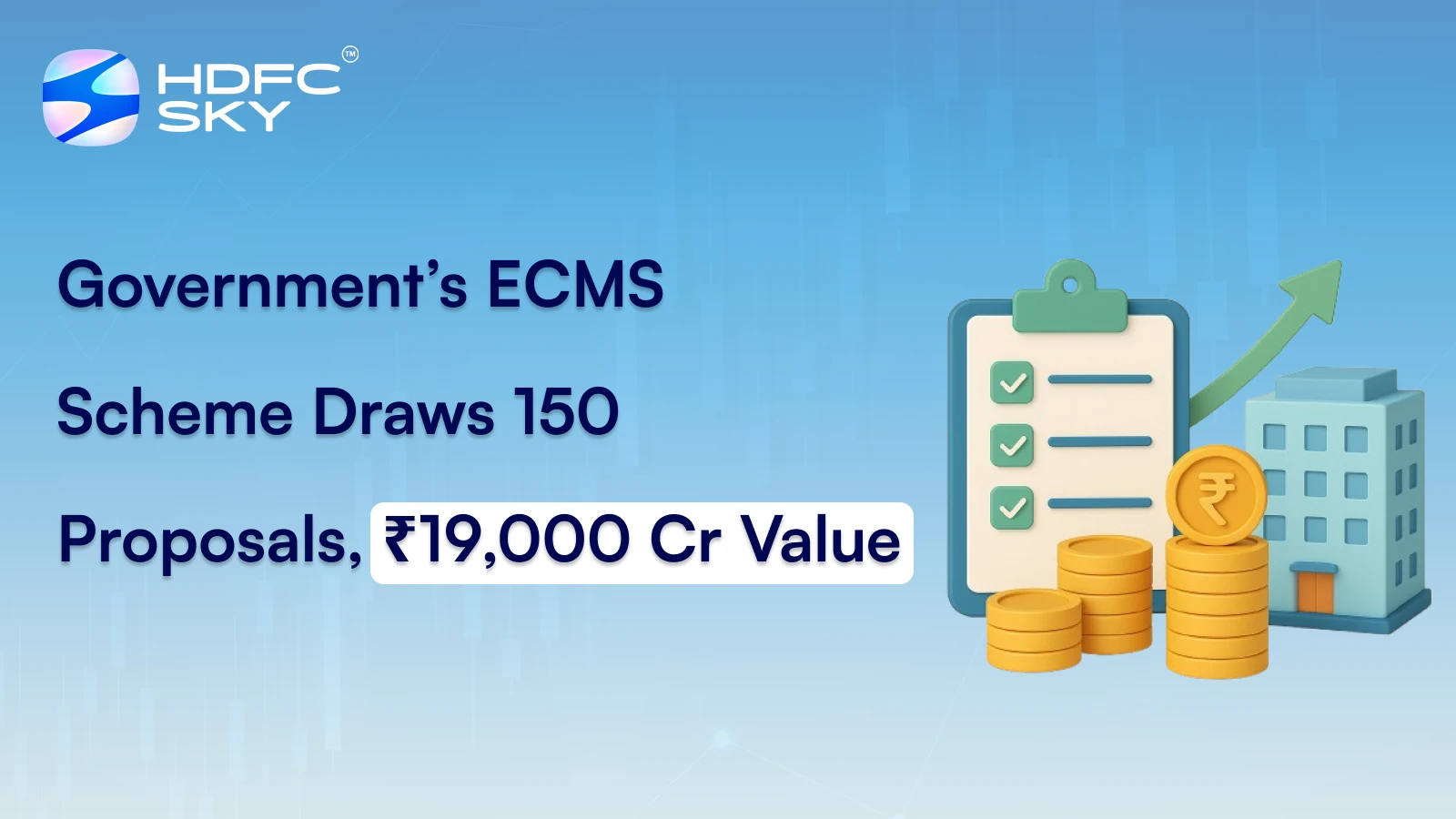
Government’s ECMS Scheme Draws 150 Proposals, ₹19,000 Cr Value
Authored By Shishta Dutta | Last Modified: Sep 12, 2025 06:05 PM IST
Open Free Demat Account
Open Free Demat Account
Mumbai, September 12, 2025: The Central government has received a monumental investment of over ₹19,000 crore from 150 companies under the Electronics Component Manufacturing Scheme (ECMS). Many small and mid-sized manufacturers of electronics supply chain have shown a keen interest, thus highlighting the strong appeal that the scheme holds.

Active Participation from Small Players
Small manufacturers working on electronic products like multilayer printed circuit boards (PCBs) are participating on a large scale. The scheme has been designed to encourage such firms, in order to expand India’s local electronic components industry. For certain categories in this scheme, applicants must meet the minimum revenue threshold of ₹50 crore to confirm their financial stability.
ECMS Timeline and Application Window
A budget support of ₹22,900 crore has been allocated to the ECMS and applications were being accepted from May 1 onwards. what was initially designed for just three months, looking at the positive response, the window has been extended by two more months. The main reason for this extension is that smaller firms need extra time to secure input materials, partnerships and technology access. September 30 will be the final deadline for submission of applications.
Target Product Segments
ECMS aims to promote a range of product categories within electronics. The focus is on priority areas such as bare and multilayer PCBs, non-mobility lithium-ion cells, electromechanical items and passive components such as resistors, capacitors, inductors and sub-assemblies of cameras and displays. The scheme will also extend help in terms of capital equipment setup and related manufacturing inputs.
Cost Headwinds and Raw Material Challenges
One major challenge that the industry faces is the rising costs of raw materials, particularly the imported inputs. Price hikes of nearly 8–9% happening every other month on imported raw materials such as Copper clad laminates (CCL), a key material in PCB production, poses a big problem. This in turn adds unpredictability to cost structures further reducing profitability.
Production and Employment Ambitions
The government plans to draw in investments of nearly ₹59,350 crore, facilitating production worth around ₹4,56,500 crore aiming to provide 91,600 direct jobs. Apart from this there are also talks about additional indirect employment. By 2026, domestic output from multiple component segments is projected to rise, which will most likely reduce the dependence on imports.
Disclaimer: At HDFC SKY, we take utmost care and due diligence in curating and presenting news and market-related content. However, inadvertent errors or omissions may occasionally occur.
If you have any concerns, questions, or wish to point out any discrepancies in our content, please feel free to write to us at content@hdfcsec.com.
Please note that the information shared is intended solely for informational purposes and does not make any investment recommendations.
 Join Us
 Add as preferred source on Google


More Business News








Open Free Demat Account
Open Free Demat Account







Invest Anytime, Anywhere


By signing up I certify terms, conditions & privacy policy