Nifty 50
- TCS₹2,34293.60 (4.16%)
- ICICI Bank₹1,422.80-20.20 (-1.40%)
- Tech Mahindra₹1,640.9055.90 (3.53%)
- Shriram Finance₹1,086.90-14.10 (-1.28%)
- Infosys₹1,14433.20 (2.99%)
- ITC₹266-3.00 (-1.12%)
- HCL Technologies₹1,316.1034.10 (2.66%)
- UltraTech Cement₹11,589-128.00 (-1.09%)
- Wipro₹180.954.55 (2.58%)
- Asian Paints₹2,608.70-22.30 (-0.85%)
- Bajaj Auto₹11,910190.00 (1.62%)
- SBI Life Insurance ₹1,761.10-12.10 (-0.68%)
- Hindalco Industries₹1,037.4013.40 (1.31%)
- Eicher Motors₹8,059-41.00 (-0.51%)
- HDFC Bank₹720.309.30 (1.31%)
- Maruti Suzuki₹13,376-64.00 (-0.48%)
- Tata Motors PV₹319.403.40 (1.08%)
- Bajaj Finserv₹2,002-9.00 (-0.45%)
- Grasim Industries₹3,29032.00 (0.98%)
- InterGlobe Aviation₹5,166-23.00 (-0.44%)

- Offerings
- Tools & Platforms
Tools & Calculators
- Open API
- Calculators
- SIP Calculator
- CAGR Calculator
- Compound Interest Calculator
- FD Calculator
- RD Calculator
- EPF Calculator
- Retirement Calculator
- HDFC SIP Calculator
- Mutual Fund Return Calculator
- Lumpsum Calculator
- Step Up SIP Calculator
- ETF SIP Calculator
- Brokerage Calculator
- Equity Margin Calculator
- SWP Calculator
- EMI Calculator
- MTF Calculator
- Margin Pledge Calculator
- Markets
Stocks
F&O
Mutual Funds
- More
India Ranks 3rd in Tech Startup Funding: Why It Matters, and Where the Ecosystem Is Headed?
Authored By Shishta Dutta | Last Modified: Sep 5, 2025 10:56 AM IST

Open Free Demat Account
Open Free Demat Account
India’s startup ecosystem has strengthened its global position in H1 2025. The country ranks third globally in terms of startup funding, with startups raising $2.5 billion in Q1 alone .
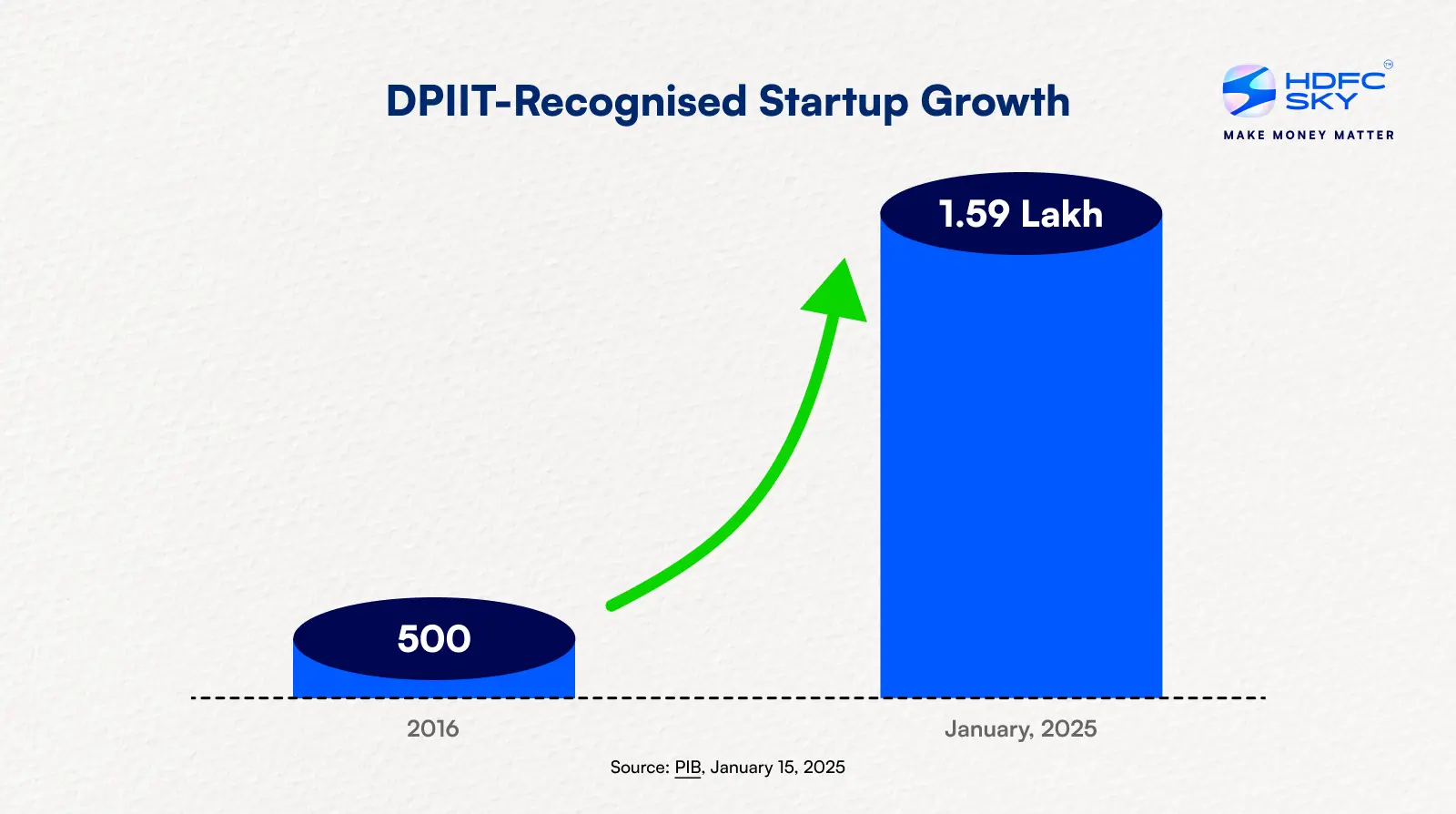
It shows the true potential of India’s startup landscape. The country now hosts the world’s third-largest startup hub with 1.57 lakh Department for Promotion of Industry and Internal Trade (DPIIT)-recognized startups and over 100 unicorns .
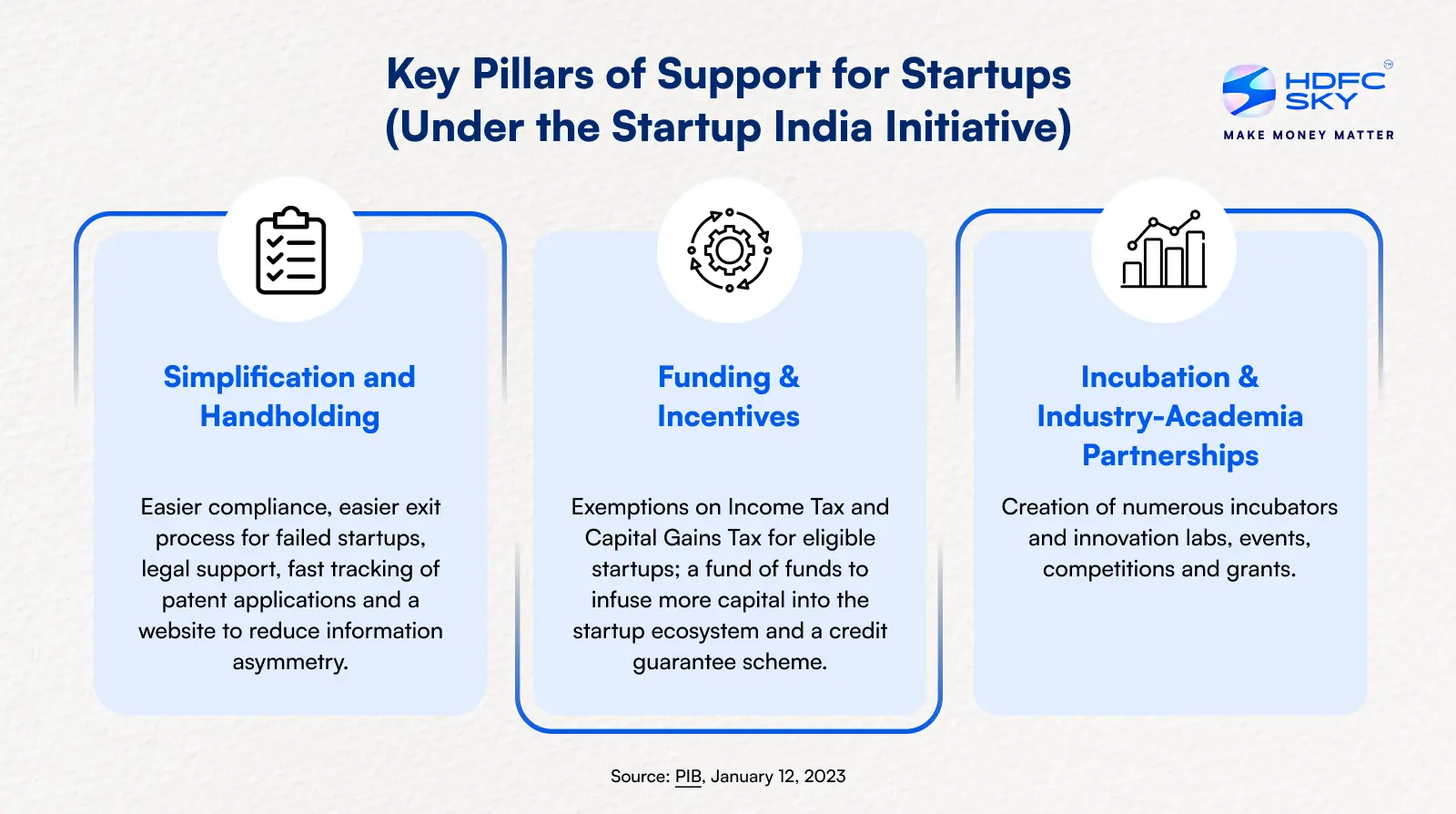
Here, key government initiatives, such as the Fund of Funds for Startups (FFS), the Startup India Seed Fund Scheme (SISFS), and the Credit Guarantee Scheme for Startups (CGSS), have played a crucial role. Focused missions in AI, deep tech, and R&D that are expanding India’s innovation capabilities are also important. Investors are now prioritizing sustainable growth and operational efficiency, while increasing mergers and acquisitions. Overall, healthier exits indicate a maturing market.

Understanding Startup Funding
Startup funding is the process of raising capital to help young companies grow and establish themselves in the market. It’s not simply about providing money for an idea but supporting companies through different stages of their development journey.
Seed (Concept validation): At this stage, funding turns a raw idea into a working prototype. Angel investors step in to cover early testing, and the main focus is proving the concept actually works.
Series A (Business model validation): At this stage, startups have moved beyond just testing an idea; they’ve shown early traction with users or revenues. The focus now is to prove that the business model itself is viable and repeatable.
Series B (Scaling): Series B moves beyond proof and focuses on speed. With a working model in place, companies raise funds to build larger teams, push marketing, and enter new markets for rapid growth.
Series C and beyond (Expansion and exit preparation): Here, the goal shifts again. Instead of just scaling, companies secure big investments to expand globally, acquire competitors, or launch new products, often preparing for an IPO or acquisition.
How is India’s 3rd Place Rank Sustainable?
This ranking is based on the substantial number of DPIIT recognitions and a decade of comprehensive policy support under Startup India .
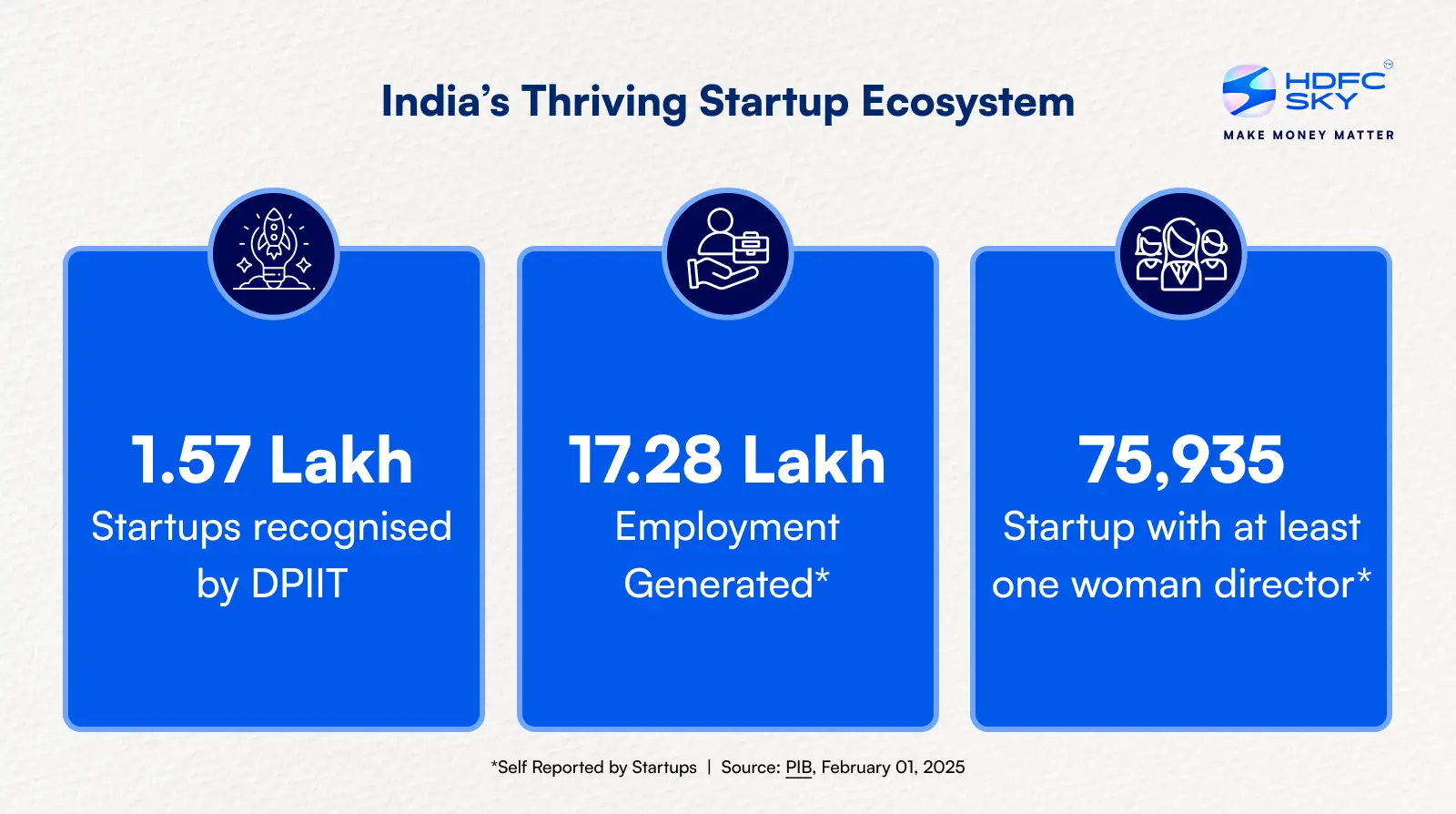
The government has documented over 1.57 lakh recognized startups as of December 31, 2024. The milestone of crossing 100 unicorns further validates this achievement.
This position is sustainable because it’s built on long-term policies, broad geographic distribution, and growing science and technology capabilities rather than short-term funding cycles.
Current policy focuses on technology sovereignty and building domestic intellectual property through national computing infrastructure, R&D financing, and data missions designed to unlock large-scale innovation potential . These measures help India maintain competitiveness even during funding slowdowns.
Policies For Powering This Ecosystem
Startup India Seed Fund Scheme (SISFS): A ₹945 crore scheme operational from 2021 . It funds proof of concept and commercialization through incubators selected by an Expert Advisory Committee (EAC).
Fund of Funds for Startups (FFS): A ₹10,000 crore corpus was approved and established in 2016 and is managed by SIDBI . It strengthens domestic capital access by investing in SEBI-registered Alternative Investment Funds (AIFs), which then invest in startups.
Credit Guarantee Scheme for Startups (CGSS): Provides credit guarantees to DPIIT-recognized startups through banks, NBFCs, and venture debt funds, reducing collateral requirements.
Complementary programs: Atal Innovation Mission (AIM) 2.0 aims to expand and strengthen India’s already vibrant innovation and entrepreneurship ecosystem. It supports both grassroots innovation and scale-up initiatives.
Platform initiatives: The Startup India Hub portal connects startups to resources and benefits. Meanwhile, Bharat Startup Knowledge Access Registry (BHASKAR) centralizes knowledge flows between startups, investors, mentors, service providers, and government bodies.
Quality of Growth
We need to transition from low-value consumer convenience models to semiconductors, robotics, deep tech, and other sectors. This is how we can improve productivity and lead in tech.
While India ranks third globally and funding remains strong, future success depends on stronger innovation capabilities. So now, the focus should be on preventing undervalued intellectual property exits and enabling local scaling of frontier technologies.
The Next Growth Curve
The government is prioritizing deep-tech, AI, and R&D as future growth drivers. Budget 2025–26 allocated ₹20,000 crore for a new Research, Development, and Innovation initiative, supplementing the earlier ₹1 lakh crore R&D corpus . This aims to boost private-sector research and emerging technologies .
India is already making progress with increased patent approvals and improved Global Innovation Index rankings . Focus areas include semiconductors, AI, 5G, and quantum computing, where India seeks to strengthen its global competitive position.
The IndiaAI Mission got ₹10,300 crore in funding in 2024. This will help in developing AI infrastructure, including GPUs, datasets, and indigenous models. The motive here is to support startups and researchers.
AI integration is expanding in public systems like Aadhaar, UPI, and DigiLocker. A recent example is its deployment in services at Mahakumbh 2025 .
Outlook
India’s startup journey is moving beyond flashy valuations and big funding headlines. What once seemed like a rush for unicorn status is maturing into a movement of building businesses that last.
Founders are now focusing on solving problems. This shift isn’t just about chasing growth but creating real economic and social impact. The talent and ambitions are the reasons that we are seeing so many emerging startups from smaller cities, which shows how far we have come.
With the right government push, investor confidence, and global opportunities, India is shaping not just its future but setting examples for the world. The real focus isn’t the hype but the staying power being built today.
Disclaimer: At HDFC SKY, we take utmost care and due diligence in curating and presenting news and market-related content. However, inadvertent errors or omissions may occasionally occur.
If you have any concerns, questions, or wish to point out any discrepancies in our content, please feel free to write to us at content@hdfcsec.com.
Please note that the information shared is intended solely for informational purposes and does not make any investment recommendations
 Join Us
 Add as preferred source on Google


More Business News









Open Free Demat Account
Open Free Demat Account







Invest Anytime, Anywhere


By signing up I certify terms, conditions & privacy policy