India’s Oil Dilemma: Striking The Energy Security Balance In A Changing World
Authored By Ankur Chandra | Last Modified: Jun 5, 2025 02:26 PM IST
India’s appetite for oil is only growing, and fast! The petroleum sector plays a crucial role in ensuring India’s energy security and supporting its economic activities. With incomes rising, cities expanding, and industries scaling up, the country is on track to become one of the world’s biggest oil consumers over the next 20 years, according to a report by Goldman Sachs.
Let’s have a look at India’s current global ranking on various metrics.
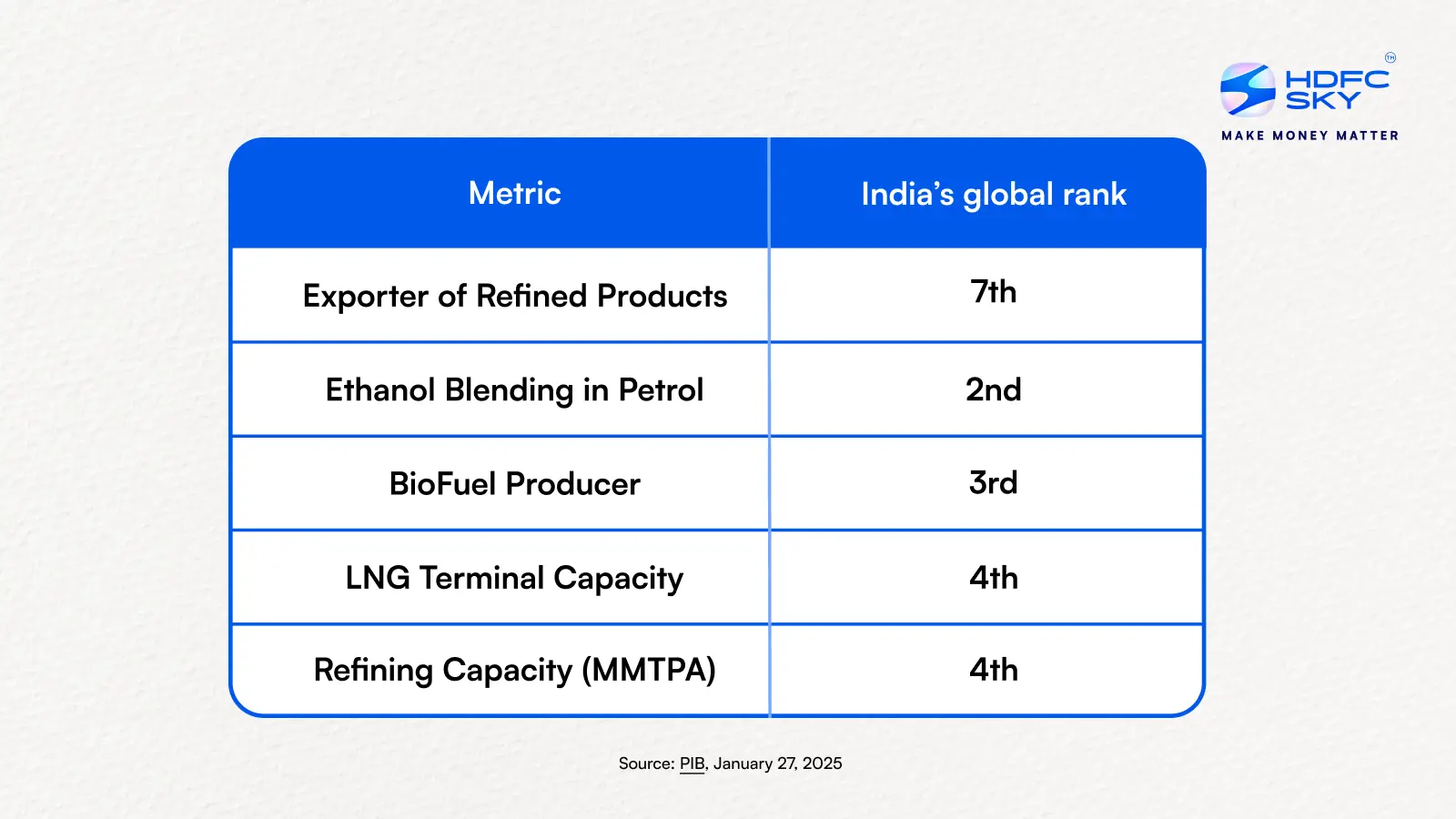
The country’s petroleum industry is vast and includes every aspect of oil, from exploration to distribution. It covers:
- Upstream activities, such as the extraction of crude oil and natural gas.
- Midstream operations like transportation and storage.
- Downstream processes, which involve refining and distributing fuels such as petrol, diesel, LPG, and kerosene.
In fact, India’s refining capacity has seen impressive growth, jumping from 215.066 Million Metric Tons Per Annum (MMTPA) in April 2014 to 256.816 MMTPA by April 2024.
But here’s the catch: India depends on imports for 88% of its crude oil and half of its natural gas needs.
That’s a big vulnerability for a country with rising energy needs.
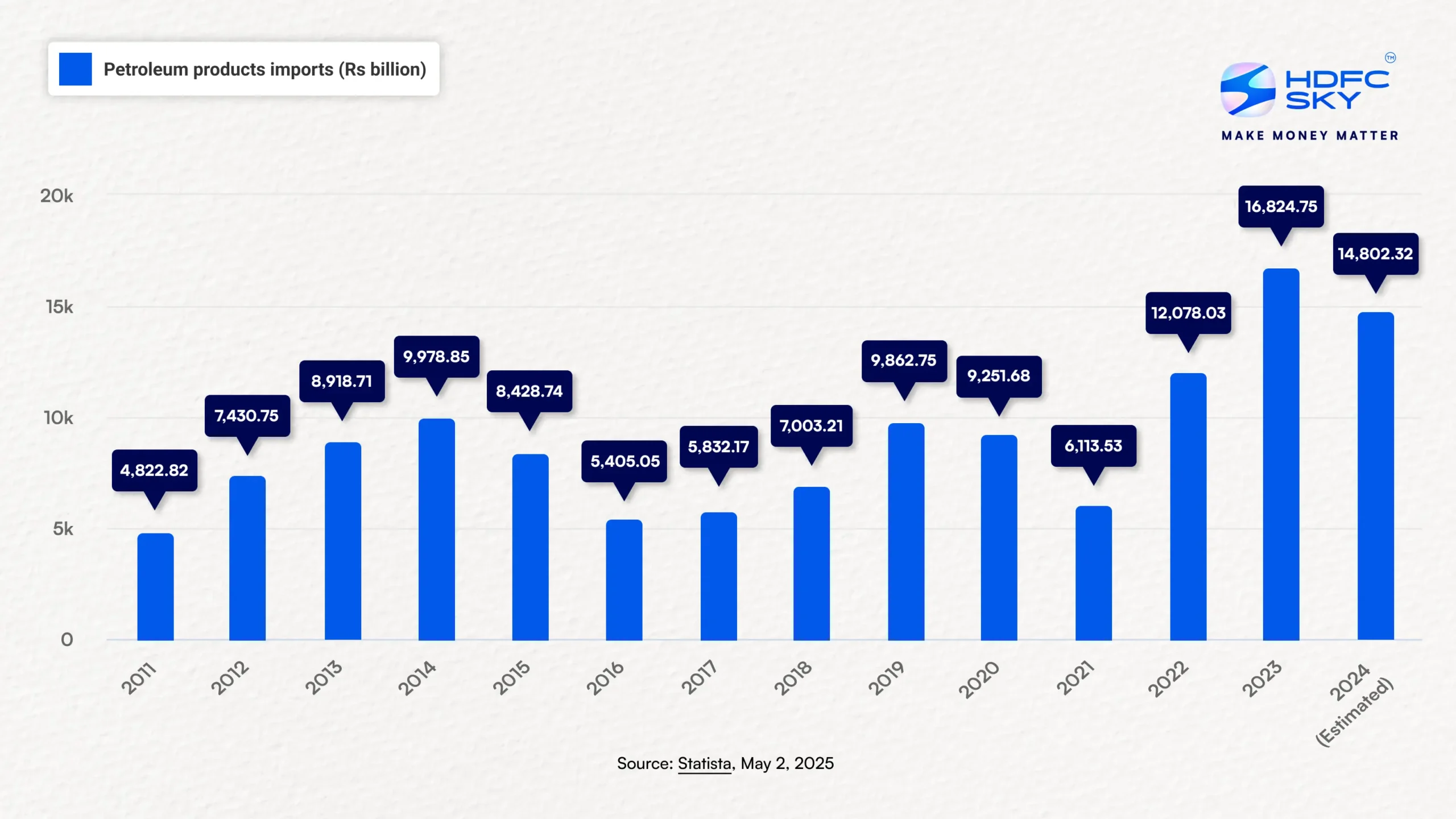
To understand the scale of this dependency, let’s look at the historical trend of petroleum product imports into India from financial year 2011 to 2024.
According to the data, the import of petroleum products’ has risen approximately 3x since 2011.
India’s Petroleum Products’ Import Trends for Financial Year (2011–2024)
Another important key variable which affects India’s energy future is global oil prices.
Impact Of Global Oil Price Fluctuations On India’s Economy
India’s heavy reliance on oil imports makes its economy highly sensitive to global oil price fluctuations.
- Recently, falling oil prices, driven by oversupply and global demand uncertainties, have eased fuel costs, providing some relief. India stands to save up to ₹1.8 lakh crore on crude oil imports and ₹6,000 crore on LNG imports in FY2026, assuming global oil prices stay within the $60–70 per barrel range, according to ICRA.
- With over 85% of its crude oil requirements being met through imports, India spent a substantial $242.4 billion on crude and $15.2 billion on LNG in FY2025, contributing to increased current account deficit.
To cushion against such volatility and reduce dependency, the government is diversifying its energy import sources and implementing policy changes. Let’s have a look:
Strategic Diversification Of Energy Import Sources Amid Recent Global Shifts
In response to this growing import bill, India has begun strategically diversifying its sources of oil and gas imports. This move also helps mitigate potential vulnerabilities in energy security.
- India’s not putting all its eggs in one oil barrel anymore. With the global energy game shifting, we’re tapping into multiple suppliers to cut risks and boost leverage.
- Russia remains the top supplier, providing around 1.88 million barrels per day (Mbd), followed by Iraq at 0.9 Mbd, Saudi Arabia at 0.56 Mbd, the UAE at 0.43 Mbd, and the USA at 0.29 Mbd.
India Is Also Reforming Domestic Policies To Attract Greater Upstream Investments.
- Recent amendments to the Oilfields (Regulation and Development) Act, 1948, are expected to encourage greater participation from both domestic and international players.
- The amendments also broaden the definition of mineral oils to include naturally occurring hydrocarbons, coal bed methane (CBM), oil shale, and shale gas.This move basically gives companies the green light to explore not just oil, but also newer sources like shale gas and coal bed methane — resources that could help India reduce its oil bill. This also makes India more attractive to foreign investors and technology providers who specialize in shale and CBM extraction.
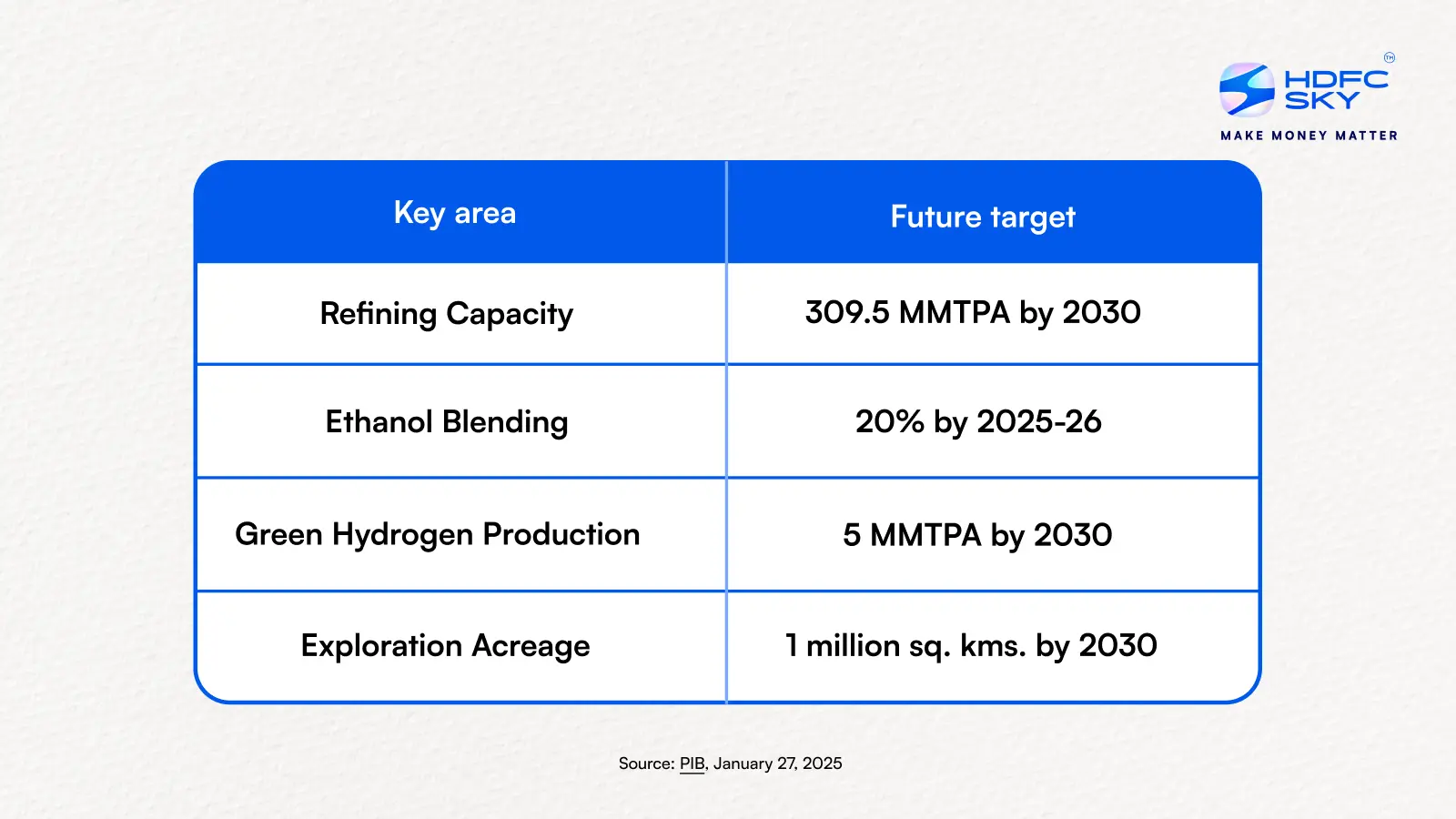
These steps are part of India’s larger ambition to become a major global energy hub, and not just a consumer. But how does India plan to scale these capabilities further in the coming years? Let’s take a look at India’s future targets:
So What’s India Actually Doing To Cut Its Oil Bill?
Oil accounts for up to ~28% of India’s total energy supply as of FY24. Therefore, reducing dependence on oil is crucial to lowering import bills.
- The government has implemented a multi-faceted strategy to reduce India’s dependence on crude oil imports. This includes promoting the use of natural gas as a fuel and feedstock across the country, aiming to increase its share in the economy and transition towards a gas-based economy.
- The government is also focusing on the promotion of renewable and alternative fuels such as ethanol, compressed bio gas (CBG), and biodiesel, while simultaneously creating electric vehicle charging infrastructure.
- Additionally, there are efforts to improve refinery processes, promote energy efficiency, and boost oil and natural gas production through various policy initiatives.
- To encourage the use of Compressed Bio Gas (CBG) as an automotive fuel, the government has launched the Sustainable Alternative Towards Affordable Transportation (SATAT) initiative.
- Furthermore, several measures have been taken to protect citizens from high international fuel prices. These include diversifying the crude oil import sources, invoking the Universal Service Obligation to ensure the availability of petrol and diesel in the domestic market, and increasing the blending of ethanol in petrol.
But the long-term solution lies in transitioning toward a cleaner and more sustainable energy ecosystem.
Way Further
India’s energy sector is undergoing a major transformation, with a growing emphasis on cleaner sources of energy. The government is working towards reaching 500 GW of installed electricity capacity from non-fossil fuel sources by 2030.
- Several initiatives have been launched to support this goal, including the Pradhan Mantri Kisan Urja Suraksha evam Utthaan Mahabhiyan (PM-KUSUM), PM Surya Ghar Muft Bijli Yojana, the National Programme on High Efficiency Solar PV Modules, and the National Green Hydrogen Mission.
- To further facilitate this transition, the government is implementing the Ultra Mega Renewable Energy Parks scheme, which aims to help project developers complete projects quickly.
- Additionally, the government has approved the Viability Gap Funding (VGF) scheme for offshore wind energy, which will support the installation and commissioning of 1 GW of offshore wind energy projects.
- Green hydrogen is another key pillar of this transformation. The Ministry of New and Renewable Energy is also leading the National Green Hydrogen Mission, aiming to position India as a global hub for the production, use, and export of Green Hydrogen and its derivatives.
Final Thoughts
India’s journey toward energy security isn’t a straight road, it’s a balancing act. On one hand, we’re still heavily reliant on oil. On the other, we’re making bold moves to diversify where we get it from, invest in renewables, and strengthen our global energy ties.
The goal isn’t to ditch oil overnight, but to reduce the risks that come with overdependence. By mixing smart imports with cleaner energy bets, India is building a more resilient and self-reliant energy future, one step at a time.
Disclaimer: At HDFC SKY, we take utmost care and due diligence in curating and presenting news and market-related content. Every effort is made to ensure the accuracy, relevance, and timeliness of the information provided. However, inadvertent errors or omissions may occasionally occur.
Should you have any concerns, queries, or wish to point out any discrepancies in our content, please write to us at content@hdfcsec.com. Your feedback is valuable and helps us maintain the highest standards of content integrity.
Please note that the information shared is intended solely for informational purposes and should not be construed as investment advice. Users are advised to consult their financial advisors before making any investment decisions.
 Join Us
 Add as preferred source on Google