Nifty 50
- TCS₹2,34293.60 (4.16%)
- ICICI Bank₹1,422.80-20.20 (-1.40%)
- Tech Mahindra₹1,640.9055.90 (3.53%)
- Shriram Finance₹1,086.90-14.10 (-1.28%)
- Infosys₹1,14433.20 (2.99%)
- ITC₹266-3.00 (-1.12%)
- HCL Technologies₹1,316.1034.10 (2.66%)
- UltraTech Cement₹11,589-128.00 (-1.09%)
- Wipro₹180.954.55 (2.58%)
- Asian Paints₹2,608.70-22.30 (-0.85%)
- Bajaj Auto₹11,910190.00 (1.62%)
- SBI Life Insurance ₹1,761.10-12.10 (-0.68%)
- Hindalco Industries₹1,037.4013.40 (1.31%)
- Eicher Motors₹8,059-41.00 (-0.51%)
- HDFC Bank₹720.309.30 (1.31%)
- Maruti Suzuki₹13,376-64.00 (-0.48%)
- Tata Motors PV₹319.403.40 (1.08%)
- Bajaj Finserv₹2,002-9.00 (-0.45%)
- Grasim Industries₹3,29032.00 (0.98%)
- InterGlobe Aviation₹5,166-23.00 (-0.44%)

- Offerings
- Tools & Platforms
Tools & Calculators
- Open API
- Calculators
- SIP Calculator
- CAGR Calculator
- Compound Interest Calculator
- FD Calculator
- RD Calculator
- EPF Calculator
- Retirement Calculator
- HDFC SIP Calculator
- Mutual Fund Return Calculator
- Lumpsum Calculator
- Step Up SIP Calculator
- ETF SIP Calculator
- Brokerage Calculator
- Equity Margin Calculator
- SWP Calculator
- EMI Calculator
- MTF Calculator
- Margin Pledge Calculator
- Markets
Stocks
F&O
Mutual Funds
- More
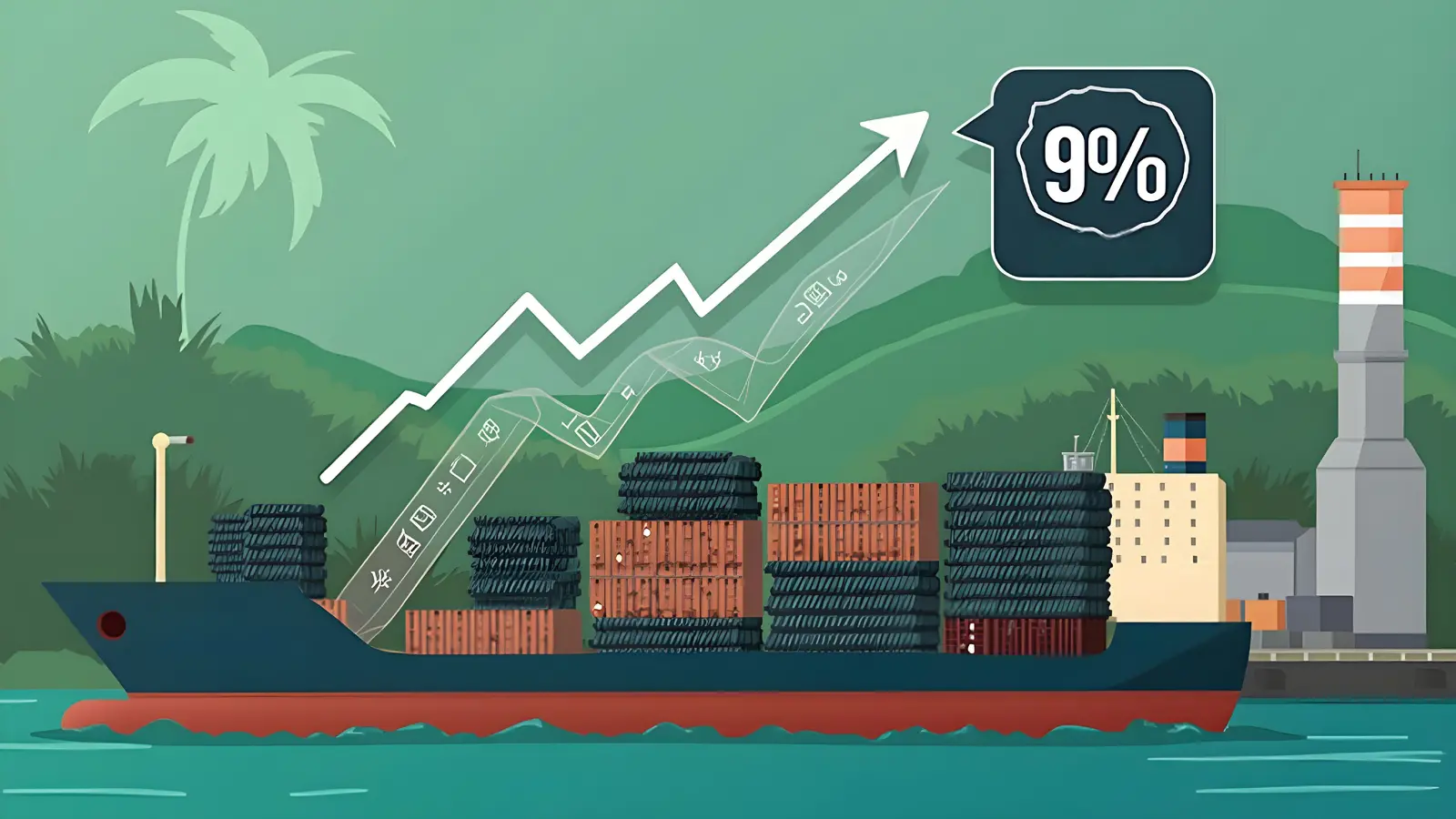
India’s Tyre Exports Rise 9% to ₹25,051 Crore in FY25; ATMA Urges Boost in Domestic Rubber Production
Authored By Shishta Dutta | Last Modified: Oct 14, 2025 06:15 PM IST
Open Free Demat Account
Open Free Demat Account
New Delhi, July 3, 2025 – India’s tyre exports rose 9% year-on-year to ₹25,051 crore in FY25, according to data shared by the Automotive Tyre Manufacturers Association (ATMA) on Wednesday. The sector has demonstrated strong recovery and growth despite global supply chain disruptions and trade policy uncertainties.
In comparison, tyre exports in FY24 stood at ₹23,073 crore. Tyres from India are exported to over 170 countries. The United States is the top export destination, accounting for 17% of the total export value. Other key markets include:
- Germany – 6%
- Brazil – 5%
- United Arab Emirates (UAE) – 4%
- France – 4%
Indian tyres also have a growing presence in Europe, Latin America, and Southeast Asia, highlighting the industry’s expanding global reach.

Segment-wise Performance
Farm and off-the-road (OTR) tyres lead India’s tyre exports, contributing nearly 60% of the total export value. The strong performance is driven by:
- Competitive pricing
- Consistent product quality
- Rising global demand for these specialised tyre segments
ATMA stressed that to unlock future export potential, the industry must focus on:
- Stronger branding efforts
- Better alignment with global standards and certifications
Industry Investment and Export-to-Turnover Ratio
With an estimated annual turnover of ₹1 lakh crore, the tyre sector remains one of India’s high-export manufacturing verticals, exhibiting a healthy export-to-turnover ratio.
Over the last 3 to 4 years, tyre manufacturers have invested nearly ₹27,000 crore in setting up new facilities and expanding existing ones. It’s a clear sign of their long-term confidence in India’s economic potential and the future of the industry.
“The tyre industry has exhibited remarkable resilience and growth post-COVID. These investments reflect a strong belief in India’s economic trajectory,” said Arun Mammen, Chairman, ATMA.
Natural Rubber Deficit Hampers Scaling
Despite robust exports, ATMA raised concerns over the natural rubber (NR) shortfall. Around 40% of India’s NR needs are met through imports due to limited domestic production, creating a bottleneck in expanding manufacturing and exports.
India’s tyre industry, which uses 60% natural rubber compared to the global average of 40%, faces added pressure as domestic NR is mostly consumed within the country, leaving little for expansion or export growth. ATMA noted that this heavy dependence on NR, while environmentally sustainable, also makes the industry vulnerable to raw material shortages, especially as demand continues to rise.
Project INROAD: A Long-term Rubber Strategy
To bridge the supply gap, ATMA, in collaboration with the Rubber Board of India and under the aegis of the Ministry of Commerce & Industry, has launched Project INROAD. The initiative is backed by ₹1,100 crore from four major tyre manufacturers. It aims to bring 2 lakh hectares under natural rubber plantation. The project also includes plans for infrastructure development and skill-building support in rubber-growing regions.
Outlook
With tyre demand expected to rise sharply, projected to touch 20 lakh tonnes of NR by 2030, ATMA has emphasised the need for urgent policy interventions and expanded domestic cultivation to reduce import dependency and sustain the sector’s export momentum.
Disclaimer: At HDFC SKY, we take utmost care and due diligence in curating and presenting news and market-related content. However, inadvertent errors or omissions may occasionally occur.
If you have any concerns, questions, or wish to point out any discrepancies in our content, please feel free to write to us at content@hdfcsec.com.
Please note that the information shared is intended solely for informational purposes and does not make any investment recommendations
 Join Us
 Add as preferred source on Google


More Business News







Open Free Demat Account
Open Free Demat Account







Invest Anytime, Anywhere


By signing up I certify terms, conditions & privacy policy