S&P’s Upgrade of India's Sovereign Rating to BBB
Authored By Shishta Dutta | Last Modified: Oct 29, 2025 02:10 PM IST
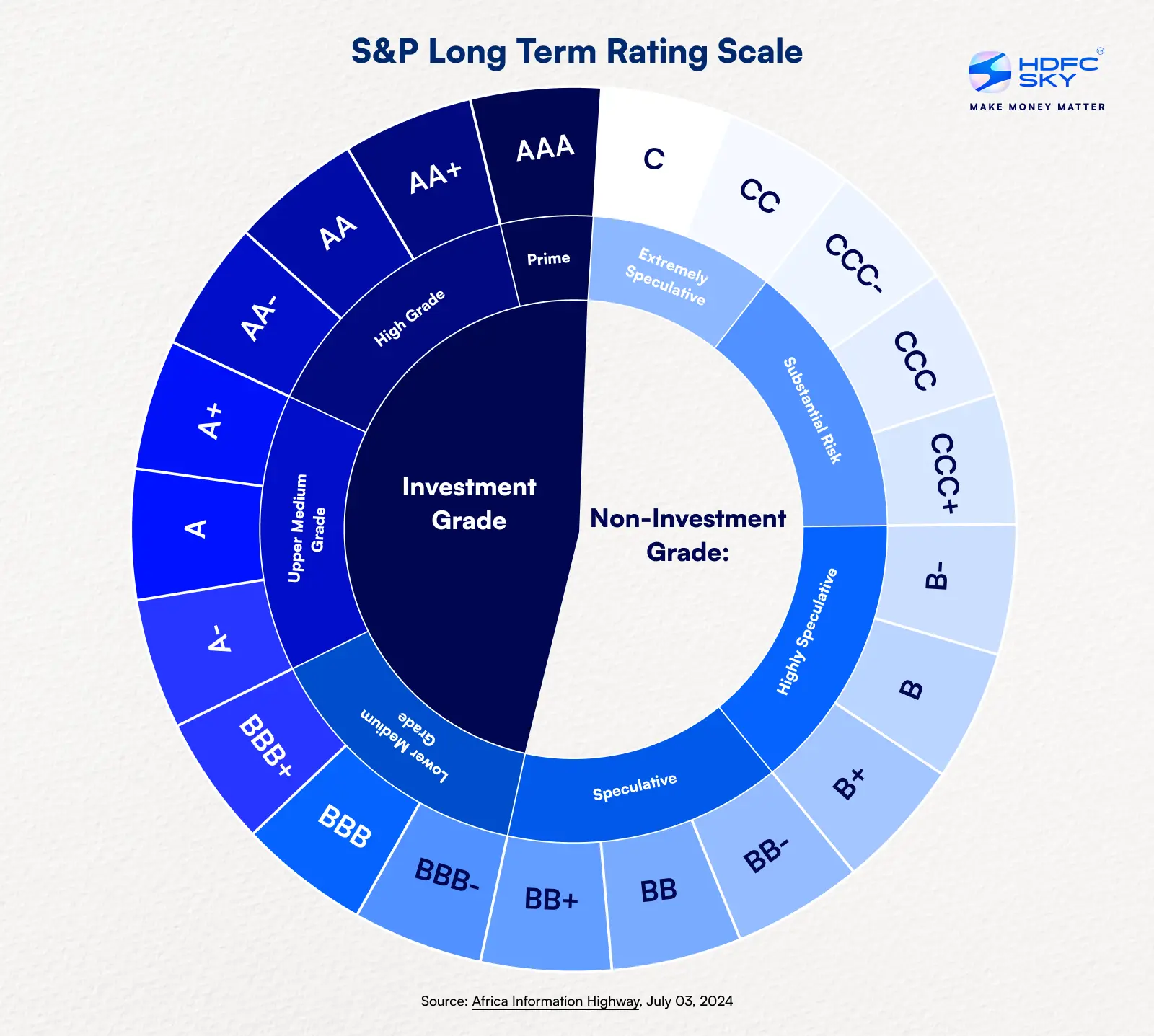
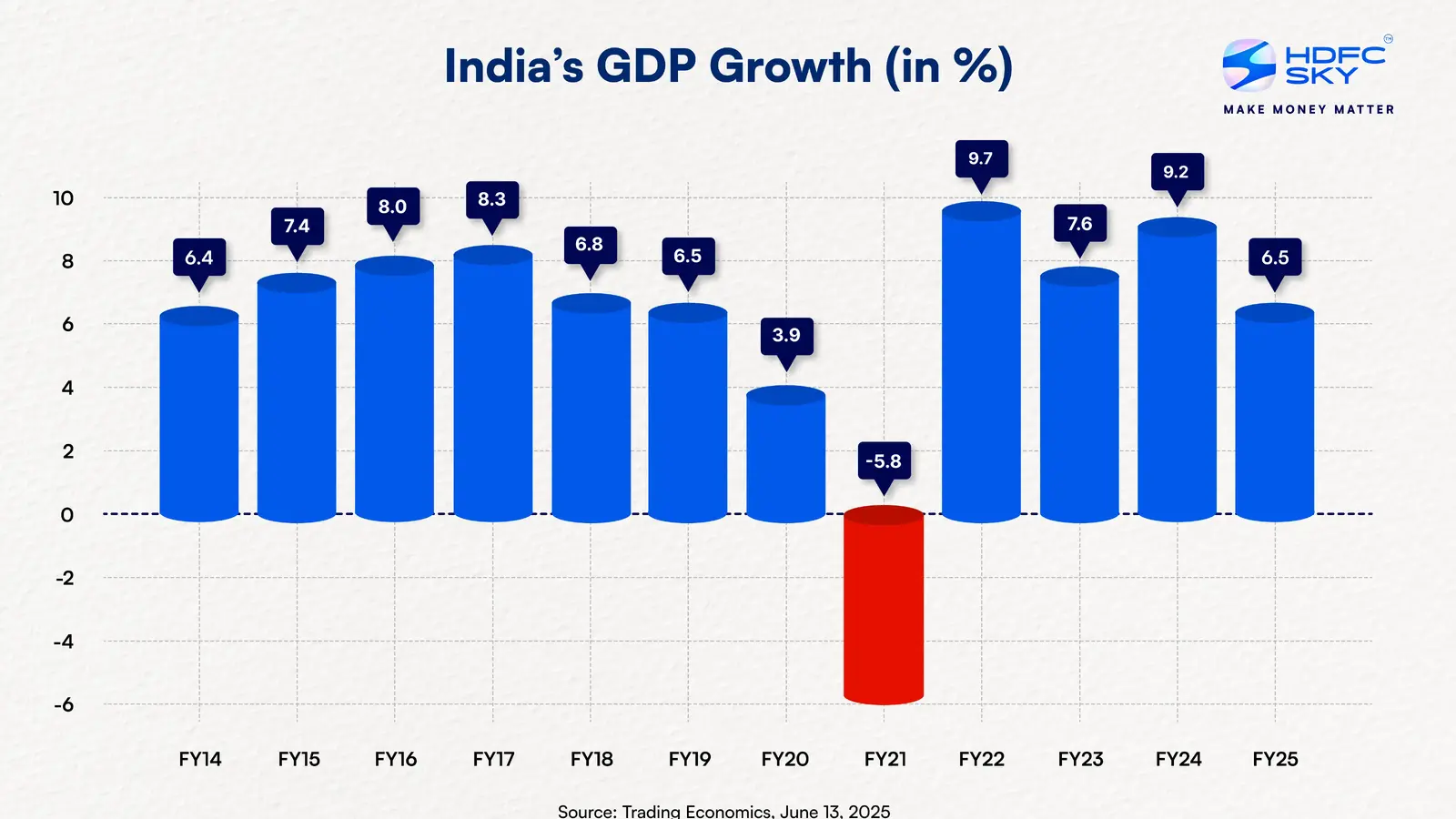
S&P Global Ratings has upgraded India’s long-term unsolicited sovereign rating from BBB- to BBB . They kept the outlook stable, which means they expect the country’s growth trajectory to remain broadly unchanged over the next 2-3 years . They are praising the country for averaging 8.8 % real GDP growth from FY22 to FY24 , which is the highest in the Asia-Pacific region. This is the first upgrade for India in 18 years .
The upgrade highlights India’s strong growth, fiscal stability, and controlled inflation . The agency also noted that even if the U.S. imposes tariffs, the impact on India would be limited. This is because the economy is mainly dependent on domestic demand and stable policies.
The government welcomed the move, calling it recognition of years of work on better capital spending, fiscal consolidation, and inflation management.
What is S&P Global Ratings?
S&P Global Ratings is one of the world’s largest credit rating agencies. It is the credit ratings division of S&P Global. This company is reputable for creating widely used market indices like the S&P 500. S&P Global Ratings evaluates the creditworthiness of companies, governments, and bonds. These ratings are crucial in global lending and capital markets, which help investors assess risk.
Key Factors on Which India Got This Rating
A mix of economic strength, fiscal discipline, and policy stability backs India’s sovereign rating upgrade by S&P. Here are the key factors behind it:
- Strong economic growth
- Steady fiscal consolidation
- Higher quality of public spending
- Focus on capex and infrastructure
- Strong corporate, financial, and external balance sheets
- Credible inflation management
- Better policy stability and predictability
What Changed and Why It Matters
S&P upgraded India’s long-term rating to BBB, which made the country more trustworthy from the investors’ perspective. This directly affects the borrowing cost, meaning the interest India pays when raising money through government bonds or loans. It also improves capital access, which means India and related issuers like public sector companies can more easily attract funds from global investors.
Moreover, Government spending quality has improved as they are putting more focus on building infrastructure. In fact, the capital spending by the Union government is expected to touch ₹11.2 trillion (3.1% of GDP) by fiscal 2026 .
The upgrade also came at a time of tariff uncertainty. However, S&P said India has strong policy buffers that would keep any tariff shock manageable . Media reports stressed the symbolic importance of this move, as it marks the first S&P sovereign upgrade for India in 18 years.
Fiscal Consolidation and Policy Credibility
Fiscal consolidation refers to government efforts aimed at reducing budget deficits and slowing the buildup of public debt.
S&P praised India’s ongoing deficit reduction and its focus on productive capital spending, noting that these moves should improve debt levels over time. Along with the sovereign upgrade, S&P raised the short-term rating to A-2 from A-3, which is a measure of how reliably India can meet its financial obligations. It also upgraded the transfer and convertibility (T&C) assessment to A- from BBB+, which recognises India’s growing financial strength.
By improving both ratings, S&P highlighted India’s near-term financial strength and its ability to handle foreign currency flows without restrictions.
Domestic Demand and Medium-Term Momentum
S&P’s decision is based mainly on India’s strong, domestic-demand-driven growth. The agency connects growth with fiscal consolidation , saying both are important to improve India’s credit standing. Moreover, exports to the US account for only 2% of India’s GDP, which helps protect the economy from tariff shocks. S&P trusts in India’s infrastructure push and solid fundamentals, as our real GDP grew over fiscal 2022 to fiscal 2024, averaging 8.8 per cent .
Inflation, External Buffers, and Stability
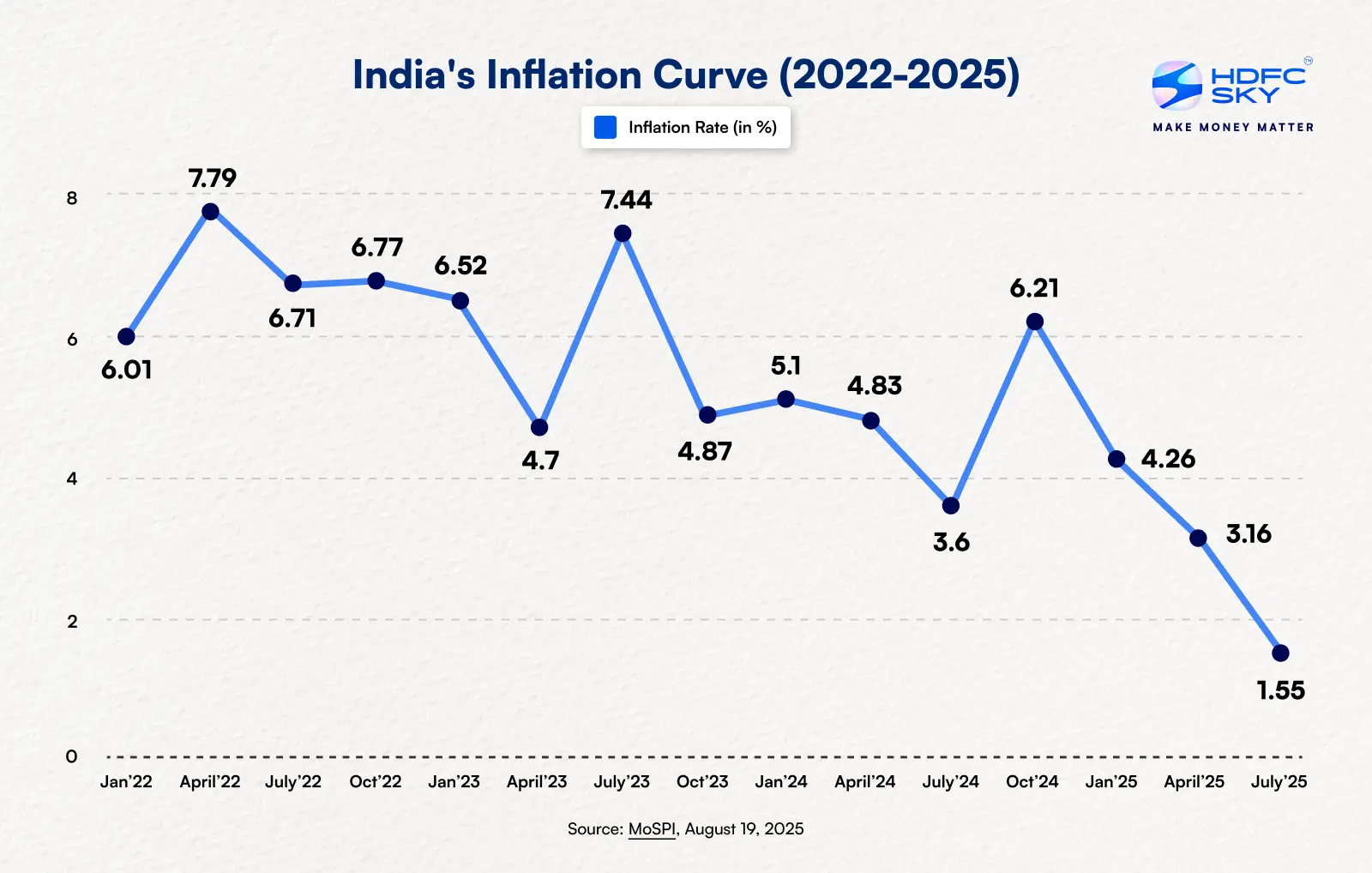
S&P pointed to better inflation control and credible monetary policy as key reasons for India’s macro stability. This is because keeping inflation expectations steady minimizes borrowing risks and supports long-term growth.
They also mentioned stronger external and financial positions, including adequate foreign exchange reserves. These factors help India tackle global shocks better. S&P linked these factors with a stable outlook, showing confidence that India can continue fiscal consolidation.
The chart below shows India’s inflation curve between 2022 and 2025. It highlights how inflation has been moving downward in recent months, which supports S&P’s view that inflation is under control and adds to the country’s overall stability.
Road Ahead
For global investors, a BBB rating acts as a green signal that India is a safe destination for their money. Large funds, pension schemes, and institutional investors often use these ratings as a filter before deciding where to invest.
When India maintains this rating, investors feel confident about loan repayments and risk management. This trust encourages more capital inflows into bonds, infrastructure, and corporate projects. For the economy, this means lower borrowing costs, more money available for development, and a steady cycle of growth.
In simple terms, ratings are about trust. If investors feel their money is secure and returns are likely, they will invest. And each wave of investment fuels the next round of economic activity, which will help India move forward steadily.
Bottom Line
Rising upwards in S&P’s rating score is definitely a crucial milestone for India. From now on, the country can expect more credible macro policies and durable growth. Here, the main factor of appraisal is that India has achieved this despite many geopolitical challenges.
Still, S&P made this clear that continued execution on consolidation, capex quality, and inflation control is necessary to keep the positive momentum. If India sticks to this policy path, the upgrade could become the foundation for broader re-rating and lower funding costs over time.
Disclaimer: At HDFC SKY, we take utmost care and due diligence in curating and presenting news and market-related content. However, inadvertent errors or omissions may occasionally occur.
If you have any concerns, questions, or wish to point out any discrepancies in our content, please feel free to write to us at content@hdfcsec.com.
Please note that the information shared is intended solely for informational purposes and does not make any investment recommendations
 Join Us
 Add as preferred source on Google