Nifty 50
- TCS₹2,34293.60 (4.16%)
- ICICI Bank₹1,422.80-20.20 (-1.40%)
- Tech Mahindra₹1,640.9055.90 (3.53%)
- Shriram Finance₹1,086.90-14.10 (-1.28%)
- Infosys₹1,14433.20 (2.99%)
- ITC₹266-3.00 (-1.12%)
- HCL Technologies₹1,316.1034.10 (2.66%)
- UltraTech Cement₹11,589-128.00 (-1.09%)
- Wipro₹180.954.55 (2.58%)
- Asian Paints₹2,608.70-22.30 (-0.85%)
- Bajaj Auto₹11,910190.00 (1.62%)
- SBI Life Insurance ₹1,761.10-12.10 (-0.68%)
- Hindalco Industries₹1,037.4013.40 (1.31%)
- Eicher Motors₹8,059-41.00 (-0.51%)
- HDFC Bank₹720.309.30 (1.31%)
- Maruti Suzuki₹13,376-64.00 (-0.48%)
- Tata Motors PV₹319.403.40 (1.08%)
- Bajaj Finserv₹2,002-9.00 (-0.45%)
- Grasim Industries₹3,29032.00 (0.98%)
- InterGlobe Aviation₹5,166-23.00 (-0.44%)

- Offerings
- Tools & Platforms
Tools & Calculators
- Open API
- Calculators
- SIP Calculator
- CAGR Calculator
- Compound Interest Calculator
- FD Calculator
- RD Calculator
- EPF Calculator
- Retirement Calculator
- HDFC SIP Calculator
- Mutual Fund Return Calculator
- Lumpsum Calculator
- Step Up SIP Calculator
- ETF SIP Calculator
- Brokerage Calculator
- Equity Margin Calculator
- SWP Calculator
- EMI Calculator
- MTF Calculator
- Margin Pledge Calculator
- Markets
Stocks
F&O
Mutual Funds
- More
Why the H-1B Visa Fee Hike Could Reshape India’s IT Export Story
Authored By Shishta Dutta | Published at: Oct 16, 2025 12:00 PM IST
Open Free Demat Account
Open Free Demat Account
Let’s start with the headline number that has sent shockwaves across India’s tech circles:
The H-1B visa fee in the U.S. has been hiked to $100,000 for new applications.
From an earlier range of $1,500-$4,000 , the cost of securing a fresh H-1B has skyrocketed to six figures.
To understand the stakes, let’s remind ourselves of the numbers:
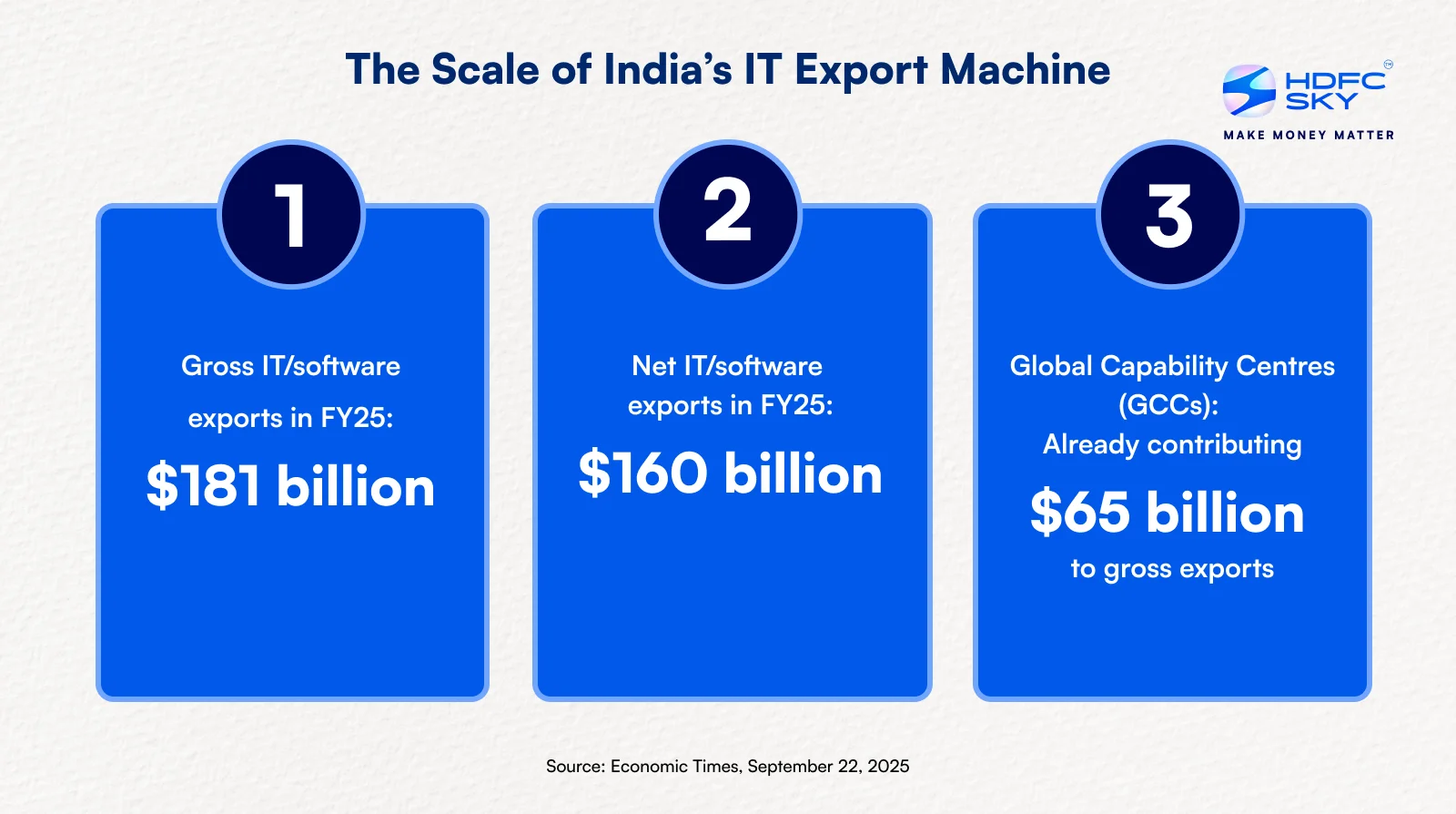
At first glance, this feels like an immigration policy update that mostly concerns Indian engineers eyeing Silicon Valley jobs. But when we dig deeper, it has implications for India’s $181 billion gross IT export engine , the industry that has been one of the country’s biggest success stories since the 1990s.
So let’s unpack this step by step.

What is an H-1B Visa?
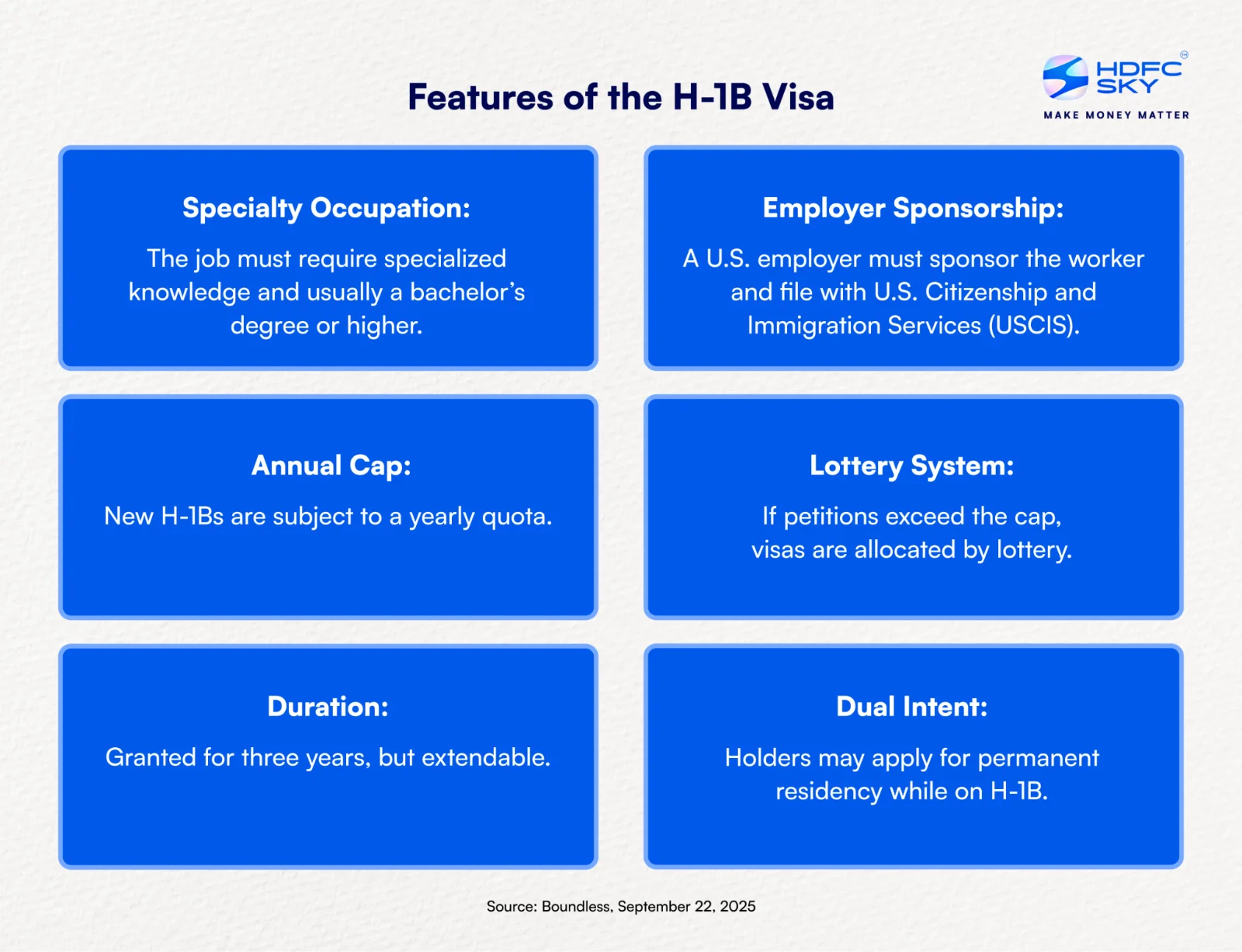
The H-1B visa is a temporary work visa for highly skilled foreign professionals in specialty occupations such as technology, engineering, mathematics, and medical sciences. It is initially valid for three years and can be extended up to six years.
Before filing, employers must certify through the Department of Labor that hiring an H-1B worker will not harm the wages or working conditions of U.S. employees.
Created in 1990, the program currently has an annual cap of 65,000 visas, plus 20,000 additional slots for advanced degree holders from U.S. institutions . For FY 2025, the cap was reached by December 2, 2024, indicating a high demand for obtaining the visa.
India’s IT Export Growth Slowing Down?
According to a recent report, India’s IT exports could now grow at less than 4% in FY26 E.
That’s a big comedown. Earlier, analysts were projecting 5% growth for FY26E and a healthy 7% compound annual growth rate (CAGR) over the next five years.
The H-1B visa, for decades, has been a bridge between Indian IT companies and their American clients. It allowed Indian tech talent to fly on-site, embed with U.S. teams, run projects in real time, and strengthen relationships.
Looking at the numbers over the past decade makes it clear why this industry matters.
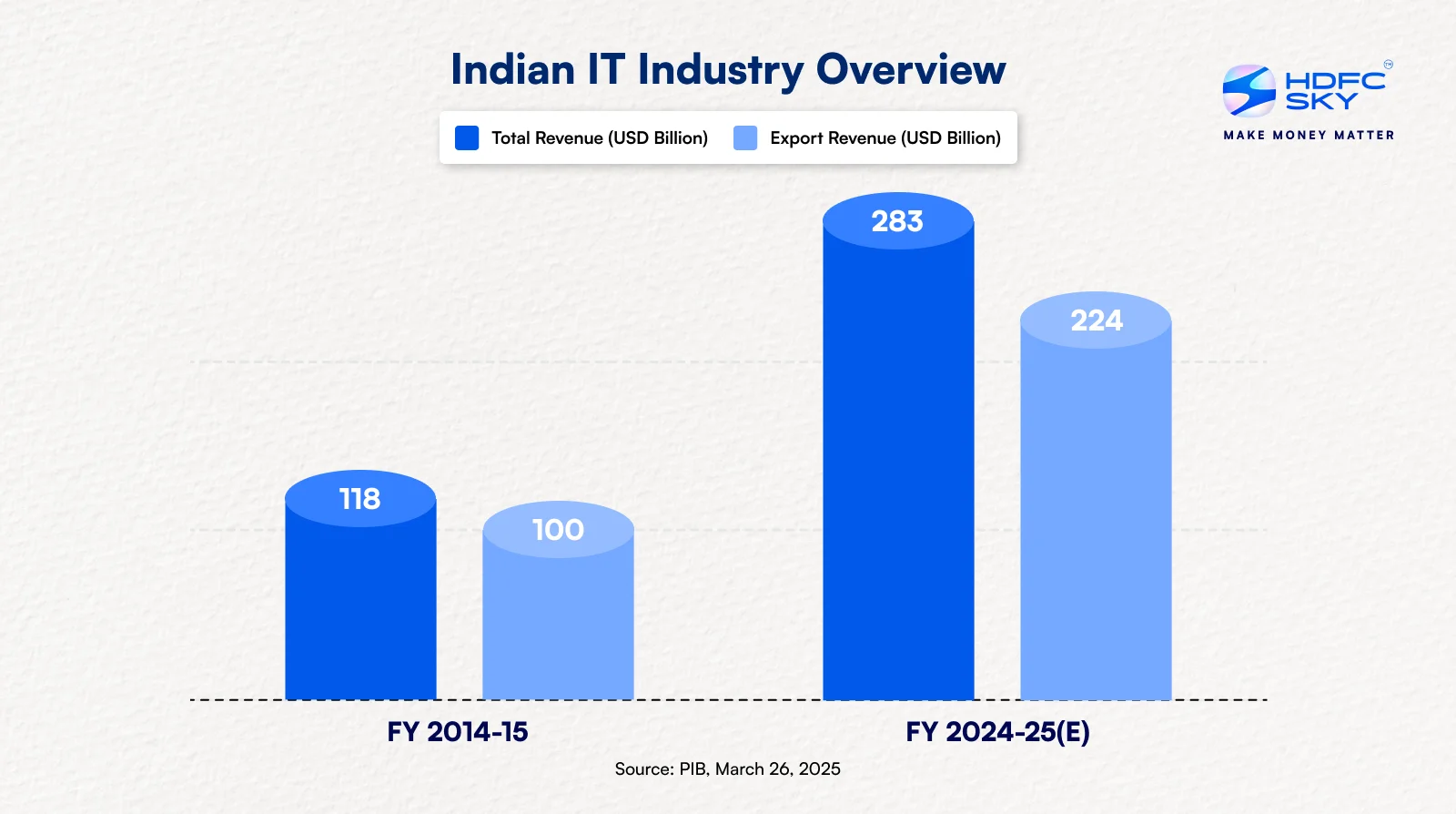
In Telecommunications, Computer & Information Services, India holds a 10.2% share of global exports, making it the second-largest exporter worldwide . This underscores the country’s strength in IT outsourcing, software development, and digital services
So when growth is projected to dip below 4%, it indicates potential structural reset.
Will Companies Actually Feel the Pinch?
Short-term pain may be limited. Most Indian IT companies have already reduced their dependence on sending people abroad compared to, say, a decade ago. Remote work, global delivery models, and automation have reduced the need for huge on-site teams.
But long-term risks are real. As Madhavi Arora, Chief Economist at Emkay Global , put it:
“Near-term impact may be limited on IT revenue/margins. However, if sustained, it could disturb Indian IT exports, pressurise project margins, disrupt supply chains, and on-site projects.”
Margins, which are already under pressure due to rising wages and currency fluctuations, could shrink further if companies are forced to absorb higher costs. However, over time, shifting more work offshore could help balance the impact on IT exports.
Why this Matters More for Talent than for Companies
Nilesh Shah of Kotak Mahindra AMC offered an angle worth pausing on:
“US restrictions on H-1B visas will hurt Indians more than Indian IT companies.”
Think about it. Indian IT firms can shift gears, push more work offshore, or expand GCCs. But the Indian engineer dreaming of a U.S. job? Their path just got very expensive.
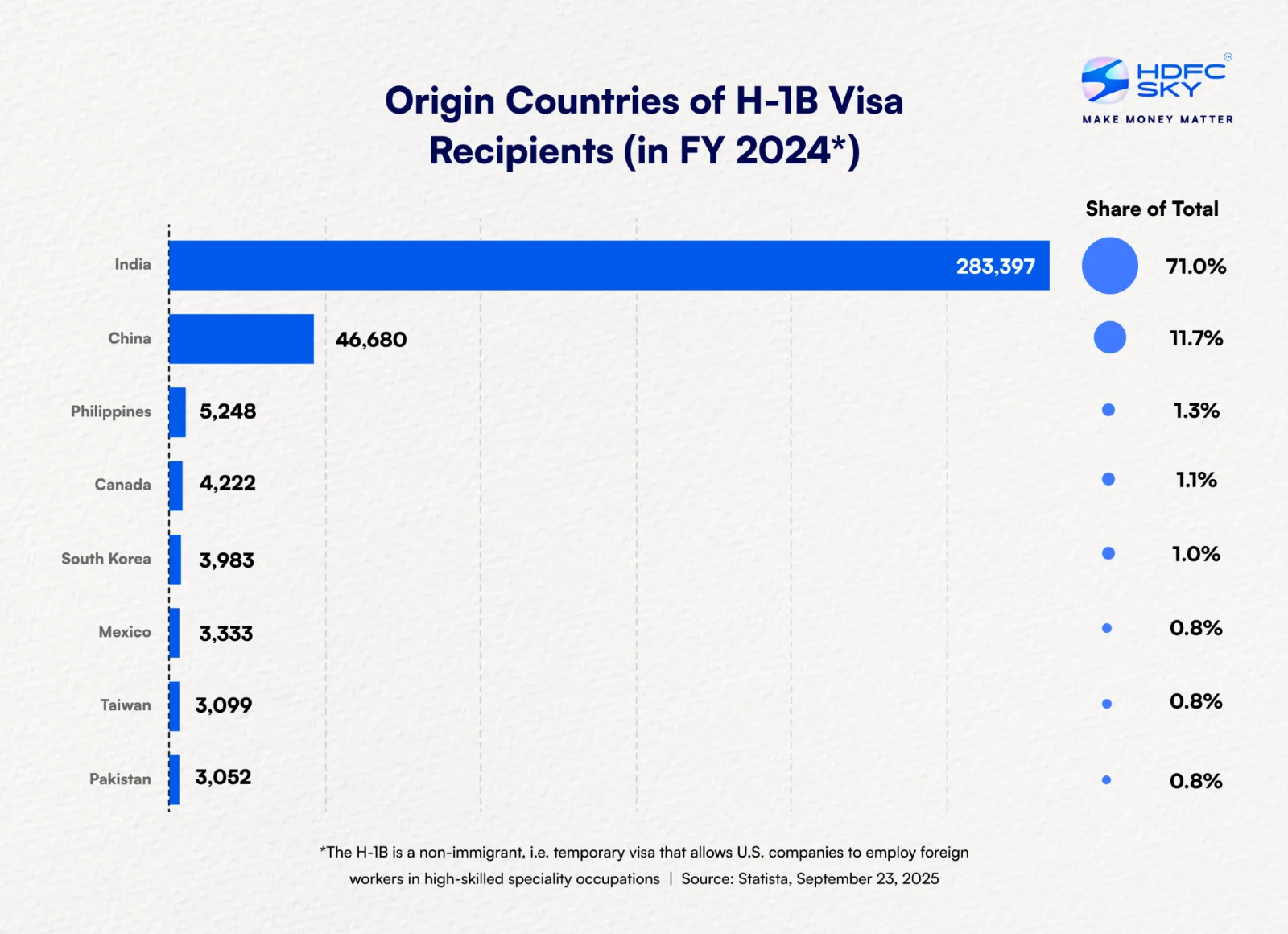
However, this could be the beginning of a new reality: fewer Indians flying out to work on-site, more Indians staying back to contribute through offshore delivery.
Maybe this is a push to build stronger ecosystems at home, where talent doesn’t need to go abroad to succeed.
The Offshore Pivot
Here’s the silver lining. Even before this visa fee shock, India’s IT industry was quietly shifting.
Global Capability Centres (GCCs) are booming. Nearly 1,700 GCCs now have in-house centres in India, doing everything from R&D to core product development. Together, they contribute $65 billion in exports .
Offshore delivery has become more acceptable post-Covid. Clients are comfortable with remote collaboration tools, 24×7 delivery models, and hybrid teams.
Technology itself has reduced the need for physical presence. Cloud, automation, AI; they make execution easier.
What about the U.S.?
Think of American companies that rely on skilled Indian tech workers to fill talent gaps. By making it prohibitively expensive to bring them in, the U.S. risks slowing down its own innovation engine.
As Nilesh Shah noted, abruptly changing H-1B visas will have adverse effects on the U.S. economy over time.
Conclusion
The $100k H-1B visa fee is less about paperwork and more about forcing a structural rethink.
For three decades, India’s IT industry thrived on a simple playbook: cheap skilled labor and on-site presence meant steady growth. That playbook is being rewritten.
If Indian IT companies can use this moment to pivot faster into offshore delivery, AI-powered services, and high-value R&D, they may come out stronger.
And if India as a country can create ecosystems where its brightest minds don’t feel compelled to leave, the H-1B shock might ironically end up being a blessing in disguise.
Disclaimer: At HDFC SKY, we take utmost care and due diligence in curating and presenting news and market-related content. However, inadvertent errors or omissions may occasionally occur.
If you have any concerns, questions, or wish to point out any discrepancies in our content, please feel free to write to us at content@hdfcsec.com.
Please note that the information shared is intended solely for informational purposes and does not make any investment recommendations
 Join Us
 Add as preferred source on Google


More Business News






Open Free Demat Account
Open Free Demat Account





Invest Anytime, Anywhere


By signing up I certify terms, conditions & privacy policy